North American Flexibility Growth
Honda bets $3 billion on Ohio as hybrid demand climbs

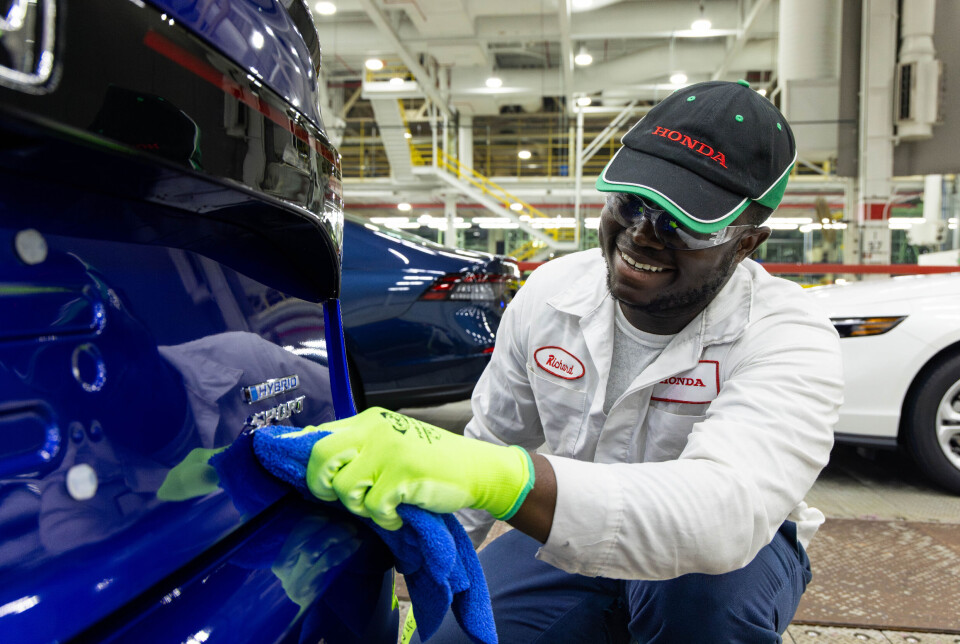
A new 240,000-unit assembly plant in Central Ohio is only the headline. Retooled engine and transmission lines in three states show how Honda intends to industrialise hybrids at scale.
Honda will invest $3 billion in a new auto plant in Central Ohio, adding capacity for 240,000 vehicles a year and more than 2,000 jobs. Production is expected to begin in 2029, pending final government approvals. The carmaker is pairing the plant with retooling at engine and transmission operations in Ohio, Alabama and Georgia, with the aim of building more hybrid-electric vehicles and the engines and hybrid systems that power them.
The package lifts Honda’s US auto production capacity to approximately 1.3 million vehicles a year and its North American capacity to approximately 1.9 million. It follows Audi’s announcement of a roughly $4 billion plant in Georgia, and it adds to a run of US investment decisions made while trade policy remains unsettled. AMS has reported that a Democratic Congress can probe auto tariffs but cannot easily scrap them, which helps explain why building close to the customer keeps winning arguments.
A plant designed to 'change its mind'
The new facility will sit on land between the existing East Liberty and Marysville Auto Plants. It will be Honda’s fourth auto plant in Ohio and its ninth auto-related production facility in the US. The capacity figure is modest by the standards of a greenfield site, and the design brief matters more. Honda says the plant will have the flexibility to produce multiple vehicle types and powertrains, including hybrid and gasoline-powered vehicles as well as battery-electric vehicles.
It promises one of the most advanced plants in the world when it comes online, with leading-edge automation, data-driven technologies and flexible production systems.
Honda points to hybrid demand as the driver, yet it is building a plant that can adapt as customer demand, market conditions and electrification trends evolve. Rather than guess where the market lands, the carmaker is paying to avoid having to guess at all. The release names no models for the plant, though it says multiple new models are under development at Honda R&D in the US.

Why Ohio keeps winning
But why Ohio? The site is home to an established and highly skilled workforce, and critically, is close to a large concentration of its US supply base. Vehicle development sits next door, including Honda Development & Manufacturing of America, the North American Automotive Development Center (ADC) and the Transportation Research Center (TRC). Existing operations already make vehicles, engines and hybrid systems nearby, and the L-H Battery Company joint venture facility has the flexibility to produce battery cells for both hybrid and all-electric vehicles.
Honda’s leadership could have chosen to build this plant anywhere in the world, but they chose Ohio because there are so many advantages to being here
“Honda’s leadership could have chosen to build this plant anywhere in the world, but they chose Ohio because there are so many advantages to being here,” said Ohio Governor Mike DeWine. “For almost half a century, Honda and Ohio have grown together, and generations of families have built their careers on Honda’s manufacturing lines. Today’s announcement isn’t just an investment in a new facility - it’s an investment in Ohio’s people and Ohio’s future.”
Honda has also spent four decades building the talent pipeline, including $132 million in research facilities and endowed chairs at The Ohio State University and work-study partnerships with two-year institutions such as Columbus State.
The powertrain story underneath
The assembly plant draws the attention, but the retooling in existing plants shows where the real constraint lies. A hybrid is only as plentiful as its engine and its hybrid system.
At the Alabama Auto Plant, which marks 25 years of vehicle production this fall, Honda is adding equipment and capacity for a new V6 hybrid engine. Line 1 will undergo one of its most significant renovations since the plant opened in 2001, so that it can build the Passport, which is currently made only on Line 2. The change gives the plant two lines that can each build multiple models.
In Ohio, the Anna Engine Plant, the largest Honda engine plant in the world, is retooling an existing line for a next-generation four-cylinder Atkinson-cycle engine for future compact and midsize vehicles built in North America. It is also expanding an on-site parts consolidation centre, expected to begin operating next year.
These investments strengthen America’s role as a cornerstone of Honda’s global future and reflect our confidence in our more than 30,000 Honda associates and the strength of American manufacturing. By expanding our comprehensive R&D and manufacturing capabilities, we will be better positioned to serve our customers and contribute to the economic vitality of the communities where we operate
The most ambitious change takes place at Honda Transmission Plant-Ohio (TMP-O). Honda has begun converting an existing transmission line into a second hybrid system line, even as the plant keeps supporting current vehicle production. The plant has been making a two-motor hybrid system for the CR-V, Accord and Civic built in the US, and it is preparing a next-generation system that goes into production next year. It is also planning a hybrid system for larger models and will serve as lead plant for that system. Together these changes raise hybrid system capacity by 250 percent in the coming years.
Honda Transmission Plant-Georgia (TMP-G), which makes the 10-speed automatic transmission for Honda and Acura models built in Alabama and Ohio, will install a new assembly line for the larger hybrid systems. Its teams will work closely with their Ohio counterparts once production begins.
Development and the Canadian link
Designers and engineers at the ADC operations in California and Ohio are developing multiple new models for the Honda and Acura brands. Their proximity to manufacturing lets production engineers join projects early to improve manufacturability, quality and efficiency at launch.
That matters because Honda announced plans in May 2026 to introduce 15 new Honda and Acura hybrid models globally by 2030, with North America expected to be the primary market for many of them.
Canada is part of the same plan. After 40 years of vehicle production, Honda of Canada Mfg. in Alliston, Ontario, will be updated and retooled for next-generation hybrid-electric and gasoline-powered models, including the reintroduction of engine manufacturing. The project will include future planned investments and related expenses.

Half a century in, still adding
Honda has built cars in North America since 1982, when the Marysville Auto Plant opened in Ohio. In 2025, nearly 99% of the Honda and Acura automobiles sold in the US were made in North America. The carmaker now employs about 33,000 associates across 18 North American plants with annual capacity for 1.6 million automobiles and nearly 2 million engines. Cumulative investment in North American manufacturing exceeds $28 billion, including more than $3.1 billion over the past five years alone.
Bob Nelson, executive vice president of American Honda Motor Co., Inc., framed the move as a long-term commitment. “As Honda approaches 50 years of building products close to our customers in America, we are making one of the most significant commitments in our history to position Honda for the next 50 years,” said Nelson. “These investments strengthen America’s role as a cornerstone of Honda’s global future and reflect our confidence in our more than 30,000 Honda associates and the strength of American manufacturing. By expanding our comprehensive R&D and manufacturing capabilities, we will be better positioned to serve our customers and contribute to the economic vitality of the communities where we operate.”
The $3 billion covers the new plant. Honda has not put a figure on the engine, transmission and Canadian projects around it, so the full cost of the programme is larger than the headline suggests.
The sequencing tells the story. The first next-generation hybrid system is due next year, two years before the new plant builds a single car. Honda is not waiting for a building to make more hybrids. It is rebuilding the hard parts first.
Articles Curated Just For You...
-
COP31 host pushes electrification as UK weighs EV cut
As COP31 opens in Antalya with electrification at its core, Britain is expected to cut its 2030 EV target. Yet UK plants export more than three in four cars, so Brussels may matter more to them than Westminster does.
-
Democrats can probe auto tariffs but not easily scrap them
A Democratic wave has taken both chambers of Congress, yet a presidential veto leaves auto tariffs, fuel rules and EV credits largely in place. For US plants, the change will come through oversight, trade talks and statehouses.
-
Stellantis appoints Pablo Di Si as North America COO
Pablo Di Si has been appointed Chief Operating Officer for North America and Stellantis' American brands with immediate effect. He will also join the Stellantis Leadership Team and report directly to CEO Antonio Filosa.
-
Ford gears up for faster EV assembly in Louisville
The carmaker has transformed the production process for its forthcoming Fathom electric truck from one line into three parallel subassemblies, reducing complexity and driving up quality