
Carmakers and AI Data Centers
Idle EV Battery lines find a customer in Data Centres


Ford, GM and LG are converting EV battery lines to grid storage for AI data centres. The prize is rich margins, but Chinese pricing, licensing ties and the chance that AI needs less power could strand this capacity twice.
Automotive battery plants built for a wave of EV demand that has not arrived are finding a second customer in the data centre. Carmakers and their cell partners are converting lines to stationary storage, and the sums involved are large enough to reshape investment plans across the sector. This is a story about manufacturing capacity in search of a market, and about whether that market is as forgiving as carmakers may hope.
Idle capacity meets a hungry customer
Slower EV sales and the end of US federal incentives have left North American cell plants underused, while AI data centres create sharp swings in electricity demand that grid-scale batteries can smooth. AlixPartners projects growth of around 40 per cent a year for battery storage through 2030. Benchmark Mineral Intelligence, expects data centres to account for 33 per cent of US storage demand in 2035, against 11 per cent globally, which suggests the US will lead the pull.

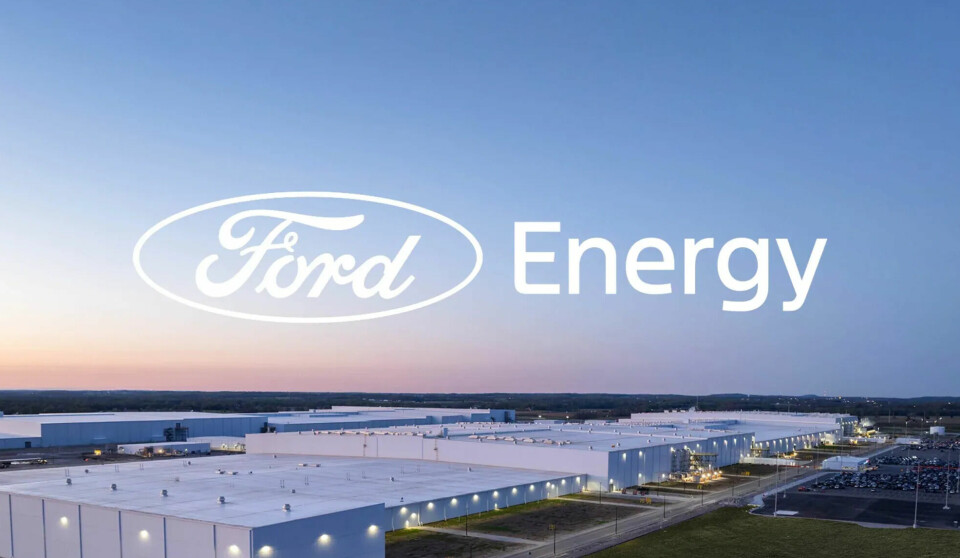
Ford is the most active mover among carmakers. Ford Energy is investing roughly $2 billion to convert its Glendale plant in Kentucky, the site left after the BlueOval SK joint venture was dissolved, into a storage hub using CATL-licensed LFP technology, with a five-year deal with EDF Power Solutions for up to 20 GWh. First deliveries are targeted for late 2027.
Ford chief executive Jim Farley told investors in July that he expects Ford Energy to rank among North America's leading storage manufacturers. Tesla's chief executive, Elon Musk, used the same earnings season to call the energy business crucial to scaling AI data centres.
It is worth noting who Ford expects to buy. Lisa Drake, who leads the venture, has said that commercial grid customers will be the predominant opportunity, with data centres secondary. The data centre supplies the headline, while utilities may supply much of the volume.
What conversion really involves
On the workforce capability question, the skills carry over better than the hardware. GM's battery planning manager, Andy Oury, gave a public statement that engineering EV batteries and engineering grid batteries overlap heavily. That is fair for chemistry and cell engineering - but a plant manager will see the differences on the floor. Ford's Kentucky operations are set to include full cell manufacturing, from electrode coils to module and container assembly.
The DC block is a standardised 20-foot container built around 512 Ah LFP prismatic cells, and it is a product with its own cell format, thermal design and integration steps.
GM and LG Energy Solution show the lighter version. Their Ultium Cells venture is investing $70 million to retool Spring Hill in Tennessee for LFP storage cells, and about 700 laid-off workers are being recalled. LG Energy Solution Vertech, the group's US storage arm, also began production this August at a new Lansing plant dedicated to storage batteries. Devon Wilson of Vertech says its order pipeline was already large before the AI boom, which suggests that data centres are an accelerant rather than the origin. Set against the billions sunk into the original plants, retooling on this scale is cheap. That is the appeal, and it is also the potential trap, because cheap conversion invites many entrants.
Sodium, silence and site permits
Chemistry will decide who keeps the margin. LFP dominates because it is cheaper than the high-nickel cells typically used in EVs, and storage projects worry less about size and weight. But GM, for example, is looking beyond it. It plans sodium-ion cells for storage by 2028 with the start-up Peak Energy, and it has said such systems could operate without active cooling and with much less system complexity.
Oury points to a further benefit that matters for siting, which is noise. Community awareness of the sound from data centres and storage sites is rising, and sodium-ion systems run more quietly. For a vehicle manufacturer, permitting friction is a commercial variable, and a product that eases it could win orders on that ground alone.
Is this really uncontested ground?
Some analysts describe storage as a market where entrants need not fight on cost. AlixPartners' Mark Wakefield made that case just recently, and the growth rates support it. But the competitive picture is less benign. Tesla reached 20 GWh of production in 2024, five years after it first made grid-scale batteries and now deploys around 10 GWh every quarter. LG Energy Solution, on the other hand, expects to exceed 60 GWh of global storage cell capacity this year, with more than 80 per cent in North America alone. Meanwhile, Ultium Cells has about 90 GWh of capacity across just two plants.
But beyond these internal considerations, price pressure also raises its head from outside. Volkswagen is seeking new battery revenue as China's dominant suppliers cut their prices. Ford's own route runs through a Chinese licensor, and a US lawmaker has already questioned whether the licensing terms have been updated or altered for the new energy storage focus.
Margins of around 30 per cent at scale, an estimate from PwC's Akshay Singh, are, it is estimated, plausible for established players. However, newcomers may find them harder to reach while volumes are still ramping and rivals are cutting prices.

Germany's integrated answer
European carmakers are taking a different path, and it matters for German brands. Volkswagen, for example, has not simply looked for buyers for spare cells. Its Elli subsidiary opened a 20 MW site at Salzgitter, connected to the national grid and trading on the European power exchange, with cells from PowerCo's Unified Cell platform.
The group calls the result ‘a closed-loop battery ecosystem’ spanning cell manufacturing, stationary storage and energy-market optimisation. But the backdrop is, to say the least, sobering. PowerCo once targeted as many as seven EV battery plants but has since scaled back its German cell factory.
Mercedes-Benz has incrementally been building expertise for years. Its Energy subsidiary supplies more than 2,000 repurposed modules delivering 29 MW to the grid, drawing on the 70 to 80 per cent of capacity a battery typically retains after vehicle use.
And neither is chasing hyperscale data centres yet. The wider retreat from EV-only plans is now more-than merely visible, as AMS has reported, in ACC's decision to cut its European factory plans from four sites to one. What we are seeing, is that spare capacity and spare know-how are appearing at the same time.
Storage rescues utilisation - only if demand holds, and as our readers are well aware, the customer is unpredictable
The risk of being stranded twice
Storage rescues utilisation - only if demand holds, and as our readers are well aware, the customer is unpredictable. Wakefield cautions that if advances in computing reduce the power AI needs, carmakers could once again be left with too much capacity. And there is also the political dimension. Opposition to data centre construction has raised questions about whether it could extend to carmakers supplying storage, and Tesla arguably carries more of that risk given how closely its chief executive and the company itself are tied to AI. Wedbush analyst Daniel Ives has judged the risk as contained, for now.

So in essence, two exposures compound each other. The first is a customer whose appetite for power may shrink through efficiency. The second is a public that may resent that customer. A plant converted to serve one narrow buyer has traded a diversification problem for a concentration problem - and the outcome is yet to be realised.
What plant leaders should ask now
There are, from an OEM perspective, a few questions that deserve answers before capital is committed. Can the converted line switch back to vehicle cells if EV demand recovers, and at what cost? Does the plant have the validation, safety and fire-performance discipline that grid buyers will demand, since early field failures would damage every entrant? Are recalled and retrained workers ready for a different product? Is the cell supply base, including licensing, resilient to trade and pricing shocks? And lastly, is there a diversified customer book beyond data centres, including utilities and industrial users?
The logistics side is real - but secondary. Moving heavy containers to remote sites is a different discipline from vehicle flow, and one for Automotive Logistics. The manufacturing lesson is that automotive scale is an advantage only when paired with automotive rigour. The carmakers likely to come out on top will look to treat storage as a product with its own life expectancy - measured in decades - and not merely as a home for unused lines.
Articles Chosen Just For You...
-

VW puts a $18.6bn price tag on cutting excess capacity
-

Valeo puts flexibility at the heart of manufacturing
-

JLR cuts 4,000 jobs to fix an underloaded plant network
-

Hyundai announces 100 new models by 2030
-

JLR turns to Stellantis to build tariff-proof Defenders
-

Stellantis STLA One platform launches in US with Belvidere-built Jeep Cherokee
-

Ford brings Lincoln production home from China by 2030
-

How the EU's Industry Accelerator Act could reshape EV manufacturing in Europe
-

Geely’s ECRI: A collaborative engine for global vehicle development
-

Suzuki eyes Europe with affordable electric kei car