A global AI manufacturing transformation at Hyundai Motor Group

Hyundai Motor Group has built a deeply integrated, AI driven manufacturing ecosystem that reduces errors, cuts downtime, preserves expert knowledge and connects data across the entire vehicle lifecycle
Since 2019, Hyundai Motor Group has improved quality management and operational efficiency across its global manufacturing operations thanks to the use of digital tools, including AI.
At an event held on August 11 at its headquarters in Seoul, the carmaker highlighted the progress and future of its digital transformation across the business. The Hyundai Motor Group AX Achievement Showcase covered the changes made to project and data management, R&D and improving collaboration to more closely connect production, quality and sales.
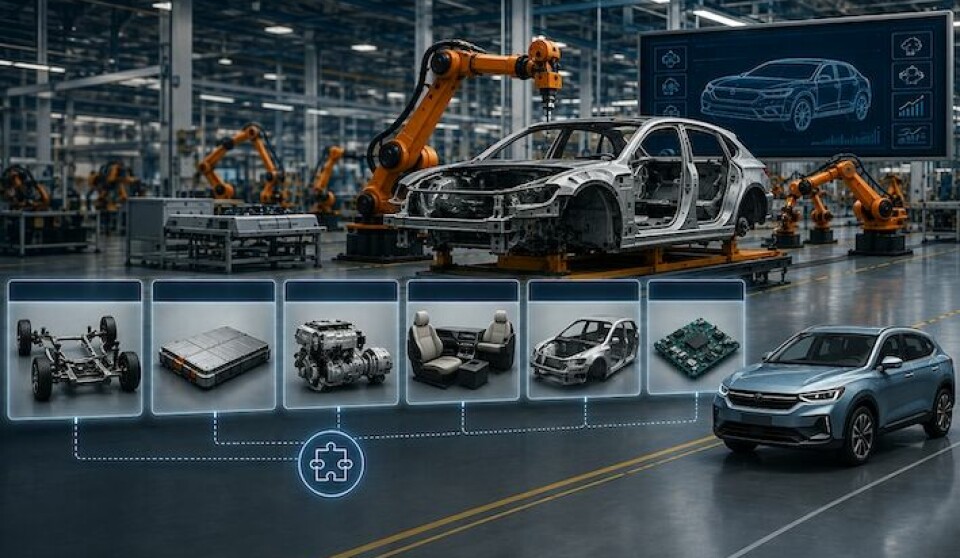
Examples of its application of AI to improve manufacturing efficiency include its AI Automation Recognition Service, which uses AI and cameras to read vehicle identification numbers (VINs) on the assembly line and verify that vehicles match system records in real time. According to Hyundai, the technology enables teams to identify and solve potential errors at an early stage. Parts and production processes vary by individual VIN, which increases the risk of error.
“If a component intended for VIN #1 is mistakenly installed on a vehicle with VIN #2, the issue must be identified during the quality inspection process,” HwaChang Sung, head of department for AI Transformation in the Project Management Office (PMO) at Hyundai Motor Group told Automotive Manufacturing Solutions. “Otherwise, the vehicle would need to be reworked, or in the worst case, an incorrectly configured vehicle could be delivered to the customer.”
Assembly line workers were required to do this manually in the past, carrying out visual checks against system records. Before this technology was implemented, VIN misidentification occasionally resulted in errors in processes such as vehicle paint application, according to Sung, as well as cases where vehicles were assembled with incorrect specifications that were later identified during quality inspections. Since its implementation, the technology has helped eliminate such human errors at the source, preventing VIN-related production and quality issues before they occur.

Now the AI system is deployed across around 70 manufacturing processes at Hyundai and Kia production operations in Korea, the US, Europe, India and the Asia-Pacific region.
Regarding measurable improvements from the AI recognition technology, Sung says that while exact figures vary depending on plant conditions and production volume, the technology has delivered meaningful operational and cost-saving benefits by reducing rework and preventing VIN-related production and quality issues. “We expect these benefits to continue growing as the technology is deployed across Hyundai Motor Group’s global manufacturing network,” he adds.
Hyundai Motor Group reports that the application of the technology has brought annual cost savings of approximately KRW 5.24 billion ($3.9m).
Correct transfer configuration
Hyundai also pointed to its Transfer Cart Sequencing Optimisation Technology, which has cut production downtime by about 86%. The system uses reinforcement learning-based AI combined with existing optimisation algorithms to automatically calculate the most efficient routes for automated guided vehicles (AGVs) transferring vehicles along the production lines.
“The sequence of vehicles loaded onto transfer carts may change for a variety of reasons as part of normal production operations,” explains Sung. “For example, a specific vehicle may be removed from the production line due to a defect identified during the manufacturing process.”
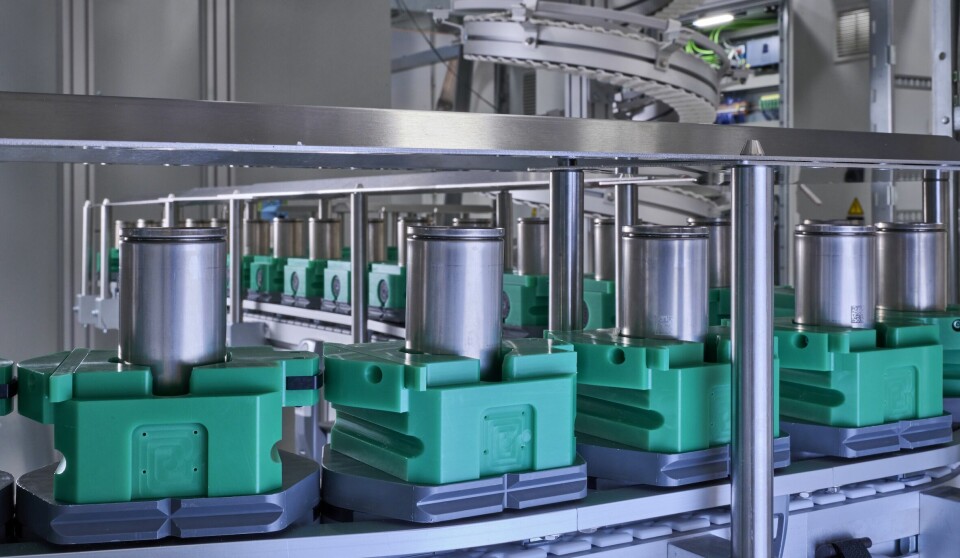
The challenge is to optimise positioning when transfer carts are no longer arranged in the desired configuration. Sung says that transfer cart storage areas typically operate at near-full capacity, with only a limited number of empty spaces available. “Similar to a nearly full parking lot with just a few vacant spots, moving one cart often requires several other carts to be repositioned first to create sufficient space,” he explains.
In addition, transfer carts move along predefined paths and can only travel in specific directions from each location. At certain points, a cart may have two or three possible routes, making the optimisation problem considerably more complex.
“To address this challenge, we developed a reinforcement learning-based neural network that estimates the minimum number of moves required to reach a target configuration from the current state,” says Sung. “Combined with a search algorithm, the system identifies the most efficient sequence of cart movements, enabling carts to be reorganised with minimal unnecessary movement while maintaining operational efficiency.”

E-Forest: Polaris platform
Across manufacturing operations, a wide range of AI agents have been developed and deployed to optimise individual production processes and operational activities. Production engineers at Hyundai Motor Group are now using a manufacturing AI platform called E-Forest: Polaris to build, test and deploy AI agents. Engineers input domain knowledge from quality management, production scheduling, equipment maintenance and logistics into AI agents that operate in actual production environments (not just trial deployment).
E-Forest: Polaris provides a platform where employees can validate their ideas through AI agents. “Once an AI agent has been tested and validated through a proof of concept (PoC) by business users, it can be deployed in actual operational environments,” says Sung. “Before deployment, AI agents are reviewed through Hyundai Motor Group's enterprise AI governance and review process. Various factors are evaluated, including business impact, cost and return on investment, cybersecurity and operational sustainability.”
Moving beyond proof-of-concept projects and implementing service-level AI agents for actual manufacturing environments, the platform helps capture individual experience and expertise as digital assets that can be shared across the organisation.
“As more AI agents are developed and deployed to handle operational tasks, it becomes increasingly important to create an environment where these agents can communicate and collaborate with one another,” says Sung. “Just as end-to-end business processes require coordination among different departments… AI agents must also be able to share information and work together seamlessly across workflows.”

To support this, E-Forest: Polaris accumulates and manages shareable data while providing a framework that enables AI agents to communicate and collaborate throughout end-to-end workflows.
Sung explains that the platform provides a structured environment where individuals and departments can systematically archive and manage their knowledge. “As this knowledge is shared and utilised across the organisation, it is continuously refined and enriched, creating a virtuous cycle in which knowledge is accumulated, improved and reused.”

Knowledge sharing
Sung points to one example of the platform’s specialised application – a graph-based production knowledge agent. The AI agent reorganises internally accumulated training materials, manuals and video content into a knowledge graph, which enables users to visualise the relationships and context between different pieces of information. As a result, employees can more easily understand how various sources of knowledge are connected.
“Through these capabilities, tacit knowledge, which has traditionally resided within individual employees or specific production sites, and has been difficult to systematically utilise, can be transformed into explicit knowledge that is documented, structured and shareable across the organisation,” explains Sung.
As a result, employees can use AI agents to access relevant production know-how and operational information more quickly and accurately. At the same time, Hyundai Motor Group can preserve and scale expertise that would otherwise remain tied to individual experience.
Data distribution
Hyundai has also established its Global One Data Pipeline, by which standardised and connected data is dispersed across research, production quality and sales functions. Information generated during development can be used in production and quality management, while data collected from sales operations can be reflected in product development and process improvement.
The Global One Data Pipeline collects data across the entire automotive lifecycle, including vehicle research and development, manufacturing, sales, aftersales service and marketing. This data is standardised, connected and turned into meaningful information so it can be leveraged as strategic assets across the company, according to Sung.

“One of the key objectives is to prevent data silos, particularly around critical information,” he explains. “By establishing common data standards and creating an environment where data can be easily shared and utilised, we can accelerate data-driven innovation across all areas of the organisation.”
One example he gives relates to customer feedback and voice-of-the-customer (VOC) data, which can help identify quality issues at an early stage. When this information is shared efficiently across the Hyundai Motor Group, quality improvements can be implemented more quickly, and customer concerns can be resolved faster through both engineering and service operations.
“Similarly, data collected from connected vehicles helps us better understand which features customers value most,” says Sung. “These insights can then be incorporated into vehicle development and product planning, enabling us to create products that more closely align with customer needs and preferences.”

Home grown and human-centred
To make the most out of the automotive data, Hyundai Motor Group has chosen to develop and operate the Global One Data Pipeline in-house. “This enables us not only to understand the unique characteristics of automotive data, but also to determine how and where it can create the most value across the business,” says Sung. “As new systems and data sources continue to emerge at an unprecedented pace, we believe that developing and maintaining our own data standards, governance models and processing frameworks, allows us to respond more quickly and efficiently.”
Most of the IT systems the company uses are developed in-house, including Hyundai Motor Company, and Kia and Hyundai AutoEver. However, in certain areas, such as enterprise resource planning and customer relationship management, the company is also using software as a service (Saas) options.
Hyundai Motor Group’s innovative manufacturing systems are helping to create a human-centred work environment supported by digital technology to improve efficiency and competitiveness. Sung says this continues the company’s efforts to ensure production line employees can work in a safer and healthier environment. That includes high-risk processes such as welding and paint shop operations, which have been highly automated.
“We have also developed wearable robots to support employees performing tasks that require frequent bending, lifting or working in ergonomically challenging positions,” says Sung. “We plan to continue advancing these efforts as part of our commitment to creating a safer, healthier, and more employee-centered manufacturing environment.”