
North American Production Reshoring
Ford brings Lincoln production home from China by 2030

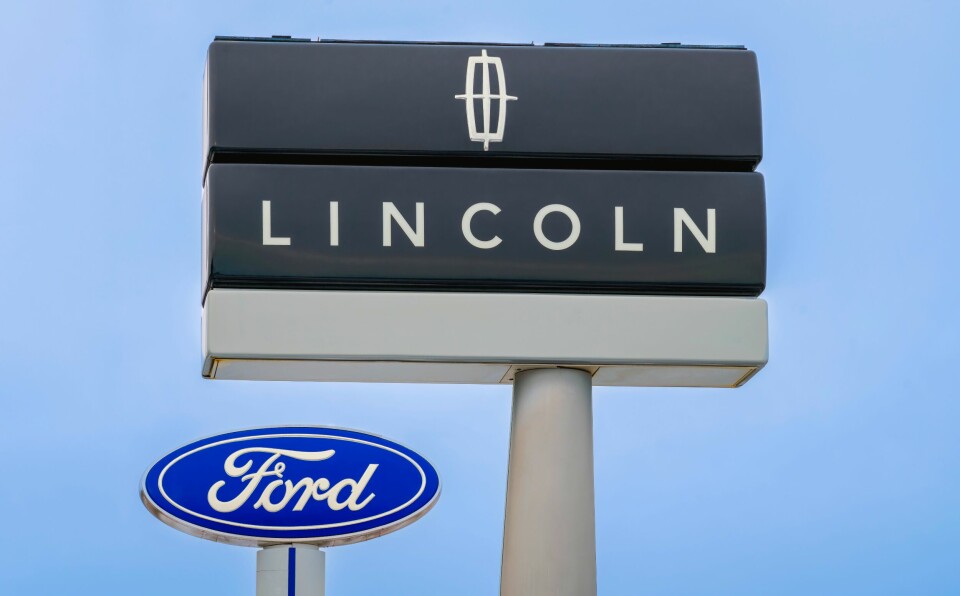
Ford will grow Lincoln output in the US from 2030 and wind down Chinese imports, a move that trades short-term tariff pain for longer-term control over its luxury brand's manufacturing footprint.
Ford Motor Company has confirmed it will expand Lincoln production within the United States from 2030, drawing a firm line under the brand's brief experiment with Chinese-built imports. The announcement, made this week, commits Ford to phasing out the importation of Lincoln vehicles from China for the US market - a reversal that speaks to the shifting economics of where a premium US nameplate can afford to be built.
For an industry that spent three decades chasing the lowest landed cost per unit, the decision could be read as an admission that geography, and not efficiency, is now the dominant variable in plant location. Ford has not said which facility will absorb the additional volume, nor has it disclosed the scale of investment required, but the direction of travel is now explicit. Lincoln, in Ford's own words, is "a quintessentially American brand", and its supply chain will soon reflect that positioning in hard fact, as well as in public statement.

A short-lived Chinese chapter
The vehicle at the centre of the shift is the Lincoln Nautilus, whose current generation is assembled at the Changan Ford plant in Hangzhou and shipped to American dealerships. That arrangement, struck in 2023, marked the first time Lincoln had sourced a US-market model from China. It has proven costly.
The Nautilus is currently subject to a tariff of 52.5 percent on entry to the United States, a levy that has turned what was once a cost-saving manufacturing decision into a significant drag on margin.
Ford's exposure to tariff policy more broadly is not trivial. The company reported gross costs of approximately $3 billion (£2.4 billion) tied to tariffs implemented or revised during 2025, with an estimated $2 billion (£1.6 billion) impact on earnings before interest and tax after offsetting measures, according to its most recent annual report. Against that backdrop, reshoring Lincoln production looks less like a patriotic gesture and more like a rational response to a cost structure that has been rewritten by trade policy rather than by engineering or labour economics.

Building on an existing North American base
Lincoln already manufactures two of its most important nameplates domestically. The Navigator is built at Kentucky Truck Plant in Louisville and the Aviator at Chicago Assembly Plant, both of which also supply export markets including Canada, Mexico and the Middle East. Ford frames the 2030 expansion as an extension of that existing footprint rather than a standalone project, which suggests the additional Lincoln volume is more likely to be absorbed into current plant networks than to require an entirely new site.
Lincoln is a quintessentially American brand, and Ford is America's automaker. This wasn't necessarily the easiest path. In fact, it's a path most of our competitors aren't choosing to take. But Ford builds in America because we believe in America, and we're betting on that belief again
The Kentucky Truck Plant and Chicago Assembly are already running full-size and three-row Lincoln programmes alongside their Ford-badged siblings, and any decision to add Nautilus-class volume into that mix would carry implications for line balancing, tooling flexibility and supplier logistics well before the first reshored vehicle reaches a dealer lot.

Ford's own language, that the move will "generate thousands of direct and indirect US jobs", points to meaningful new headcount and supplier activity rather than a token production run. Ford CEO and President Jim Farley set out the rationale in a statement accompanying the announcement.
"Lincoln is a quintessentially American brand, and Ford is America's automaker. This wasn't necessarily the easiest path. In fact, it's a path most of our competitors aren't choosing to take. But Ford builds in America because we believe in America, and we're betting on that belief again," said Farley.
The wider reshoring signal
Ford already leads US automakers on several manufacturing measures that matter to this story. The company assembled more than two million vehicles domestically last year, more than any rival, and employs approximately 56,300 hourly manufacturing workers in the US, again the largest such workforce in the sector. Those figures give Ford a credibility advantage when framing the Lincoln move as reinforcement of an existing strength rather than a defensive retreat.
The broader context is a US-China trade relationship that has moved well past tariffs on finished vehicles and into questions of where automotive manufacturing capacity itself should sit. Ford's decision follows growing political scrutiny of Chinese-built vehicles entering the US market, and Farley has indicated the timing was directly tied to the Trump administration's trade policy settling into a predictable shape.
For manufacturing planners elsewhere in the industry, that predictability, however costly, may prove more decisive than the tariff rate itself. A 52.5 per cent duty is painful but plannable. Years of uncertainty over where that number might land is not.

What the Lincoln decision ultimately demonstrates is that reshoring in 2026 is rarely about a single plant or a single model. It is a portfolio-level recalculation, in which existing domestic capacity, workforce availability and political risk are weighed against the sunk cost of an overseas supply arrangement that looked sound only a few years ago.
Ford has effectively conceded that the strategy on Lincoln's China sourcing no longer works, and in doing so has handed its North American plants a multi-year mandate to absorb volume that Hangzhou was never meant to relinquish so soon.
Articles Chosen Just For You...
-
Catena-X data network grows fivefold as plant gains mount
Catena-X has grown fivefold in nine months to 1,069 firms, and factory pilots in quality control and equipment efficiency show the automotive data network delivering results on the shop floor, not just in the supply chain.
-
Inside the US tariff turmoil reshaping North American vehicle production
As USMCA trade rules unravel and 50% tariffs hit US-Canada auto trade, Ian Henry tracks how Toyota, Honda, Ford, Stellantis, Hyundai, Volvo and GM are responding – from new US plants to a proposed JLR-Stellantis Defender collaboration
-
Idle EV Battery lines find a customer in Data Centres
Ford, GM and LG are converting EV battery lines to grid storage for AI data centres. The prize is rich margins, but Chinese pricing, licensing ties and the chance that AI needs less power could strand this capacity twice.
-
Ford confirms Geely GEA platform for new Valencia SUV
Geely's chairman has confirmed that Ford's new European crossover will be built on the GEA architecture, giving fresh technical substance to the Valencia joint venture and deepening the localisation of Ford's European supply chain.