
Volkswagen restructuring
VW puts a $18.6bn price tag on cutting excess capacity

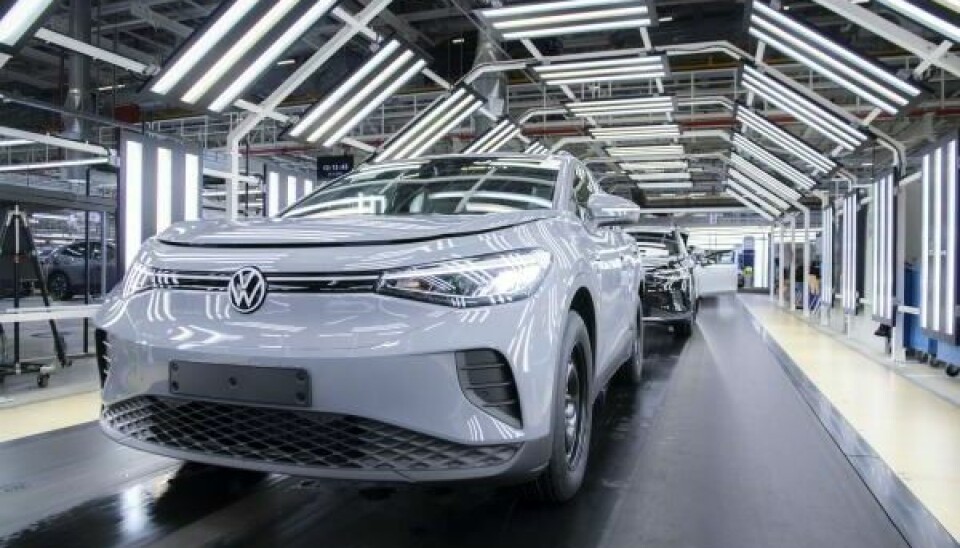
Volkswagen could spend up to €16bn ($18.6bn) on job cuts and potential plant closures as it tackles around 500,000 units of excess capacity across its European manufacturing network.
VVolkswagen is reportedly budgeting up to €16bn ($18.6bn) for the restructuring measures tied to its Future Plan 2030, including large-scale workforce reductions and the possible end of vehicle production at four German plants. According to Der Spiegel, which cites the supervisory board resolution approved last week as well as additional internal documents, up to €10bn ($11.6bn) alone could be required for job cuts through 2030. The money would cover measures including partial retirement schemes, severance payments and social plans. The group is planning to eliminate around 50,000 positions in the coming years in addition to previously announced reductions, with roughly half potentially affecting Germany.
Four plants account for another €6bn ($7bn)
The more direct manufacturing cost comes from the future of Emden, Zwickau, Hanover and Neckarsulm. Volkswagen management is reportedly assuming around €2bn ($2.3bn) for a potential end to vehicle production at Emden and Zwickau in 2031. A further €2bn each has been allocated for Volkswagen Commercial Vehicles’ Hanover plant, where production could end in 2032, and Audi’s Neckarsulm site, which faces a similar risk from 2034. That would bring the potential plant-related restructuring cost to around €6bn ($7bn).

Volkswagen has not approved the closure of any of the four sites. What the supervisory board has acknowledged is that none currently has a competitive follow-on vehicle programme secured for the period from 2031 to 2034. The group now plans to develop a broader concept for a competitive European production structure by the middle of 2027, while examining alternative industrial uses for the four plants in parallel. The cost assumptions reported by Der Spiegel nevertheless show that Volkswagen is already modelling the financial consequences of production ending at those locations.
The economics of closing capacity
According to the report, Volkswagen expects the cost of ending production at the four plants to be recovered relatively quickly through lower fixed costs, including payroll savings. By early 2037, those savings are expected to have offset the restructuring charges. A Volkswagen spokesperson declined to comment on the figures.
Whether that calculation is realistic remains disputed. Labour representatives reportedly expect the eventual costs to be significantly higher. One reference point is Audi’s former Brussels plant, where the closure of a site employing just over 3,000 people resulted in charges of around €1.6bn ($1.8bn). The workforces at Emden, Zwickau, Hanover and Neckarsulm are considerably larger, raising questions over whether the €2bn ($2.3bn) provision for each location will prove sufficient.
Restructuring targets the production footprint
The figures add another layer to Volkswagen’s most extensive restructuring programme to date. The supervisory board unanimously approved large parts of the Future Plan 2030 last week, with the group describing it as the most far-reaching transformation programme in its history.
At the centre of the plan is a push to raise profitability and reduce structural costs. Volkswagen is targeting an operating margin of 9% by 2030, compared with 3.8% at the half-year stage. Reaching that level will require not only workforce reductions but a leaner manufacturing footprint, fewer models and significantly lower complexity across the group. The production network is therefore one of the central levers. Volkswagen has already identified around 500,000 units of excess capacity across Europe. At the same time, the group is preparing to reduce its model range and concentrate volumes across fewer vehicle programmes, increasing the pressure on plants that do not have competitive follow-on allocation.

Plant decisions pushed to 2027
For Emden, Zwickau, Hanover and Neckarsulm, the key decisions are still ahead. No closure has been formally agreed, and Volkswagen says alternative industrial uses are being explored. But the reported internal cost planning suggests the group is preparing for scenarios in which vehicle production does end.
That makes the period to mid-2027 critical. Volkswagen will need to determine whether the four sites can secure new products, reduce costs sufficiently or develop alternative industrial roles that justify continued operation.
The €16bn ($18.6bn) figure therefore reflects more than the cost of cutting jobs. It shows the financial scale of reshaping a production network that Volkswagen no longer considers aligned with future market demand – and the price attached to reducing capacity that may no longer have a viable vehicle programme.