Inside VW Slovakia: How Bratislava is mastering the electric shift, AI, and supply chain disruption
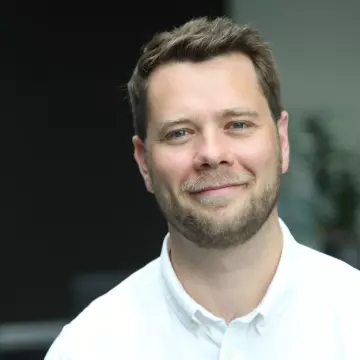

Volkswagen Slovakia CEO Wolfram Kirchert on leading one of the Group's most complex plants – from the electric Cayenne ramp-up and workforce integration challenges to predictive maintenance and building resilience against geopolitical supply chain risk
In an exclusive interview, Volkswagen Slovakia CEO Wolfram Kirchert reveals how Bratislava's multi-brand expertise, AI-driven production, and €600m in cross-brand savings are making it indispensable to the Volkswagen Group. He explains how the Bratislava plant is managing the ramp-up of the electric Cayenne, pioneering multi-brand production, and positioning itself as one of the Group's most competitive sites in a rapidly changing automotive landscape.
I have a dual role. On the one hand, as CEO, I bear corporate responsibility – that is, for board matters, finances, HR, and joint strategic decisions at the executive level. On the other hand, in engineering and as plant manager, I am very close to day-to-day operations.
AMS: How has your 25 years’ experience across a number of roles within Porsche helped you in your current role?
Wolfram Kirchert: For many years, I worked in production as a representative for the model series. Later, I moved into planning and control. Most recently, I was responsible for Porsche’s brand planning, which involved overseeing the planning of all products and locations across all departments.
This background continues to serve me well today. On the one hand, my in-depth knowledge of the product development process, and on the other, my planning mindset. I always say, once a planner, always a planner. Structured work, clear descriptions of the situation, and robust analyses before implementing measures are also crucial for me in my day-to-day work. Added to this is my deep understanding of the Porsche organisation, which also helps us here in Bratislava as the contractor responsible for manufacturing the Porsche Cayenne.
You currently lead a facility responsible for producing a number of brands and models. How would you describe your leadership style? And how do you manage to stay close to your employees despite this scale and level of responsibility?
I have a dual role. On the one hand, as CEO, I bear corporate responsibility – that is, for board matters, finances, HR, and joint strategic decisions at the executive level. On the other hand, in engineering and as plant manager, I am very close to day-to-day operations.

That’s why I attend the daily morning meetings where we discuss production progress, issues, and audit results. This allows me to stay in touch with the pulse of the plant and the projects despite the strategic issues.
I would describe my leadership style as cooperative but clearly structured. When someone comes to me needing a decision, I first expect a thorough analysis: What is the cause, what are the alternatives, and what measures are possible? We then make joint decisions based on this. So, I consciously involve employees in the decision-making process.
In Slovakia, colleagues often come to me with a proposed solution already in hand. This has advantages because the analysis has already been done, but alternatives still need to be presented. That is exactly what I try to encourage, thinking through not just option A, but also B and C. At the same time, I have found the organisation here to be extremely effective. Problems are quickly identified, analysed, and resolved. Performance is very high.
The Cayenne is also incredibly important to the team at the plant. The teams are passionate about the project because building large premium vehicles is something special. At the same time, the electric Cayenne marks our entry into electric mobility and thus serves as a cornerstone for the site’s future
You mentioned that many employees come from different countries of origin because the skilled labour market in Slovakia is tight. How significant is this challenge in day-to-day operations?
We support this with training and integration measures, ranging from language courses to the use of translators on the production line who mediate between the native languages frequently used in the work environment and Slovak.
This is organised through our industrial engineering structure with the training centres, where we have established highly differentiated programmes. This is supplemented by the Human Resources department, which supports our colleagues from the very beginning – for example, with finding housing, dealing with government agencies, contacting the immigration office, and all administrative matters related to work permits.
When I look at my immediate management team, it is clearly dominated by Slovaks. In my department, there are only a handful of expats in total. Management of the site is therefore predominantly in the hands of experienced Slovak colleagues.
The electric Cayenne is now in series production but still ramping up. How would you describe the current phase? And what does this project mean for the Bratislava site?
In the current phase, the focus is naturally on further stabilising and fine-tuning the processes. We are increasing weekly output step by step.
There’s no need to dwell on the significance of the product for us as a plant. Our goal is to bring a perfect product to market together with Porsche
The Cayenne is also incredibly important to the team at the plant. The teams are passionate about the project because building large premium vehicles is something special. At the same time, the electric Cayenne marks our entry into electric mobility and thus serves as a cornerstone for the site’s future.

What structural changes at the plant were necessary for the ramp-up of the electric Cayenne? And where were the biggest industrial challenges?
A major advantage is that we didn’t have to make an either-or decision. The internal combustion engine isn’t being phased out; instead, there will be a parallel offering. This gives us more flexibility to respond to fluctuations in demand between internal combustion, hybrid, and fully electric powertrains. That’s why our goal was to integrate the electric Cayenne into existing production structures wherever possible.
In body construction, however, we had to start from scratch. Due to the new electric platform, the underbody is completely different from that of an internal combustion engine vehicle. That’s why we needed a new underbody line, which we set up in a new hall. Additional space for specific components was also necessary.
Starting with the body-in-white assembly – that is, where the side panels, roof, fenders, doors, and tailgates are joined – we were able to integrate into existing structures. In doing so, we introduced many new technologies, including automated guided vehicle (AGV) systems in logistics and more than 50 new AGV tuggers in body construction.
The press shop was also affected. It was important to us to press geometry-forming aluminium components in-house whenever possible to ensure high quality. To this end, we set up 14 new tool sets for the Cayenne and expanded the press shop by approximately 2,200 sq. m to accommodate additional tool sets and efficiently organise tool changes.
In the future, we want to fully leverage the potential of collaboration within the Brand Group Core – for example, in planning, pilot plant networks, and ramp-up management, in industrial engineering, and eventually also in logistics, scheduling, and quality assurance
Bratislava is now considered a production site for large SUVs and for models like the Passat and Superb. Is that the role the plant will focus on in the long term? Or do you also see the site playing a role in other segments in the future – regardless of the powertrain?
First, we are very pleased to have gained an additional pillar of strength with the electric Cayenne, which ensures solid capacity utilisation for us in the Porsche segment. In the Audi division, we also have planning security with the planned product portfolio. In this respect, Bratislava is clearly positioned within the Group as a site for large SUVs.
Looking further into the future, however, one thing is clear, the site will eventually need another vehicle project to gain even more flexibility on the path to the all-electric era.
We are actively working to strengthen our competitiveness and our cost profile so that we remain attractively positioned for future location decisions within the Group.
There has been a lot of talk about regionalisation within the Volkswagen production network for some time now. Bratislava is set to form a new region together with the Czech Republic and India. What exactly are the expectations for this?
We have already had positive experiences in the past with project-based collaboration with various partners, such as on the BETA+ project between Volkswagen and Skoda. And we have always maintained close communication with our colleagues at Audi in Győr. The conditions – for example, regarding the legal framework or labour cost levels – are sometimes very similar in both countries.
In the future, we want to fully leverage the potential of collaboration within the Brand Group Core – for example, in planning, pilot plant networks, and ramp-up management, in industrial engineering, and eventually also in logistics, scheduling, and quality assurance.
Many plants distinguish themselves through lean expertise or specific shopfloor strengths. What do you see as Bratislava’s real trump card? How does your plant stand out within the Group?
A key point is our experience as a multi-brand plant. There is a clear industrial logic behind this. This is particularly well illustrated by the so-called BETA+ family.
What exactly is meant by BETA+?
In our case, this includes the VW Passat and the Skoda Superb. They are sister models that share a technical platform. At the time, the project team decided to consolidate production in Bratislava. At the same time, however, development and procurement were organised according to a cross-functional approach. The platform came from VW, while Skoda was responsible for body development and procurement for all three vehicles – namely, the Superb sedan and station wagon, as well as the Passat variant.
This enabled significant synergies to be leveraged throughout the entire project duration – not only in production but also in development and procurement. Across all departments, the potential savings compared to separate project management amounted to around €600m. This is precisely where the industrial rationale for such multi-brand concepts lies.
We see different process decisions and technical solutions across the brands and can select the best solution for our location based on the best-practice principle
I am convinced that the Group will shift even more strongly in the future from brand-oriented to platform-oriented plant utilisation. We are also seeing this with the Electric Urban Car Family currently being launched in Spain in the segment starting at €25,000. Products with a common technical basis also belong together in production, regardless of which emblem is on the vehicle. And Bratislava is a showcase plant for this, because we have been living by this principle for more than 20 years.
And what does that mean specifically for the site’s competitiveness?
We see different process decisions and technical solutions across the brands and can select the best solution for our location based on the best-practice principle. This creates significant pressure for standardisation. We only allow differences where they are truly essential. Where identical parts and processes are possible, we consistently demand uniformity.
Especially when different brands run on the same line, conceptual consistency is crucial. We recognised this early on at our site and are therefore very well positioned today.

When large SUVs and high-volume models roll off the assembly line in parallel in Bratislava, controlling this is extremely complex. How do you manage this mix on a day-to-day basis? And where are the typical bottlenecks?
The development of our production program is indeed highly complex. It is managed by a very strong team in logistics and production control. Our production control room resembles a control centre; there, all vehicle flows and system statuses converge in real time on a large monitor wall. The backbone is our manufacturing information system, which maps the entire body and vehicle control throughout the factory.
We establish a production schedule for each month, which we also incorporate into the supply chain forecast. Our goal is to create the greatest possible stability so that there is as little disruption as possible in the supply chain. The daily schedule is then developed based on this.
The challenge lies in the fact that we must take more than 80 sequencing conditions into account daily to create a manufacturable schedule. These include line allocations, cycle times, technical capacities, equipment variants, and country-specific variants. Ultimately, this must result in a stable, seamless process that we run with as few disruptions as possible.
Nevertheless, interventions in the schedule cannot be ruled out. What matters is how stable we can keep the system as a whole. When it comes to key performance indicators – such as weekly schedule adherence and the so-called backlog of overdue vehicles – we rank among the top performers across the Group.
Are there specific plants within the production network with which Bratislava collaborates particularly closely – especially regarding regionalisation, product proximity, or similar conditions?
Over the past two years, we have worked very closely with our colleagues at Porsche Leipzig because a similar product portfolio is manufactured there and because Leipzig gained early experience with new electronics platforms with the launch of the electric Macan. This was particularly helpful in building expertise for new electronics architectures.
When it comes to the production system, the Iberian Peninsula is an important reference area for us because the conditions there are very similar.
Added to this is the close collaboration with Skoda. So, the exchange is sometimes product-related, sometimes technology-related, and sometimes driven by site-specific conditions. Overall, however, we are very closely networked across the entire production network – both within the Core brand group and with the premium brands. Best practices are exchanged regularly and very systematically.
With the new electronic architectures and commissioning processes, the demand for software analysis and electrical engineering is growing in particular. That is why we are working closely with the Dual Academy and universities in Slovakia to define the right training profiles for the future
Automation is a major topic, AI the other. What role does AI already play in Bratislava today? And where do you see very specific applications at the plant?
We are just as focused on AI and digitalisation as all our other plants. At the same time, it doesn’t make sense for every plant to develop its own tools. That’s why we place a strong emphasis on group-wide best practices and rollouts. If there’s a useful application somewhere, we take a very close look at whether we can adopt it.
Camera-based systems are a particularly important area. We recently implemented a major project in chassis and powertrain assembly that checks whether lines are laid out correctly and all components have been installed properly. Solutions like this significantly reduce manual inspection efforts.
The advantage is that we have now built our own team of experts who can program and train these systems themselves. The hardware is often no longer the decisive cost factor. It is much more about training the systems, detecting anomalies, and continuous optimisation. We also use similar applications to verify vehicle identification numbers.
In addition, we are working intensively on predictive maintenance. We analyse large amounts of plant and process data to detect anomalies early and avoid failures whenever possible. And this is not limited to production; we are also consistently driving paperless, digitized processes in HR, finance, and administration.

New technologies are also changing the skill set required of employees. Which qualifications will be crucial in the future? And how do you support employees who want to drive such developments themselves?
With the new electronic architectures and commissioning processes, the demand for software analysis and electrical engineering is growing in particular. That is why we are working closely with the Dual Academy and universities in Slovakia to define the right training profiles for the future. There is a clear shift away from purely mechanical roles and toward mechatronics and electrical engineering.
At the same time, we are also providing intensive further training for our core workforce. For the electric Cayenne, we have developed extensive training programmes, particularly on battery technology, high-voltage systems, and the associated safety concepts.
Another key point is fostering intrinsically motivated individuals within the company. Such colleagues exist everywhere – you just have to provide them with the right framework.
What does that look like in practice?
A good example is 3D printing. When I arrived, there were individual initiatives in many areas of the plant using different printers and without a common framework. We turned this into a site-wide network. While the printers remain decentralised in Quality Assurance, the pilot hall, or production, they are organisationally linked.
At the same time, we’ve standardised the inventory and set up an internal ordering system. Anyone in the plant who needs a part or tool can ask whether it can be produced via 3D printing before spending a lot of money to source it externally. The network then checks where there is available capacity and which printer is suitable.
This creates a network of expertise made up of people who work with new materials and more complex components and learn from one another. At the same time, we make significantly better use of existing resources. The utilisation rate of our printer fleet is now very high, and we save five-figure sums annually as a result.
We follow a similar principle in bot programming. When individual employees have developed good solutions, they share this knowledge with the rest of the company through training sessions. This is exactly the kind of environment we want to create; connecting talented people, giving them space, and turning individual initiatives into genuine areas of expertise.
Bratislava is now considered a very stable and important location within the production network. In your view, what are the key levers to ensure that this remains the case?
The real challenge lies in competitiveness. Labour costs and overhead expenses are rising here as well, compounded by government consolidation measures in Slovakia, such as additional levies and transaction taxes. We have little control over much of this. What we can certainly influence is how efficiently we produce our vehicles.
We are continuously working to optimise our cost structure. This includes streamlining indirect functions, as well as further automation, digitalisation, and the targeted use of AI. Ultimately, it always comes down to the development of factory costs. Recently, we have invested heavily in preparation for the new models. Naturally, this is reflected in the costs at first. This makes it all the more important that existing production is as efficient as possible.
Finally, a topic from a logistics perspective. Are you already feeling the geopolitical tensions surrounding the Middle East at the plant? And what lessons has Bratislava learned from the recent crises regarding supply chain resilience?
This is an issue that affects all locations within the Group. The past few years have shown very clearly how fragile supply chains can be under geopolitical pressure.
Fundamentally, we rely heavily on resilient, as local as possible supplier networks. About 30% of our sourcing already comes from Slovakia. This not only reduces transportation costs but also makes us more robust because we are somewhat less affected by global tensions.
Close integration with Group management is also important. In the event of bottlenecks, Volkswagen Group Logistics coordinates between the brands. Added to this is operational support for suppliers. Our teams also support critical suppliers on-site, whether in terms of logistics, quality, or industrialisation processes. In this way, we strive to identify bottlenecks early and actively help ensure stability.