EV or ICE? Inside the factory strategies splitting the auto industry in 2026

From purpose-built EV megaplants to U-turns on EV and battery investments, the global auto industry's production strategies are diverging fast. The winners may be those who build for flexibility.
The global automotive industry in 2026 is navigating an electrification transition that has grown simultaneously more technically sophisticated and more strategically fractured. Across OEMs and their tier supplier networks, three distinct manufacturing responses have crystallised: full-commitment investment in purpose-built EV platforms and production infrastructure; hybrid-first or multi-powertrain flexibility strategies that hedge against uncertain demand; and alliance-based approaches designed to leverage external technology at lower capital cost. Each reflects a different reading of the same commercial and policy landscape – and each carries distinct implications for how production systems are designed, tooled and operated.
The production footprint for Neue Klasse is itself a statement of intent. BMW has established five new battery manufacturing facilities near its vehicle production plants under a local-for-local strategy...
New-generation EV platforms
The clearest indicator of long-term EV manufacturing intent lies in platform architecture. BMW's Neue Klasse represents the most comprehensively reimagined EV platform currently entering production from a traditional premium OEM. At the heart of the Neue Klasse is a clean-sheet e-architecture built around a new high-voltage battery system managed by an in-house control unit called the Energy Master, which sits on the roof of the battery pack and handles all power flows, monitors the battery, and controls the electric motors. The decision to eliminate classic module-based battery production and insert cylindrical cells directly into the pack – a cell-to-pack approach – saves space, weight and cost, while structural integration of the battery into the vehicle floor lowers the centre of gravity and compresses overall vehicle height.
BMW has also introduced an 800-volt architecture and four centralised computing units, described as "superbrains," which pool processing power across infotainment, automated driving, driving dynamics and basic functions. The superbrain was developed entirely in-house, and for the first time BMW has developed the hardware and software for all key functions independently in Munich – giving the company full control over update capability and technology sovereignty.
The production footprint for Neue Klasse is itself a statement of intent. BMW has established five new battery manufacturing facilities near its vehicle production plants under a local-for-local strategy, building at sites in Germany, Hungary, China, Mexico and the United States to ensure production resilience regardless of political or economic disruption. Production of the Energy Master control unit has begun at BMW's Landshut plant, with around 700 employees expected to be dedicated to the operation as it expands. The iX3, the first Neue Klasse model, entered production at BMW's new plant in Debrecen, Hungary, in late 2025, with Munich beginning production of the i3 sedan in mid-2026. From 2027, Munich will produce only battery-electric vehicles, signalling a definitive factory-level commitment to full electrification.
Volkswagen Commercial Vehicles offers a contrasting but equally instructive model of EV production transition at its Hanover plant. The site operates multiple drive concepts and platform logics in parallel: the all-electric ID. Buzz and ID. Buzz Cargo, alongside the Multivan with diesel and plug-in hybrid drive. Hanover is simultaneously preparing for the next stage of the transition. Pre-series production of the fully autonomous ID. Buzz AD has started at the plant, with series production scheduled for 2027. The vehicle represents the attempt not only to develop autonomous mobility, but to transfer it into existing high-volume production – marking the evolution of Hanover from a classic commercial vehicle plant into a facility where electric mobility, software, sensor technology and new industrial processes converge.
Rivian's Normal, Illinois facility offers another good example of redeveloping a brown field site for EV production. The launch of the company’s R2 model demonstrates what can achieve when vehicle and production operations are designed concurrently
The mixed-platform production challenge
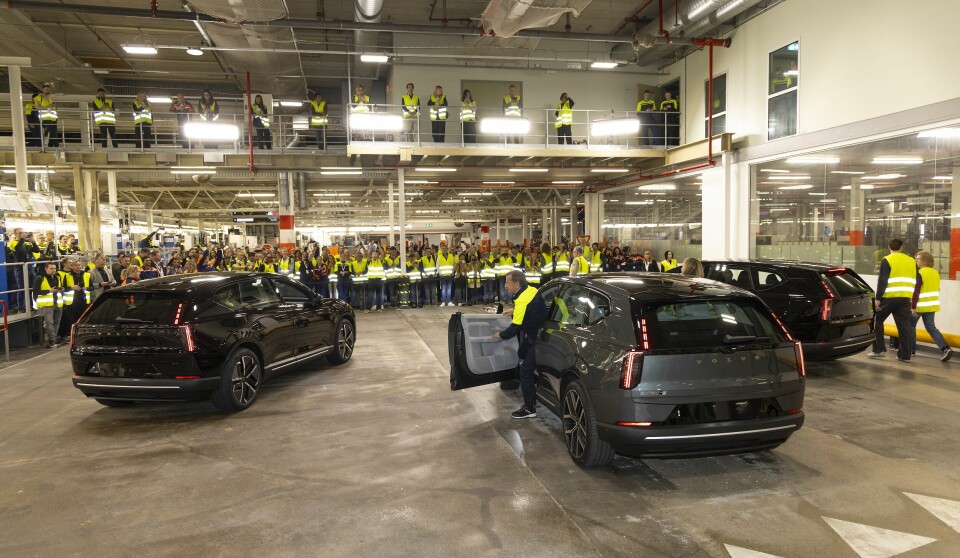
A defining challenge for most OEMs is managing the transition on live production lines. Volvo's experience at Torslanda is a good insight into this challenge precisely because the engineering complexity required to introduce a new BEV platform without disrupting ongoing high-volume production became a competitive cost. Introducing the EX60 alongside the still-selling XC60 required new dedicated facilities – a battery unit assembling a cell-to-body pack, a megacasting facility for large-format aluminium structural components, and repositioned e-motor supply from Automotive Components Floby – all feeding into a common final line. The transformation took around three and a half years in an operating plant, compared to an estimated two and a half years had the factory been a greenfield site.
Rivian's Normal, Illinois facility offers another good example of redeveloping a brown field site for EV production. The launch of the company’s R2 model demonstrates what can achieve when vehicle and production operations are designed concurrently. Rivian built a digital twin of the plant to develop and test the production system virtually while the R2 vehicle was still being finalised.
That parallel development process allowed the team to optimise the entire vehicle lifecycle from initial assembly through to long-term serviceability. The outcome is an assembly process that is leaner at every stage: Rivian eliminated 2.3 miles of wiring from the R2's electronics architecture and reduced part complexity through the extensive use of large, high-pressure die castings, removing thousands of welds and fasteners and cutting vehicle mass by around 2,000 lbs compared with the R1. A structural battery unit, in which the top of the pack serves as the vehicle floor, further consolidates components and simplifies the build.
On the production line, a fully automated hang-on system in the bodyshop ensures precise gap and flush alignment across all exterior panels, an AI-powered robot handles part scanning and placement without manual input, and lineside wireless diagnostics identify and correct faults in real time. The company’s planned Georgia plant will carry these learnings forward and is targeting 300,000 vehicles per year in a restructured single-phase build-out, with start of production expected to begin in late 2028.
The hybrid pivot: Multi-powertrain strategies in North America
North American OEM strategy has diverged sharply from European and dedicated EV manufacturers. A combination of policy change, uneven consumer demand and financial pressure has accelerated a significant pivot toward hybrid and ICE flexibility, with direct consequences for production investment.
Volkswagen ended ID.4 assembly at its Chattanooga, Tennessee plant in April 2026. Chattanooga was among the first Volkswagen facilities anywhere in the world to run two architecturally distinct vehicle platforms on a single production line — building Atlas models on the MQB platform in parallel with the ID.4 on the MEB electric architecture. That investment in inherent production flexibility now allows Volkswagen to consolidate the line without dismantling what came before it. The second-generation Atlas, designated for the 2027 model year, will take over as the plant's primary production mandate, beginning production in summer 2026 with vehicles reaching dealerships in autumn. Volkswagen acknowledged plainly that "the EV market continues to challenge the industry, requiring measured decisions throughout the last few years to navigate this unpredictability."
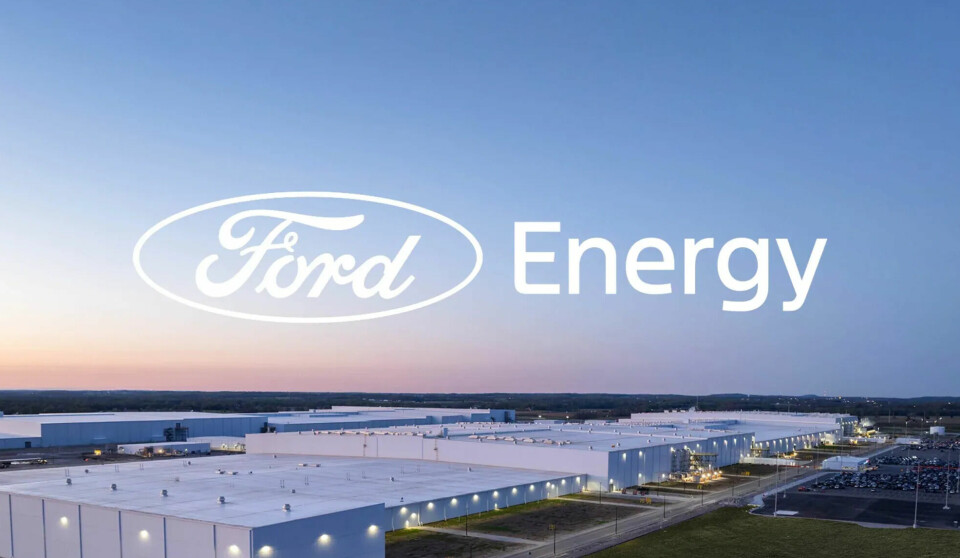
...while cell demand for EVs might be slowing, the Ford is leveraging its existing production investment and supply chain for batteries and refocusing on the growing battery energy and storage market...
Nissan's reversal at Canton, Mississippi was more comprehensive still. Having announced a $500m commitment to transforming the plant into a North American EV hub, Nissan formally cancelled plans to produce fully electric SUVs there and redirected the facility toward a V6-powered revival of the Xterra SUV, expected in 2028 with a hybrid option. A spokesperson confirmed: "Canton does have a future that will include diverse powertrains, but it will not include EVs."
The hybrid Xterra positions Canton as a flexible, multi-powertrain facility rather than a single-technology wager at a moment when policy environments are volatile and technology cycles are shortening – though it comes with the risk of arriving in market after a new generation of lower-priced electric SUVs has reshaped buyer expectations.
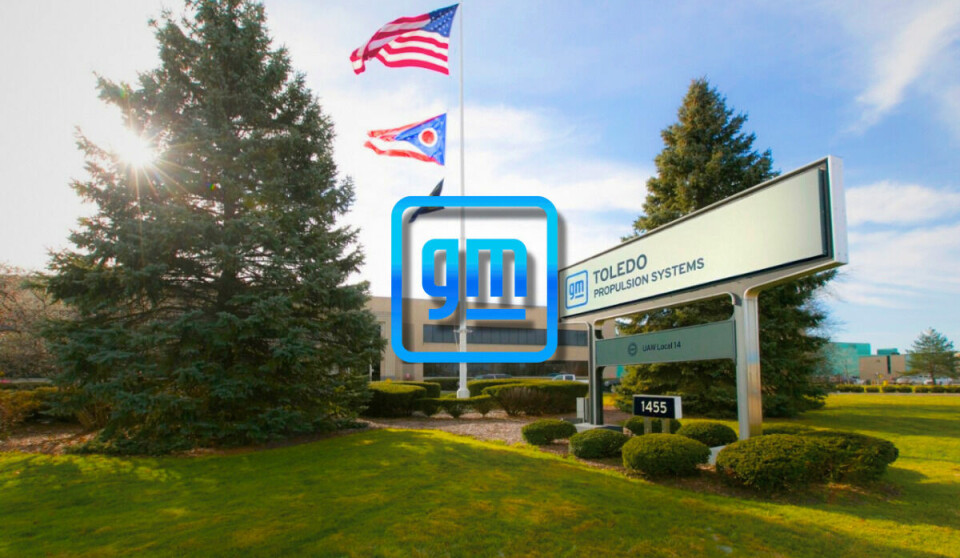
General Motors has reinforced its own multi-powertrain logic through the largest single tranche of powertrain investment. $830m has been directed at three Midwest powertrain plants – Romulus Propulsion Systems, Toledo Propulsion Systems, and Saginaw Metal Casting Operations – as part of a domestic manufacturing total exceeding $6 billion in a year. The investment is concentrated on expanding 10-speed transmission capacity for full-size trucks and SUVs, and on increasing head casting volume for GM's sixth-generation engine family, which will power both next-generation full-size pickups and the Corvette. Romulus alone has now accumulated $600m in transmission-related investment over twelve months, a scale that signals systematic intent rather than opportunistic spending.
Ford is another high-volume manufacturer that has been required to change strategy and pivot production as the EV landscape changes. While the OEM has scaled back its EV production output, it hasn’t given up on this market. This is most notable with the development of its new universal EV platform that aims to deliver a range of affordable EVs to be produced at scale. Ford is also leaning into wider opportunities in the battery segment. So, while cell demand for EVs might be slowing, the Ford is leveraging its existing production investment and supply chain for batteries and refocusing on the growing battery energy and storage market, aimed at industrial processes, homes and data centres. A smart move that should keep it well placed as EV demand increases.
Alliance Manufacturing: China technology, European production
A fourth strategic model is taking shape through OEM alliances that import Chinese NEV platform economics into European manufacturing. Stellantis and Leapmotor have announced an expansion of their joint venture into full-scale European production, with Spain's Zaragoza and Madrid plants at the centre. At the Figueruelas Opel plant in Zaragoza, a new production line will accommodate Leapmotor's C-SUV B10 and a new all-electric Opel C-SUV – the latter engineered to benefit from components sourced through the Leapmotor International joint venture ecosystem, providing a direct pipeline into Leapmotor's cost-competitive Chinese NEV supply chain. The partnership with Leapmotor should enable a development time of less than two years for the new Opel C-SUV, designed in Rüsselsheim with international teams in Germany and China.
The model has commercial momentum behind it: the joint venture has expanded to more than 850 points of sale and service across Europe and logged over 40,000 shipments in 2025. Its manufacturing significance is the cost case it creates – bringing Chinese bill-of-materials economics to bear on vehicles assembled in Europe and compliant with Made-in-Europe regulatory requirements, directly addressing the affordability gap that has constrained BEV adoption across mid-market European segments.
The defining variable: Manufacturing flexibility
What connects these divergent strategies is the common recognition that manufacturing flexibility – the ability to accommodate different powertrains, battery chemistries and output volumes without full capital re-commitment – has become the primary competitive variable in electrification production. Whether that flexibility is expressed through Volkswagen's parallel-platform line at Chattanooga, BMW's local-for-local battery supply strategy, Rivian's digitally twinned factory, or Nissan's pivot to hybrid production at Canton, the underlying logic is the same: in a market where policy, technology and consumer preference are all in active transition, the factories best positioned to survive are those designed to adapt.