
Flexible EV Megacasting


How Volvo casts an EX60 floor in two minutes
At Torslanda, a single aluminium casting replaces hundreds of stamped and welded components on the EX60. Peter Schüler, Megacasting Shop Manager, explains the physics, the process, and the industrial ambition behind Europe's most advanced high-pressure die-casting cell.
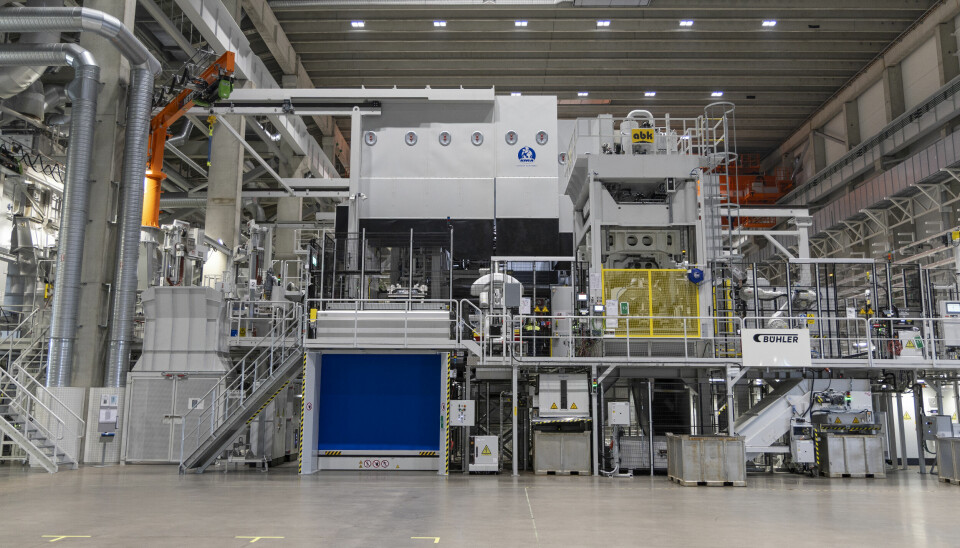
There is a piece of aluminium on a workbench at Volvo's Torslanda plant outside Gothenburg that tells you a great deal about where high-volume electric vehicle manufacturing is heading. It is roughly the size of a car floor, weighs 43 kilograms, and was made in two minutes. Behind it stands the machine that produced it: a high-pressure die-casting press with a locking force of 8,400 tonnes, designed and built by Swiss precision engineering company Bühler to a specification that had never previously existed.
Volvo Cars is the first European OEM to deploy megacasting technology at production scale, and the first customer anywhere in the world for a machine of this particular size, shot weight, and cycle speed.
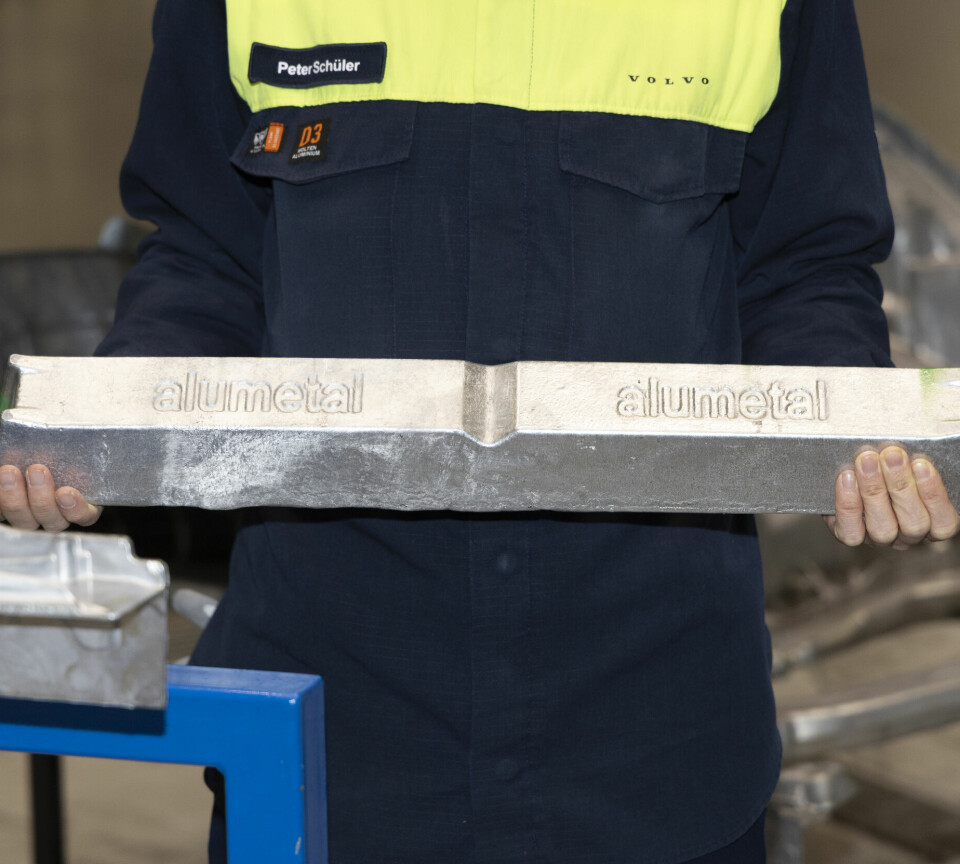
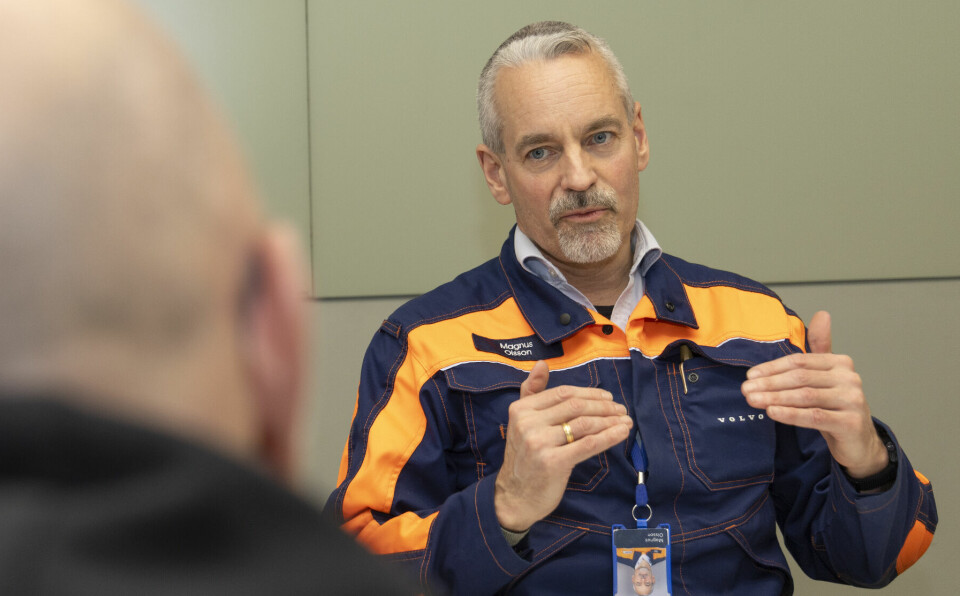
Peter Schüler, Shop Manager for Megacasting at Torslanda, points at the finished part with the merited confidence of someone who spent two years willing it into existence. "After two years, this is the product for startup production. And this, this is the part that will be in your vehicle, that hopefully, you have already ordered."
From coils to casting: why Volvo's stamping era had to be overcome
To understand what megacasting represents, it is first necessary to understand what it replaces. The floor of the current Volvo XC60 is a mosaic of pressed steel components. Raw material arrives as coils, which are cut into blanks and formed into shape under successive press tools.
"On average, to provide a good part historically, we have three and a half press stamping until we get a part," Schüler explains. Each forming step requires tooling, transfer, intermediate storage and inspection before the next stage can begin. Multiple sub-assemblies are produced in isolation and then united in the body shop. "We'd clamp, weld, clamp, weld, clamp, weld."
The result of this traditional approach is not simply a complex process. It is a process that, structurally, creates unwarranted delay. Material accumulates at every intermediate stage. Capacity at one station creates a buffer, waiting on the next. Lead times for a complete floor assembly, measured from raw material to body shop, are counted in months. "And at a certain point you simply have a complex model," says Schüler.
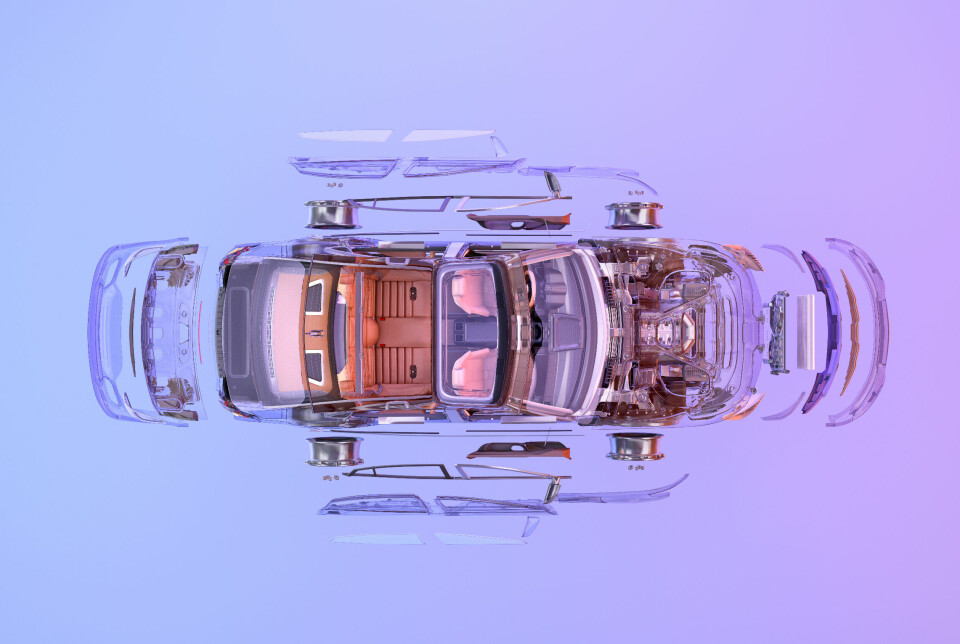
Megacasting collapses this entirely. Where the XC60 requires dozens of pressed and welded components to form its underbody, the EX60's rear floor structure is a single aluminium casting. "So how much time do we save?", asks Schüler, rhetorically. "We go from months, to days." The full value chain, from raw material to body shop delivery, that once demanded months of staging, now runs in a fraction of the traditional production time. "So now you really understand the reduction of the complexity."
The Volvo EX60 is both designed and born electric
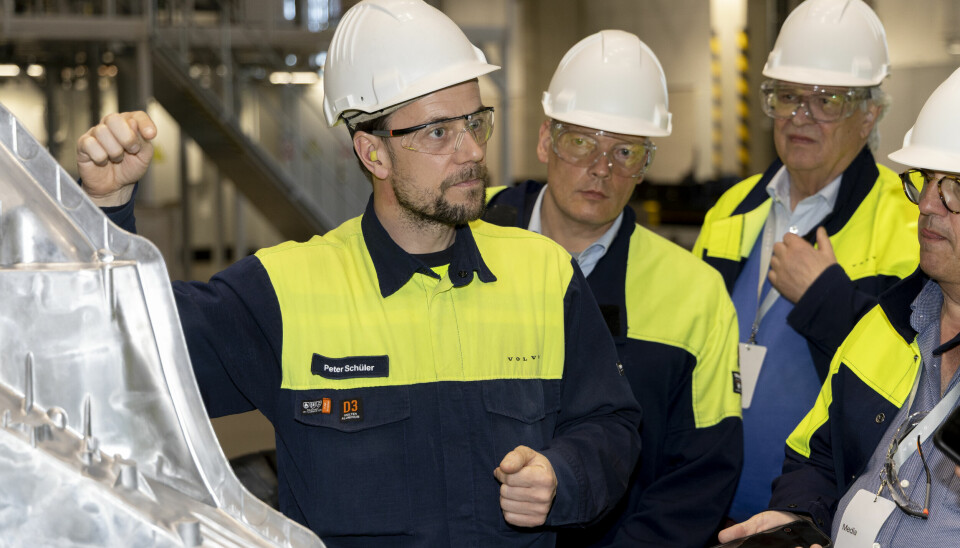
That reduction is as strategic as it is operational. Fewer components mean fewer suppliers, fewer internal logistics flows, fewer inspection gates, and a fundamentally different set of capital requirements. The EX60 was, from the beginning, designed with this in mind. It is, as Schüler puts it, "designed and born electric" rather than adapted from a combustion architecture. Its floor, and the battery it houses, were conceived as a unified system from the first engineering drawing.
The physics of pouring metal at speed
Die casting at this scale is a materials science challenge as much as it is a mechanical one. Aluminium behaves in ways that punish inadequate tooling, particularly at the volumes and injection speeds that automotive production requires. Schüler is precise about the difficulties his team had to master before the machine could run reliably.
"The tricky thing is to move material from A to B. It is to be able to go from wide to small, or wide to small, which slows down the process. The tricky thing is also, that with materials being pressed, you end up with turbulence."
In terms of temperatures, again, we melt at about 700°C-750°C, we inject at 250°C, we trim at about 60°C, and we cool down to 30°C
Turbulence in a die-casting shot means entrapped air. Entrapped air means porosity in the finished part. Porosity means scrapped structural castings and, at automotive volumes - unacceptable waste. Controlling the flow of 93 kilograms of liquid aluminium across the full geometry of a car underbody, ensuring it fills every feature of a die without introducing defects, requires simulation capability that Volvo built up during the early development phase of the programme. "By doing this in the early phase, you really understand the constraints and what the limits are."
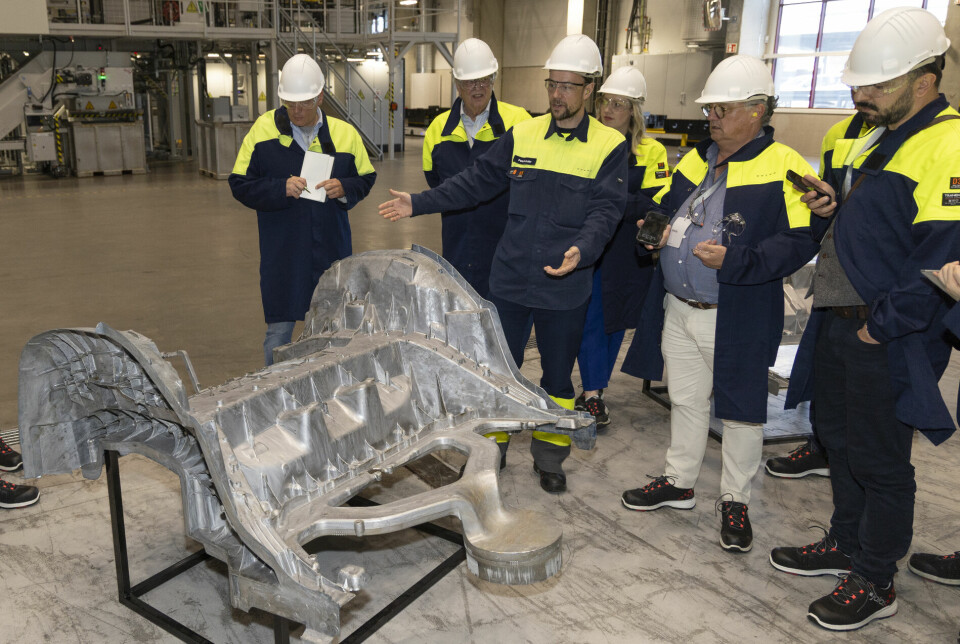
Schüler outlined how the thermal process is precisely staged. "So we buy this material, the raw material. You see the elevator over there? It goes directly up to the melt chain. So in the tower, we tip the material and we start the burners - at 750°C we start to melt. It goes by gravity into a holding furnace.
"The whole purpose of the holding furnace is to make sure that we always can melt at the same pace that we need to shoot." From the holding furnace, material transfers to a dosing furnace matched to the shot rhythm of the press. "And from that point, we pour 93kg into a shot sleeve. By milliseconds, we inject it into the mould and then we start to cool."
Asked to summarise the operating temperatures across the process, Schüler is precise: "In terms of temperatures, again, we melt at about 700°C-750°C, we inject at 250°C, we trim at about 60°C, and we cool down to 30°C."
Consecutive shots are also a prerequisite for consistent quality. "Every time you cool down the die - you're starting from zero. Then you need to reheat the die, and after three shots, you have production parts again. So the availability in the machine is key to be able to achieve this." An idle machine, when restarted, produces non-conforming parts for its first few cycles. Machine uptime, here, is a quality metric as much as a productivity one.
A 93kg shot and a 43kg part: the material arithmetic
The total shot weight is 93 kilograms. The finished floor section weighs 43 kilograms. The difference, approximately 50 kilograms, comprises the runner and gate material trimmed from the casting after cooling. Here lies one of the most decisive advantages of the process relative to conventional stamping. In a traditional press shop, material utilisation sits at around 50 per cent. "This means that when we stamp, 50% goes back to the supplier. We then buy new coils, and then we cut the in gates and out gates. 50% utilisation."
In megacasting, that trimmed material goes nowhere outside the plant. "This goes Aluminium into the bin and directly into the melt chain. It means that you now can understand the complexity reduction of the complete value chain." When the collection bins are full, the elevator that feeds the melt tower is recharged from them.
"So we can utilise every single piece of this material that we have bought." It is a closed internal loop, and the contrast with stamping is stark. In a conventional press shop, scrap metal leaves the plant, must be reprocessed externally, and returns as new coil at cost. Here, the circuit is short and fully internal.
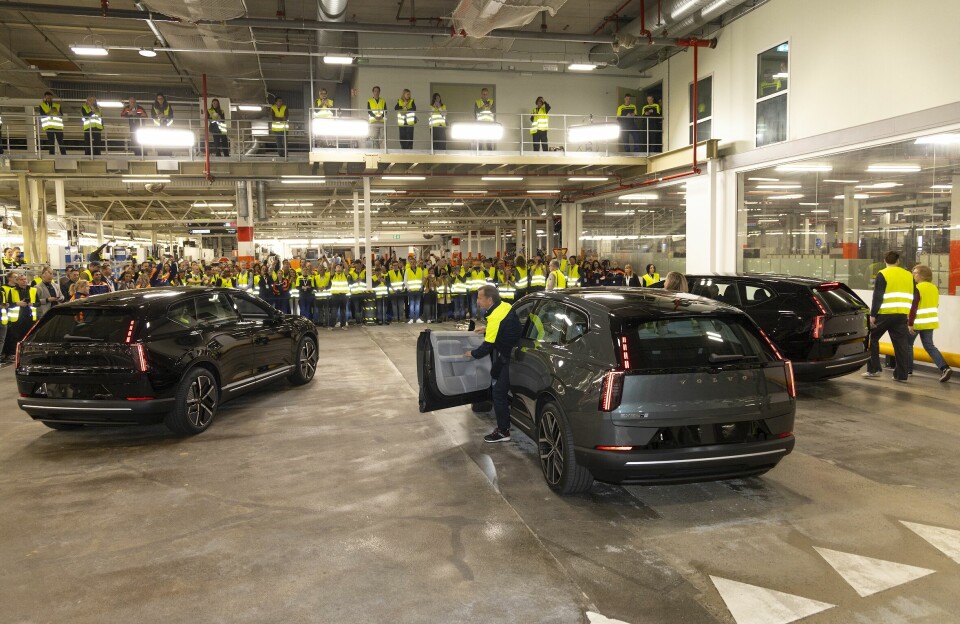
The weight advantage of aluminium over steel is substantial. "Normally we say that this way of producing vehicle parts amounts to just half of the weight of doing it the traditional way. So we save 50% of the weight." For a battery-electric vehicle where every kilogram saved extends driving range and reduces battery sizing requirements, this is not a marginal improvement. It is a structural advantage built into the production method from the outset.
Closed-loop aluminium: from trim scrap back to shot sleeve
Volvo's commitment to recycled aluminium extends beyond the internal circuit of gate material. By the time mass production commenced, half of the aluminium being fed into the melt chain was already secondary material. "So we buy this material... 50% of the material in mass production is already recycled material."
Reaching that position required learning. "From the prototype we're starting to learn only with primary aluminium. But during the journey - where we learnt about the cost, the capabilities then we were able to introduce more recycling materials with the same performance. We need to be able to get a safe cost customer."
The cycle time for all of this is 120 seconds. So every 120 seconds, we pour material into the shot sleeve, and we will get a piece like this - shiny, beautiful one
The mechanical properties of recycled aluminium alloys can vary batch to batch, and managing those variations within the tight tolerances of a structural automotive casting is not a trivial process engineering task. That Torslanda now achieves this at 50 per cent secondary content, without performance compromise, is the product of a carefully staged development sequence. When asked directly whether recycled material presents practical difficulties, Schüler's answer is unambiguous: "No real difficulties."
The sustainability impact of the technology is clearly significant. Primary aluminium smelting is among the most energy-intensive industrial processes in manufacturing. Each tonne of secondary aluminium used in place of virgin material reduces the embodied energy of the casting by around 95 per cent. At the volumes Torslanda will eventually reach, the accumulated effect is consequential.
The Bühler Megacasting Machine Underpinning the Volvo EX60
Cooling, geometry control and the identity of every part
The physical process does not end with the shot. After the casting is extracted from the die, it passes a sensor board that confirms all runner and gate material remains intact and present. The purpose is die protection. "If not, when we close the die, it's at risk of damaging the die." With a die weighing between 100 and 150 tonnes, protecting it from stray metal fragments is a non-trivial concern. Damage to the tooling at this scale means unplanned downtime measured in days, not hours.
Water cooling then brings the casting from 250 degrees Celsius down to 30 degrees. "So it's just normal water," says Schüler. But controlling what happens to a large, thin-walled aluminium structure as it transitions through this thermal range is not simple. "Then the tricky part comes, which is: How do you control the geometry?" The casting is placed in a fixture during final cooling to constrain its geometry and ensure dimensional accuracy before it enters the trim press.
We have never seen a ramp up curve in our company history like this before. So it's really, really steep. So we really need to be on our toes in terms of new technology
After trimming removes the runner system, the part enters a laser marking station. This is the point at which the casting acquires an individual identity. "This is the point it cools as an individual. It's 1, 2, 3, 4," he says, pointing. "All the parameters are stored, from a quality perspective." The laser-engraved data matrix encodes four tracking variables per casting. "I know exactly which shell, I know exactly which die. And we have full tracking for which part goes into which car."
A final surface quality inspection follows, after which the casting travels by autonomous mobile robot to the machining line, and then into body assembly. "The cycle time for all of this is 120 seconds. So every 120 seconds, we pour material into the shot sleeve, and we will get a piece like this - shiny, beautiful one."
The puzzle die: flexibility as Volvo's strategic edge
A megacasting die is not a solid monolith. At 100 to 150 tonnes, it cannot be manufactured or serviced as one. Volvo and Bühler have instead designed the tooling as a modular assembly of interlocking inserts. "Imagine needing to change something in a classic assembly line, or a body line like this. It's difficult - or more or less impossible. Our dies are designed like a puzzle. So if we would like to do further productivity changes, further quality changes, we can activate the engineering loop and just change the puzzle piece. So we're changing an insert, or the capability of the machine, or there is just the changing of the die - and we have a totally new product."
The implications of this are considerable. Traditional press tooling for a stamped underbody involves a web of interdependent tools and fixtures that, once configured for a given part, resists modification. With a puzzle die, individual inserts can be replaced without disturbing the rest of the assembly, and the engineering loop for a geometry change is active rather than reactive.
Die changeovers themselves take two hours. "Absolutely. So we can perform die changes in two hours." Full die replacement for a new model variant requires drawing release and supplier lead time, but the scale of disruption is incomparably smaller than the retooling of a conventional body shop. When asked how long end-to-end die development takes when a new model is required, Schüler is measured: "In that case, I need a new drawing, and I need a die maker, and then it's in. Of course, I need some engineering time to commission it, but it's quite fast compared to having to throw-away a system just like that." End to end, he says, "we're talking about a couple of months."
The SPA3 platform on which the EX60 is based extends this flexibility further. A smaller vehicle, whether a saloon or an estate variant, requires only a new die. "The machine capability are there, the parameter settings are there, and then you just go. So the flexibility is extreme, and totally different." The locking force, thermal management, and parametric knowledge accumulated during the EX60 programme are all reusable.
"We are the only European OEM that are first out to adapt to this. It means a serious advantage." Die longevity adds to the business case: Schüler puts the serviceable life of a die at over 100,000 shots, subject to routine maintenance intervals.
Košice will also receive another megacasting machine, and they will also produce the Spa 3 platform. But they will have another top pad. This means that their floor will be a little bit different, but they will have the same megacasting parts for the back end
Ramping up: the steepest curve in company history
The path from concept to mass production was deliberately front-loaded with learning. "So what we did as a company was to learn early. So we produced this two years ago. So it was the first prototype car that we're building in R&D. After that we have two build series before we were standing here as a ramp up." Two further engineering build series followed the first prototype before the production ramp commenced in earnest.
"The ramp up curve and the order book are massive for this. We have never seen a ramp up curve in our company history like this before. So it's really, really steep. So we really need to be on our toes in terms of new technology."
Managing the ramp required matching workforce capability to machine output in real time. "So the tricky thing in ramping up, is to be able to train all the members. Because we started with 1 shift, then moved up to 2 shifts, and now are at 3 shifts. And like so, we reached the ramp up." A continuous, three-shift operation running technology with no direct industry precedent demands a training structure that cannot simply draw on established practice, and Volvo built that structure from scratch during the ramp-up.
Bühler faced the same absence of reference points on the equipment side. "Bühler has never built a die casting machine of this size, scale, shot weight and speed before. We are first out." For both the machine builder and the customer, the EX60 programme was an exercise in simultaneous development without a template. The fact that Torslanda now runs three shifts at production rate is a measure of how thoroughly that learning was absorbed.
Košice Slovakia, SPA3 and the reach of the technology
Torslanda will not be the only Volvo plant operating megacasting technology. According to Schüler, the carmaker's Košice facility in Slovakia, which will also produce vehicles on the SPA3 platform, is to receive a megacasting machine. The configuration, however, will differ from Torslanda's. "Košice will also receive another megacasting machine, and they will also produce the Spa 3 platform. But they will have another top pad. This means that their floor will be a little bit different, but they will have the same megacasting parts for the back end."
The arrangement illustrates the modular logic underpinning the SPA3 architecture. The machine capability and process knowledge accumulated at Torslanda are transferable across plants; only the tooling changes to accommodate local model requirements. Megacasting, in this sense, is not a facility-specific innovation. It is a platform-level manufacturing strategy.
The floor section that sits beneath the EX60's battery pack is not, in the traditional sense, a floor at all. It is the battery housing
Investment, energy and the industrial logic of born-electric manufacturing
The total capital investment at Torslanda to prepare the plant for EX60 mass production stands at SEK 10 billion (~$1.07bn), of which megacasting is one significant element alongside wider transformation of the body shop, assembly infrastructure, and logistics. "What we invested for all of Torslanda is SEK 10 billion. And megacasting is a part of that. SEK 10 billion in Torslanda to be able to get the EX60 ready for mass production."
Energy is a notable dimension of the operation, and one that has been built into the process design from the outset. The furnaces run continuously at high temperature, and the thermal energy generated does not go to waste. "So this is also an advantage to be able to use the rest of the energy from this process. We can use that for the furnace in the paint shops."
Waste heat recovery of this kind is increasingly a baseline expectation in modern automotive manufacturing; embedding it into a new process from day one reflects a design philosophy that considers the full energy system rather than the individual cell in isolation.
The floor section that sits beneath the EX60's battery pack is not, in the traditional sense, a floor at all. It is the battery housing. "So from a product perspective, at that point you don't see a vehicle floor. Here we don't have a floor. Here we have a battery pack. So this is designed from the beginning as 'born electrical'. So you can see underneath here, that this is where we are assembling the battery. So the floor is the battery. This gives us a major advantage."
That integration would not be achievable with a steel-stamped underbody of conventional geometry and weight. The dimensional precision, surface quality, and structural efficiency that aluminium megacasting enables are not incidental features of the process. They are prerequisites for the packaging logic of the EX60's entire drivetrain architecture.
The manufacturing method and the product it produces are, in this case, genuinely inseparable. What Volvo has built at Torslanda is not simply a faster or cheaper way to make a car floor, but a different industrial logic, applied to a vehicle that required a different industrial logic in order to exist. Every 120 seconds, the machine behind Peter Schüler demonstrates the point.