
Humanoid Robotics
Tesla’s Humanoid claim meets the reality of the line


Emad Mostaque says Tesla will sell more robots than cars within two years. Whatever the number, BMW, Mercedes-Benz and Hyundai are already preparing humanoids for the line, and the harder questions concern tasks, tooling and suppliers.
Emad Mostaque, the former chief executive of Stability AI, made a bold prediction on this week’s episode of the Moonshots podcast with Peter Diamandis. To investors it is a valuation argument. To plant managers it is a production question. He set it out in four sentences. “Tesla sells 1.6 million cars a year. Within two years, it’ll be selling more robots. It makes 100 billion a year. At 10 million, that’s 400 billion of revenue.” Then, for good measure, he added “That’s likely.”
Fellow panellist Salim Ismail, founder of OpenExO, said the boss is staking the business on it. “Elon said 80% of Tesla’s future revenues he expects to come from the robots from Optimus.”

Why the claim exists
The financial backdrop is brief but meaningful to carmaking. Tesla shares trade at 202 times forward earnings, and Gary Black of the Future Fund, one of the stock’s best-known bulls, called them “rich by any standard”. Operating margin has fallen from 16.8% in fiscal 2022 to 4.6% in fiscal 2025, on revenue of $94.8 billion, against consensus of $142 billion for fiscal 2028. Mostaque’s sums imply about $40,000 per robot and roughly four times Tesla’s present revenue.
Others can debate that. What matters to this audience is whether the machines can be built, where they would work, and what they would ask of a plant and its suppliers.
What Tesla has actually built
The best evidence, for or against, perhaps, can be gleaner in Fremont. Tesla ended Model S and X production there in May and cleared the line in 46 days. Optimus production began on a line designed for one million robots a year. Elon Musk warned that output would be slow at first and called this year’s rate “literally impossible to predict”.
The complexity of the situation casts light on the level of caution. Optimus reportedly has more than 10,000 unique parts, none of which has been through mass production. Tesla is using a modular layout with several sub-assembly lines, most of them heavily automated, rather than one linear flow. Robots will be built largely by robots, which is elegant on paper and unforgiving when one station falters. The Model 3 and Model Y lines at Fremont are untouched.
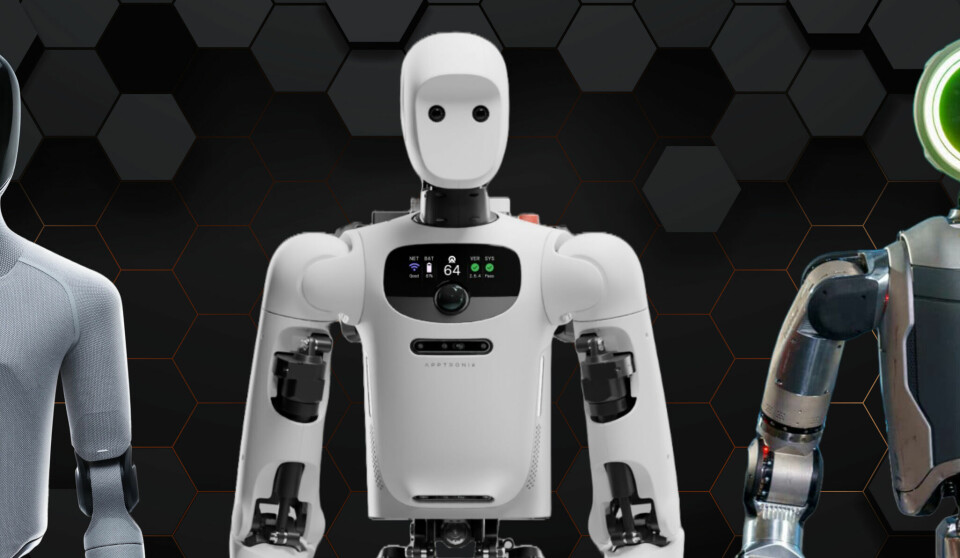
The larger ambition, however, sits in Texas. Jordi Hays noted on TBPN that the new Optimus factory at Giga Texas will have a “targeted capacity of 10,000,000 Optimus per year”, with initial production planned for 2027. Construction trackers suggest the building could run nearly the full length of the main Giga Texas plant, potentially beyond 4,000 feet. Every launch engineer knows that capacity is a ceiling and not an output. More than 1,000 Optimus units are reportedly working in Tesla’s own plants, sorting battery cells, moving parts between stations and carrying out basic quality checks. Most of that work is for learning and data collection rather than productive output.
Humanoids on other carmakers’ lines
Tesla may be the loudest voice, but it is not the first to put a humanoid in a plant. The more instructive trials come from carmakers that bought or partnered for their robots rather than building them.
At BMW’s Spartanburg plant, two Figure 02 robots ran 10-hour shifts on weekdays for 11 months, logging 1,250 hours. Figure describes the work as a “classic pick-and-place task”, loading sheet metal parts into position for welding. BMW says the robots supported the production of more than 30,000 X3s, and the work is physically punishing and demands speed and accuracy. BMW has since moved to trials of the newer Figure 03 in Spartanburg.
At Leipzig it is testing Hexagon’s AEON, a humanoid that rolls on a wheeled platform and works on battery and component assembly. BMW is therefore running two concepts side by side, one on legs and one on wheels. AMS has already reported on BMW’s wider push to put AI to work in production.
Mercedes-Benz has invested in Apptronik and is testing its Apollo robot in German plants. Early tasks under discussion include bringing parts from storage to line workers and inspection. Apollo stands roughly five feet eight inches tall and lifts up to 55 pounds.

And it may not be a stretch to say that Hyundai, in fact, has the most explicit schedule. Boston Dynamics plans to build 30,000 Atlas humanoids a year by 2028 at Hyundai’s Metaplant near Savannah. Parts sequencing is due to begin on the line in 2028, with component assembly to follow by 2030. A Robot Metaplant Application Center is set to train the machines to work alongside people.
The plan has already drawn criticism from Hyundai’s labour union in South Korea, a reminder that deployment is also a workforce conversation.
Where a humanoid fits among the robots already there
Industrial robotics in car plants, many argue, actually dates back to 1961, when General Motors installed a Unimate arm on an assembly line. Six decades on, the body shop belongs to articulated arms and fixed cells, while logistics increasingly belongs to autonomous mobile robots. A humanoid has no case against a welding robot. Its case is for the gaps in between, such as unloading, kitting, line-side delivery and sequencing, where the task was designed around a human body and the plant was built long before anyone imagined a robot colleague. And that is the argument for the form factor.
A humanoid could, in principle, take on such work in a brownfield plant without rebuilding the cell around it. The test is whether it beats the purpose-built alternative for each task, on uptime, safety validation and changeover time. BMW’s decision to trial both a legged and a wheeled machine suggests the industry has not yet decided that legs are necessary.
Even a tenth of Tesla’s announced capacity would mean a million machines a year
AMS has asked whether the wire harness has finally become robot-ready, and the same question applies in reverse. A humanoid is a dense bundle of cables, sensors and motors, and every connection must be routed, terminated and tested. AMS has also covered Hyundai Mobis’s automated wire harness assembly pilot, a sign that the industry is still working out how to automate the very work a humanoid multiplies.
Scale is a supply chain problem
Mostaque’s threshold means Tesla would have to build more than 1.6 million humanoids in a single year. Hyundai’s plan for 30,000 Atlas units is already ambitious for a new product, and Mostaque’s figure is more than fifty times larger. Tesla took roughly a decade to move from the first Model S deliveries to a million vehicles a year, and it did so with parts the industry already understood.
And component considerations sharpen the point on this. One report puts the third-generation Optimus at around 50 actuators. If that holds, 1.6 million robots would need some 80 million actuators a year, and 10 million robots would need 500 million. Whether precision motion hardware, harnessing, and electronics can be sourced at that volume, and held to automotive quality levels, is a question that no forecast has materially been able to answer, yet.
Articles Curated Just For You
-

Tesla’s Humanoid claim meets the reality of the line
-

Ford aims to award up to $1bn to suppliers via Michigan LIFT
-

The solid-state battery Maxell wants factories to stop thinking about
-

Has the wire harness finally become robot-ready?
-

Humanoids are on the factory floor. But who controls access?
-

Why factories need an AI orchestration layer, not more apps
-

Shanghai Electric expands AI robotics for industrial manufacturing
-

Hyundai reshapes vehicle production at Metaplant America
-

The dunnage dilemma: why the bin is still winning in automotive production
-

Mercedes production chief, Michael Schiebe, backs AI and flexible EV strategy
What plant managers should watch
But three signals will say more than any prediction. The first is how fast Fremont moves from starting production to making meaningful quantities. The second is whether Giga Texas holds its 2027 start. The third is whether the carmakers now running pilots publish what the robots actually did, for how many hours - and at what failure rate.
Mostaque may be right, early, or even just incorrect by a wide margin. But the more useful lesson is already on the floor at Fremont, where a carmaker cleared a vehicle line in 46 days to make room for something else. Even a tenth of Tesla’s announced capacity would mean a million machines a year, built on tooling that did not exist, even two years ago. So for carmakers, perhaps the sensible time to ask what a humanoid needs from your plant, is before the first one is even delivered.