
Harness Automation
Has the wire harness finally become robot-ready?


Wire harness production remains one of the most manual areas in automotive manufacturing. Automated pre-assembly, zonal E/E architectures and new product designs are beginning to change that.
Body shops, paintshops and battery production can reach high levels of automation. Wire harness production is different. Flexible wires, multiple branches, small connectors and very high variant complexity still make the harness a difficult product for machines to handle.
That is why the industry is changing its approach. Instead of trying to automate a harness that was originally designed for human hands, engineers are increasingly looking at how the product itself can be made easier to grip, route, inspect and assemble by machines.
Why wire harnesses are so difficult to automate
The problem starts with the physical behaviour of the product. A wire is flexible and changes shape when it is picked up or placed down. Human operators compensate for this naturally. Robots need much more predictable positions and repeatable conditions.
A good example is the wire harness automation project developed by Nissan and the University of Tennessee. The team demonstrated the repeated insertion of a 1.6mm terminal into a 1.8mm connector opening. But the task becomes much harder as the connector fills up and the robot has to place further wires into increasingly restricted space.
Aaron Hall, Industrial Strategy Engineer at Nissan, describes the problem clearly: “A wire is not a rigid structure like you would see in body assembly or general assembly. It’s unpredictable and almost uncontrollable unless you have a grasp on the entire thing.”
That is why better robotics alone will not solve the problem. Connector geometry, wire routing and the production sequence all have to become more automation-friendly.

Automation is moving into pre-assembly
A more realistic route is to automate smaller parts of the harness before final assembly. Instead of trying to build a complete vehicle harness in one highly automated process, manufacturers can move more work into automated pre-assembly.
Christian Infanger, Director Product Group Harness Assembly at Komax, describes today’s bottleneck clearly: “The current final assembly is labour-intensive and prone to errors.” Processes such as cutting, crimping, twisting and terminal insertion are already far easier to automate than the final assembly of a complete harness. Taping, clip mounting and automated routing are increasingly being added as well.
A One-Piece-Flow can support that shift. In simple terms, the sub-harness moves through several process steps without being repeatedly stored, picked up and repositioned. That reduces handling, makes it easier to react to engineering changes and can lower the amount of testing required at the end of the line.
The benefit is not only lower labour input. Flexible production cells can also respond more easily to changing volumes and new harness variants.
What Next2OEM has demonstrated
The potential of a different approach is visible in the research project "Next2OEM". The project looks beyond a single robot or production station. Its aim is to automate the complete chain more consistently, from wire processing and contact insertion through testing and pre-assembly to the later integration of the harness into the vehicle. The key principle is that harness, process and production equipment are developed together from the start.
Ingo Busche from Audi puts the current starting point at no more than around 10% automation in large parts of manufacturing and assembly. In the project demonstrator, the result was very different: “We have achieved around 90% automation in manufacturing and production or assembly.”
The important point is not simply the number. The project reached this level because the product itself was designed to work with the automation system. Connectors had to be accessible, wires needed more predictable routing and the process had to be clearly defined for machines. That is where Design for Automation becomes critical. The harness cannot simply be handed over to manufacturing once the electrical design is finished.
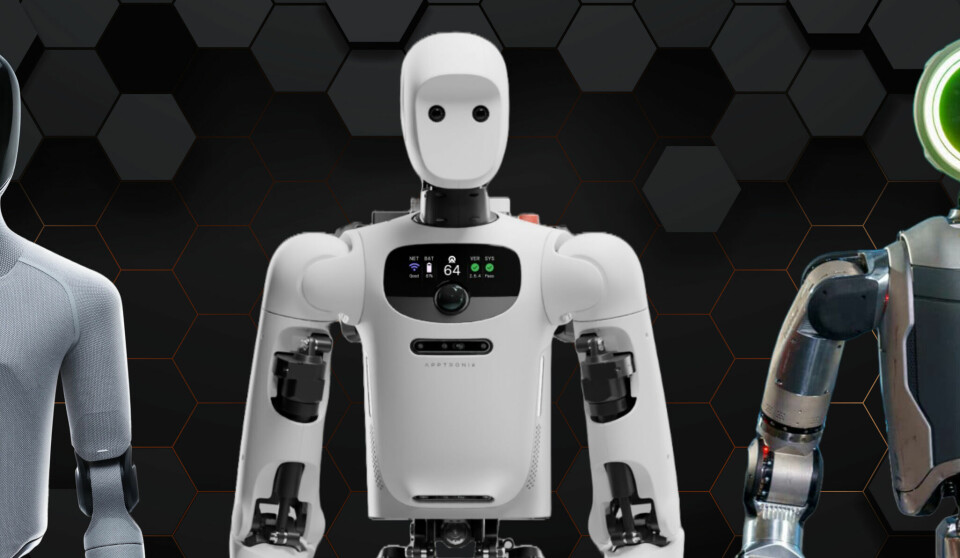
This direction is also supported by Svenja Müller and Marcella Oberst from TE Connectivity, who see “end-to-end automation of wire harnesses” as one of the industry's major challenges over the next few years. They argue that both harness production and vehicle assembly need to become more modular and easier to automate.
Zonal architectures could make the task easier
Vehicle architecture itself can also help. In a traditional E/E architecture, long wiring runs connect components and ECUs across large parts of the vehicle. Zonal architectures organise this differently. Components connect to a nearby zonal controller, which then links into the vehicle's central computing structure.
For the harness, that can mean shorter wiring routes and smaller sub-harnesses. BMW's Neue Klasse shows how far this can go: its zonal wiring architecture uses 600 metres less wiring and reduces harness weight by around 30%. BMW also divides the harness into multiple sections to make installation easier and more ergonomic.
That matters for automation. A compact sub-harness is easier to grip, transport and position than a large harness spanning much of the vehicle.
The underlying aim is to simplify the EDS, or Electrical Distribution System. This does not mean removing electrical functions. It means structuring the physical network of wires, connectors and distribution points more clearly, with shorter routes, fewer unnecessary interfaces and more manageable modules.
Join us at the AWH & EDS Event
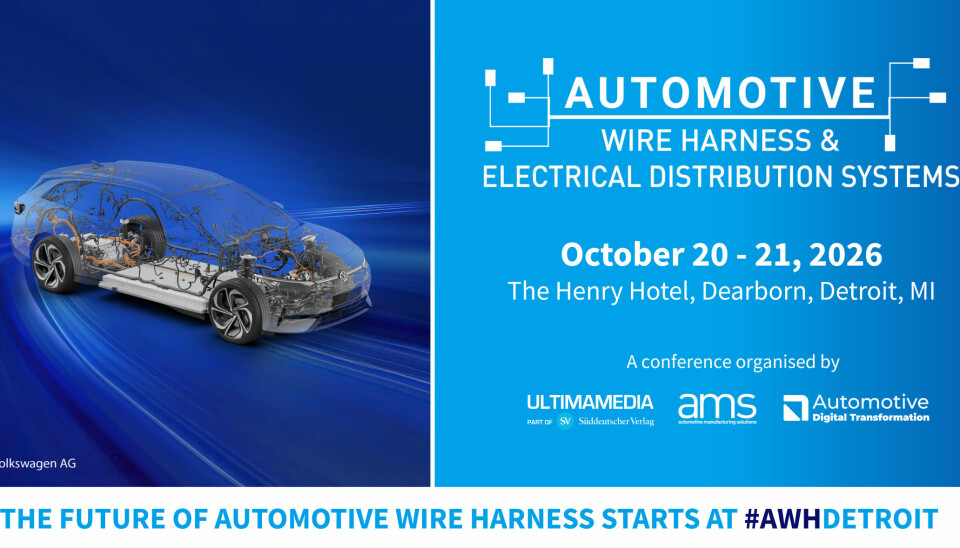
The conference brings together OEMs, Tier 1 and Tier 2 suppliers, wire harness developers, connector manufacturers, materials experts and engineering technology providers.
Quality becomes part of the automated process
Automation can also move quality control further upstream. A poor crimp, an incorrectly inserted terminal or a damaged wire can become expensive if the problem is discovered only at end of line or after installation in the vehicle. Automated equipment can capture process data directly, monitor insertion steps and use cameras to confirm whether components are in the correct position.
That fits a wider shift in automotive manufacturing towards AI-supported quality control, where cameras, sensors and digital inspection systems are being used earlier in the process rather than only during final inspection.
For harness production, however, vision and AI are not a substitute for good product design. The more predictable the connector, wire position and assembly sequence are, the easier it becomes for automated inspection to work reliably.

The robot also needs the right data
Physical design is only one side of the problem. Automated production also needs to know the exact state of each harness. As the product moves through manufacturing, more information is added: terminals are crimped, connectors populated, clips installed and tests completed. That information needs to move with the product.
In Next2OEM, the digital state of the harness was therefore carried through the process along with the physical component. For one centre-console harness with only 85 bill-of-material lines, the digital twin contained around 3.8 million nodes and 7.5 million edges linking product, process and machine data.
This reflects a broader manufacturing trend. Audi is already using digital twins linked with live factory data to make automated production more transparent and adaptable. For wire harness automation, that context is essential. A robot should not only recognise the component in front of it. It also needs to know which production steps have already been completed and what should happen next.

The harness has to move closer to the robot
The path to higher automation therefore does not depend on one breakthrough technology. Robots are improving at handling flexible wires. Vision systems are getting better at detecting position and variation. Digital twins are providing more context. But the bigger opportunity lies in making the task itself easier.
That means smaller sub-harnesses, clearer interfaces, automation-friendly connectors and continuous digital product data. Zonal architectures can support this shift if they genuinely reduce physical complexity.
The gap between very low automation levels in parts of today's harness production and around 90% in a demonstrator shows the potential. It also shows the condition for getting there: the wire harness will not become robot-ready simply by asking the robot to adapt to a product made for human hands. The product itself has to be designed for automated manufacturing.