Intelligent Design For Manufacture


Physics-aware AI embeds production constraints into design
As automotive manufacturers face unprecedented pressure to compress development cycles, a new generation of AI tools is forcing a fundamental rethink of how production and design teams collaborate from the earliest stages
The automotive industry has spent four decades perfecting a workflow that is now proving inadequate. Computer-aided design and simulation replaced physical prototypes in the 1980s, allowing manufacturers to explore perhaps 50 design iterations annually rather than five. Yet even this digital methodology has become a constraint. Each crash simulation consumes a full day of computing time, while each aerodynamic analysis ties up expensive resources. The result is that engineering teams, despite access to sophisticated software, remain severely limited in how many design variations they can explore before production deadlines force decisions.
This bottleneck matters more now, than at any point in recent memory. Chinese manufacturers are bringing new vehicle programmes to market in roughly 120 weeks, while European and American OEMs typically require 200 weeks or more. The gap reflects fundamentally different approaches to how design decisions are made, validated and translated into manufacturing reality.
There's never been greater pressure, especially if we think about the automotive industry, to innovate faster...On the other hand, you're seeing that the same companies have been building cars, in almost the same way - for the past 30 years
Thomas von Tschammer, co-founder and US General Manager of Neural Concept, a Swiss firm working with approximately 70% of global automotive OEMs including General Motors, Renault, and tier suppliers Mahle and OPmobility, frames the turning point bluntly. "There's never been greater pressure, especially if we think about the automotive industry, to innovate faster," he observes. "On the other hand, you're seeing that the same companies have been building cars, in almost the same way - for the past 30 years."
What is emerging through these deployments is not simply faster simulation. Rather, it is a rethinking of when and how manufacturing constraints enter the design process. Instead of discovering stamping complications or tooling challenges after concepts have solidified, these limitations now shape initial exploration. The implications reach beyond cycle time reduction to fundamental questions about how design and production engineering actually collaborate.
Development Cycle
Transformation
The AI Revolution in Automotive Design
The decades-old simulation bottleneck
Understanding why simulation has become a constraint requires examining what it replaced. "Eighty years ago, if we were designing vehicles, we were designing them through prototypes," von Tschammer explains. "You would build a prototype, crash it against a wall, and evaluate if the results were good enough, and if the car was safe enough. Then you would iterate on your prototype and build a new one."

Since then, the shift to numerical simulation represented genuine progress. Physical prototypes are expensive, time-consuming and limited. Digital models can be modified rapidly and tested under varied conditions, yet the limitations have become increasingly apparent. "A single crash simulation takes at least a day to be computed, which highly limits the number of variations or designs the same engineering teams can explore," von Tschammer notes.
For complex validation requirements, particularly those involving multiple scenarios, the computational expense becomes prohibitive. This becomes apparent when we examine pedestrian safety; a heavily regulated aspect of vehicle development, and one with clear ramifications for vehicle production.
Manufacturers must test numerous impact locations across the bonnet, for example, evaluating both adult and child pedestrian scenarios at various speeds and angles. Each design iteration needs to be validated against this entire matrix, and accordingly, the computational burden needed rapidly multiplies.
The consequence is that design exploration remains narrowly bounded. Engineers iterate within familiar territory, making incremental adjustments to proven concepts rather than discovering potentially superior solutions. Manufacturing considerations, when they arise, typically trigger expensive redesigns rather than informing initial exploration. This sequential approach - design followed by manufacturing validation followed by redesign - consumes time, and cost, and frequently results in compromised solutions that satisfy neither performance nor optimal production objectives.

Manufacturing constraints as design inputs
Design for Manufacture has long advocated bringing manufacturing knowledge into the design process earlier, or put another way, for design and manufacturing departments to collaborate from the outset. The reality, however, has been that sequential workflows defeat this intent. Designers propose concepts optimised for performance or aesthetics, while manufacturing engineers identify production challenges. The design then returns for modification - and the cycle repeats until acceptable compromises are reached between the different departments.
This sub-optimal sequence reflects nothing less than practical constraints for both production and design. Technology, as we know, is for many processes in automotive development, a great enabler. Yet traditional CAD (Computer-Aided Design) and simulation tools do not facilitate real-time collaboration across disciplines. Evaluating whether a proposed design can be stamped economically, whether it requires prohibitively complex tooling, or whether it will generate excessive scrap rates, requires time-consuming analysis. By the time manufacturing input arrives, substantial design effort has been invested in directions that may prove impractical to the entire project.
What changes when AI models can evaluate thousands of design variations daily, is the economics of exploration. Manufacturing constraints can be specified as explicit rules that candidate designs need to satisfy. "The engineers can provide the model with explicit manufacturing constraint rules," von Tschammer explains. "For instance, they might specify that they don't want a given thickness to be less than X millimetres, or they don't want a radius to be more than Y millimetres. The model, while generating designs, will ensure that all of that is being validated."
This inverts the traditional sequence. Rather than discovering manufacturing challenges after committing to a design direction, engineers explore only the subset of possibilities that satisfy production constraints from the outset. The design space, accordingly, shrinks - but what remains, represents genuinely viable options.

The approach depends on training AI models directly on three-dimensional geometry rather than extracted parameters. Von Tschammer highlights that a thickness measurement cannot capture how components interact spatially, how stress concentrates at specific junctions, or how features influence manufacturing feasibility. "Because we're working with parameters, we don't have the information on the entire 3D geometry," he says. Geometry-learning models capture these spatial relationships, including how seemingly minor features affect both performance and manufacturability.
In General Motors' pedestrian safety application, using Neural Concept’s platform, this distinction proved consequential. The AI model successfully learned how components beneath the bonnet, the windscreen wiper motor, latches and structural reinforcements, influenced crash dynamics without requiring engineers to manually specify which features mattered. The model learned from historical simulation data, which spatial arrangements correlated with desired outcomes.
This capability naturally impacts vehicle manufacturing considerations, since stamping operations, injection moulding and other forming processes are deeply geometric: whether a part can be manufactured economically depends on considerations such as radii, draft angles, undercuts and material flow paths; all inherently spatial considerations.
The Workflow
Revolution
From Sequential Bottlenecks to Simultaneous Collaboration
Design Phase
Performance-optimized concepts created in isolation without manufacturing input
Mfg Review
Production issues discovered: too complex to manufacture economically
Redesign
Compromised solution to satisfy conflicting requirements from both teams
Real-Time Co-Design Platform
The stamping complexity equation
The implications for manufacturing process optimisation are direct. Stamping involves sequential forming operations. Part geometry determines how many steps are required, which in turn drives tooling cost, cycle time and scrap rates. A design requiring five forming operations costs substantially more to tool and produces slower throughput than one achievable in three operations, assuming equivalent performance.
Historically, discovering these differences required detailed manufacturing engineering analysis, typically conducted after initial design concepts had been established, and so the feedback loop was slow. Design iterations that inadvertently increased stamping complexity were identified too late in the process, triggering redesigns that consumed time and sometimes forced unnecessary compromises.
"What the engineers can do is provide some rules and parameters, such as, 'I want to minimise the number of steps in my stamping process,'" von Tschammer notes. "Then the AI model will explore variations with this objective in mind, to simplify the whole manufacturing workflow." This allows manufacturing process implications to inform design exploration from the outset rather than constraining it retrospectively.
The practical impacts of this ripple out beyond individual components. For example, a body structure comprises dozens of stamped panels, each with its own manufacturing complexity. Small geometric changes that simplify forming operations, when aggregated across an entire vehicle programme, can substantially reduce total tooling investment and improve production throughput. The challenge is discovering these opportunities through manual iteration, while systematic exploration makes them visible, says von Tschammer.
Whether this actually translates to simpler, more economical tooling in production depends on how thoroughly manufacturing constraints are specified upfront. If critical limitations are omitted from the rules governing design exploration, the AI model will generate options that appear viable but prove problematic when detailed tooling design begins. The approach enables better integration of manufacturing considerations, but it does not eliminate the need for deep manufacturing-engineering expertise. That knowledge must inform the constraint specification that guides this exploration throughout the process.
We're seeing a move from a world where design iterations and product development were mostly led by engineering intuition and experience that was embedded in a few highly skilled individuals within the company, to a world where the same engineers can now take much more data-informed design decisions and trade-offs
Lightweighting meets production reality
Electric Vehicles present a particularly acute challenge where design objectives and manufacturing constraints intersect. Battery packs add substantial mass, degrading range and performance unless offset elsewhere. Yet manufacturing processes impose limitations that can conflict with aggressive lightweighting, stamping operations become more difficult as parts become thinner or geometrically extreme, and material savings that compromise formability or require additional process steps may deteriorate manufacturing economics despite reducing vehicle weight.
The trade-offs are not simple. "Many times the objectives for the engineers will be to explore, for the same requirements, how much lighter the same design could be," von Tschammer explains. "We see a lot of objectives in terms of lightweighting these cars, but also in simplifying the tooling." And these objectives frequently compete. A lighter design might require additional forming steps or tighter process controls, increasing manufacturing cost and complexity.
Traditional approaches to navigating these trade-offs involve sequential optimisation. Engineers design for performance, then modify for manufacturability, then iterate. The process is slow and often fails to identify optimal solutions because the explored design space remains limited.
By training models on both structural mechanics and manufacturing process simulations, it becomes possible to map the trade-off frontier systematically. Engineers can see precisely how much weight must be added to reduce stamping complexity by a given amount, or how much manufacturing cost increases to achieve a specific weight target.

This visibility does not resolve the trade-off, but it does make the decision explicit rather than implicit. A manufacturing engineer can articulate precisely what production penalty a particular lightweighting strategy entails. A design engineer can quantify exactly how much structural performance must be sacrificed to simplify tooling. And in this manner, the negotiation becomes data-informed rather than intuition-based.
For components where small geometry changes have disproportionate manufacturing implications, this systematic exploration proves particularly valuable. A slight modification to a radius might enable single-stage forming rather than requiring progressive dies. The performance impact might be negligible, but the manufacturing cost reduction, substantial. Discovering these opportunities through manual iteration is improbable given the vast number of possible geometry variations, and again, systematic exploration surfaces them.
When collaboration becomes simultaneous
General Motors' deployment in pedestrian crash safety illustrates how these tools alter cross-functional workflows. Pedestrian safety, governed by stringent regulations varying between markets, demands extensive validation. More than 100 impact locations on the bonnet must be tested under different scenarios. Each design iteration historically required hundreds of finite element simulations.
The company trained deep learning models on 11 historical vehicle programmes - equating to approximately 1,100 validated impact scenarios. The resulting models achieved prediction accuracies within 5% to 10% of full-fidelity simulations. The speed improvement is substantial, as again, what previously required days now requires only seconds; yet von Tschammer emphasises that acceleration alone misses the more significant shift.

"Thanks to these workflows,” he says, “they can iterate in real-time in front of the same screen, looking together at different scenarios, design concepts, and trade-offs to drastically accelerate these cycles," he observes. This synchronous collaboration between often-siloed teams represents a departure from sequential handoffs. Rather than designers proposing concepts that safety engineers later validate or reject, both groups are able to explore options simultaneously.
The same principle applies to design and manufacturing collaboration. When evaluating whether a particular design can be stamped economically no longer requires days of manufacturing engineering analysis, when the implications of geometry changes on tooling complexity are visible immediately - the nature of cross-functional dialogue changes. Disagreements about whether design intent or manufacturing feasibility should take precedence can be resolved with direct evidence rather than prolonged negotiation.
"We're seeing a move from a world where design iterations and product development were mostly led by engineering intuition and experience that was embedded in a few highly skilled individuals within the company, to a world where the same engineers can now take much more data-informed design decisions and trade-offs," von Tschammer notes.
This, of course, also inherently democratises decision-making. Junior engineers with access to comprehensive trade-off data can contribute meaningfully to discussions previously dominated by senior experts with decades of tacit knowledge.
We work today with about 70% of the global OEMs through different stages, as well as with many Tier 1 and Tier 2 suppliers
The shift also changes what constitutes valuable engineering time. "What we're seeing is that they will spend much less time on lower-added-value tasks, setting up complex CAD workflows and CAE (Computer-Aided Engineering) workflows, and much more time on high-added-value tasks, which is basically applying their domain expertise to take the right decisions," von Tschammer explains. For manufacturing engineers, this means less time configuring simulations of forming operations and more time interpreting results and guiding design direction based on production knowledge.
Tier suppliers navigate the transition
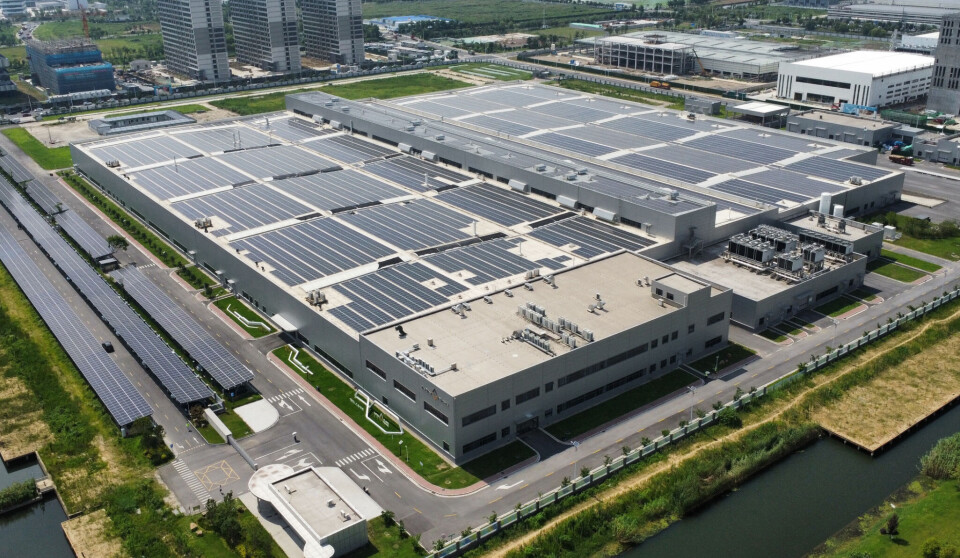
Whilst General Motors represents the most publicised deployment, tier suppliers are exploring similar capabilities. Mahle (a German automotive parts manufacturer specialising in engine systems, filtration, and thermal management), and OPmobility (a French automotive supplier focused on intelligent exterior systems, clean energy, and front-end modules), have adopted these approaches - as have other suppliers less willing to discuss specifics publicly.
The applications vary. Battery thermal management, electric motor optimisation and component design each present distinct challenges where performance and manufacturability need to be balanced.
"We work today with about 70% of the global OEMs through different stages, as well as with many Tier 1 and Tier 2 suppliers," von Tschammer confirms. The breadth suggests genuine utility rather than isolated success in a single application. Yet it also reveals various maturity levels. Some organisations are using these tools in production workflows, while others are experimenting cautiously, validating predictions against conventional methods before committing to AI-informed decisions.
This tier supplier adoption pattern, when viewed from a certain angle, also reveals changing competitive dynamics. Suppliers historically competed on manufacturing excellence, cost efficiency and quality. As design becomes increasingly software-mediated, and as AI tools enable rapid exploration of design spaces previously impractical to navigate, competitive advantage may shift toward analytical capability. Suppliers who can systematically optimise designs for both performance and manufacturability are likely to gain ground on those relying on traditional iteration.
"These will be engineers more familiar with programming languages, more familiar with interacting with AI models, while keeping very strong foundations in physics and domain expertise," von Tschammer notes.
Yet whether automotive producers, particularly those with ageing engineering workforces and established cultures, can execute this skills transition represents a genuine challenge. Universities are not yet systematically teaching AI-augmented engineering workflows. On-the-job training faces resistance from engineers comfortable with established methods.
There is also the question of where genuine manufacturing expertise resides in this new workflow. Manufacturing engineering has traditionally combined analytical knowledge with tacit understanding developed through years of shopfloor experience. A veteran manufacturing engineer knows not just the theoretical limits of a stamping operation but the practical realities of how tools wear, how operators compensate for process variation, and how slight material inconsistencies propagate through entire production runs. This knowledge is difficult to codify - nearly impossible to capture in simulation models - and yet critical for making robust manufacturing decisions.

If AI models trained on historical simulation data become the primary basis for design decisions, there is a risk that this tacit knowledge atrophies. The designs may satisfy all explicit constraints yet prove problematic in production for reasons not captured in the training data. Maintaining the feedback loop from manufacturing experience to design improvement, then, becomes critical. The technology enables better integration of manufacturing constraints into early design exploration, but it does not eliminate the need for deep manufacturing expertise guiding that exploration.
The automotive industry's experimentation with physics-aware AI for design optimisation symbolises (and activates) a genuine shift in capability. Manufacturing constraints can now inform initial exploration rather than triggering late-stage redesigns; cross-functional collaboration can occur in real-time rather than through sequential handoffs, and design spaces previously too large to navigate systematically become tractable. Targets of 30% to 50% development cycle reductions are being pursued seriously, says von Tschammer.
Yet capabilities and outcomes are not synonymous. Whether this technology actually delivers depends on organisational factors, as much as technical ones. Engineering skill requirements are changing, so naturally, automotive decision-making processes must adapt to this swift development, and the integration between AI-accelerated exploration and manufacturing reality requires continuous validation rather than blind trust. The early adopters, General Motors among them, are placing consequential bets on a workflow that looks fundamentally different from how vehicles have been developed for many decades.