
Physical AI Arrives
BMW brings humanoid robots to European production

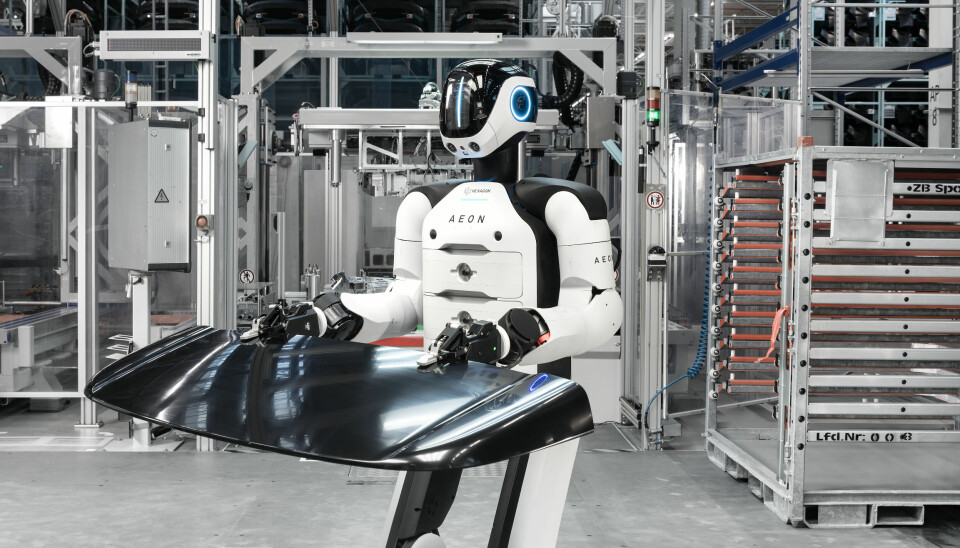
BMW Group's Leipzig plant becomes the first in Europe to host a humanoid robot pilot, as the German automaker scales lessons from Spartanburg and partners with Hexagon Robotics to test the AEON robot across battery assembly and component manufacturing.
For years, humanoid robots have existed in the imagination of automotive engineers as a distant promise, compelling in theory but frustratingly elusive in practice. BMW Group has now made a decisive move to convert that promise into industrial reality. On 27 February 2026, the company confirmed that it is deploying humanoid robots at its plant in Leipzig, Germany, marking the first time Physical AI of this kind has entered a European automotive production environment. The announcement is not merely a headline. It is the culmination of a structured, multi-year strategy to embed adaptive, AI-driven robotics into the fabric of BMW's global manufacturing network.
From Spartanburg to Saxony
The Leipzig pilot did not emerge in isolation. Its intellectual and operational foundations were laid in Spartanburg, South Carolina, where BMW Group completed what it describes as the world's first deployment of humanoid robots inside an active automotive manufacturing plant. In collaboration with Figure AI, the Figure 02 robot was introduced into the body shop in 2025, a deliberate choice of location given the area's already-high degree of automation and its workforce's familiarity with integrating new technologies.
The results were, by any measure, substantial. Within ten months, Figure 02 supported the production of more than 30,000 BMW X3s, operating Monday to Friday in ten-hour shifts. Its specific task was the precise removal and positioning of sheet metal parts for welding, a process that demands both speed and millimetre-level accuracy. Over approximately 1,250 operating hours, it moved more than 90,000 components and took around 1.2 million steps. The transition from laboratory training to stable shift operation, project teams noted, was faster than anticipated.
Michael Nikolaides, Head of BMW Group Production Network and Logistics, drew the lesson plainly: "Our aim is to be a technology leader and to integrate new technologies into production at an early stage. Pilot projects help us to test and further develop the use of Physical AI – AI-supported, adaptive robots – under real industrial conditions. The successful initial deployment of humanoid robots at our BMW Group plant in Spartanburg, USA, proves that humanoid robots can function not only under controlled laboratory conditions, but also in an existing automotive manufacturing environment."

The architecture of the AEON deployment
The robot at the centre of the Leipzig pilot is AEON, developed by Hexagon Robotics, the humanoid robotics unit of Hexagon, headquartered in Zurich. Hexagon itself is a long-standing partner of BMW Group in sensor technology and software, with net sales of approximately €5.4 billion (around $6.4 billion). Hexagon Robotics unveiled AEON in June 2025, and by December of that year, the robot had already completed its first test deployment on the Leipzig shop floor.
AEON's design lends itself to the kind of multifunctional use BMW Group is pursuing. Its human-like body can dock a wide variety of hand and gripping elements or scanning tools, and it moves on casters, giving it the dynamic mobility needed to operate across different production stations. During the pilot phase, it will be deployed in the assembly of high-voltage batteries and in component manufacturing for exterior parts.
A further test deployment is planned from April 2026, ahead of the full pilot phase beginning in summer 2026. BMW Group's structured evaluation approach dictated the path: theoretical assessment, laboratory testing using real production use cases, first deployment under live conditions, and then the pilot phase proper.
Arnaud Robert, President of Hexagon Robotics, offered a measured statement on the collaboration: "We are very pleased to be working with the BMW Group to advance the use of humanoid robots in real-world environments."

The data foundation that makes it possible
Physical AI does not function in a vacuum. One of the most instructive aspects of BMW Group's approach is the extent to which its robot strategy depends on an underlying data infrastructure that has been years in the making. The company has systematically dismantled isolated data silos across its production system, replacing them with a uniform data platform that ensures all information is consistent, standardised, and accessible at all times.
This architecture matters because it is what allows digital AI agents to operate autonomously in complex environments and to learn continuously. When combined with physical robots, these agents form what BMW Group terms Physical AI, a convergence that the company argues is ushering in a paradigm shift in production.

Milan Nedeljković, Member of the Board of Management of BMW AG responsible for Production, articulated the strategic framing: "Digitalisation improves the competitiveness of our production – here in Europe and worldwide. The symbiosis of engineering expertise and artificial intelligence opens up completely new possibilities in production."
The Spartanburg experience reinforced how critical this infrastructure work is in practice. Integrating Figure 02 required early involvement from production IT, occupational safety teams, process management and logistics. Physical adaptations were necessary, including additional barriers and partitions. 5G network coverage in the production hall was enhanced to ensure the robot's continuous, reliable operation. Integration into BMW's Smart Robotics ecosystem was achieved through standardised interfaces. None of this was accidental; it was the product of deliberate systems thinking.
A centre that pools the knowledge
To ensure that the insights from Spartanburg and Leipzig do not remain locked in individual project teams, BMW Group has established a new Centre of Competence for Physical AI in Production. The centre is designed to consolidate expertise and make knowledge about AI and robotics widely available across the company's global manufacturing network.
Felix Haeckel, Group Leader of the Centre of Competence for Physical AI in Production, described its purpose: "In our new Center of Competence for Physical AI in Production, we are pooling our expertise to make knowledge about AI and robotics widely available within the company. In recent years, we have already built up an international team of experts whose task, in addition to in-house research and programming, is the gradual integration of AI into the existing production system.

At the same time, our team in Munich is advancing its own robotics research in order to set up pilot projects in the field of physical AI in our plants, provide technical support, and develop them further in a targeted manner."
The centre also functions as an evaluation mechanism for technology partners. Firms seeking to test humanoid robotics in an industrial environment are assessed against defined maturity and industrialisation criteria before they are permitted to progress through the structured pilot pathway BMW Group has established.
What this signals for the factory floor
It would be tempting to read BMW Group's announcement as simply another corporate enthusiasm for robots. That reading would miss the more significant shift underway. The company is not replacing human workers wholesale, nor is it pursuing automation as an end in itself. Its framing is explicitly one of complementarity, with humanoid robots targeted at tasks that are monotonous, ergonomically demanding, or safety-critical, precisely the tasks that place the greatest physical burden on employees over time.
Michael Ströbel, Head of Process Management and Digitalisation in Production at BMW Group, placed the Leipzig project within that context: "We are delighted to now be using a humanoid robot in a pilot project at a plant in Germany for the first time. Following evaluation by our Center of Competence for Physical AI in Production, tests were already carried out in the laboratory and at the Leipzig plant at the end of last year.

This year, we are focusing on gradual integration into our production system in order to test a wide range of possible applications. The focus is on researching the multifunctional use of the robot in various production areas, such as battery production for energy modules and component manufacturing for exterior parts. In Hexagon, we have found a proven and long-standing partner with a highly innovative approach to humanoid robotics for this project."
The Leipzig pilot represents a calculated step in a much longer progression. BMW Group generated revenues of €142.4 billion (approximately $168 billion) in 2024 and employs 159,104 people worldwide. The company's willingness to invest in Physical AI at scale is a signal that it views intelligent robotics not as a curiosity but as a structural element of competitive manufacturing. For an industry watching labour costs, ergonomic regulation, and quality demands tighten simultaneously, that signal is worth noting.