Bentley and ZF Foxconn strengthen UK supply chain

Bentley Motors is strengthening its UK manufacturing network through a new dedicated axle assembly facility in Stoke-on-Trent, developed by ZF Foxconn Chassis Modules
Bentley says the investment will bring critical component production closer to its Crewe headquarters, supporting the marque’s next generation of vehicles as it progresses with its Beyond100+ transformation.
Construction has begun at Chatterley Park, approximately 17 miles from Bentley’s Dream Factory in Crewe. The purpose-built facility will assemble complete front and rear axle systems exclusively for Bentley, with production scheduled to begin in 2027.
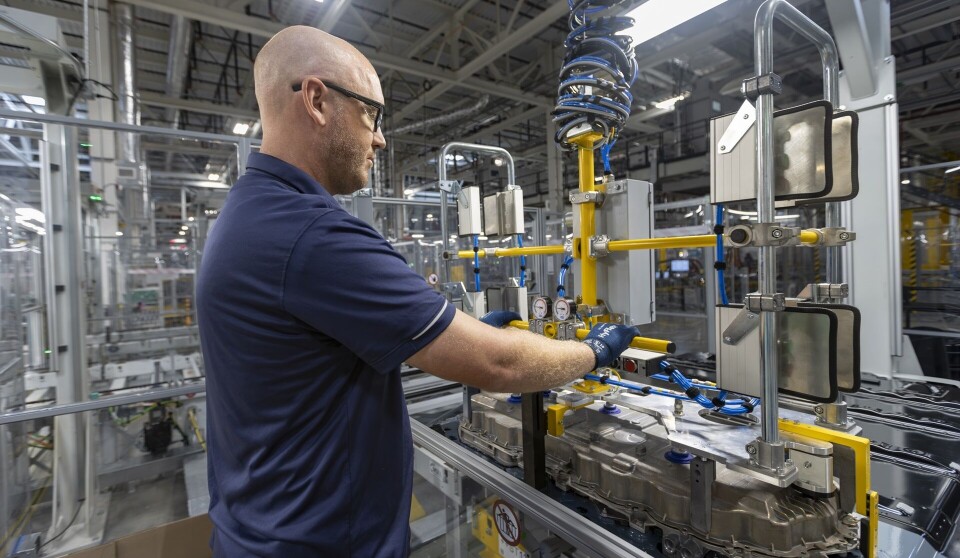
The project represents an important step in Bentley’s plans to develop a more localised manufacturing and supplier network in the UK. Under a just-in-sequence (JIS) production model, complete front and rear suspension modules will be delivered directly to Bentley’s production lines in Crewe, aligning component supply with vehicle assembly requirements.
By integrating axle assembly, logistics and supply chain operations more closely with its manufacturing activities, Bentley says it aims to strengthen production coordination, quality control and responsiveness. The facility will support vehicle programmes covering internal combustion engine (ICE), plug-in hybrid and battery electric vehicle (BEV) powertrains.
Andreas Lehe, Bentley’s board member for manufacturing, describes the development as the first cornerstone of the company's ambition to localise key suppliers closer to its Crewe operations through a future supplier park.
“This new facility strengthens our ability to work closely with ZF Foxconn Chassis Modules (ZFFCN) to achieve those standards through greater integration, collaboration and manufacturing alignment,” he says.

Beyond100+ and a changing powertrain strategy
The investment comes as Bentley adapts its Beyond100+ strategy to reflect changing market conditions, customer demand and the pace of electric vehicle adoption. Originally established as a roadmap towards becoming an exclusively electric luxury car manufacturer, the strategy was extended in 2024 from 2030 to 2035, with a commitment to introduce a new plug-in hybrid or BEV model each year over the following decade.
However, Bentley has since taken a more flexible approach to electrification. Its November 2025 strategy update confirmed that internal combustion and plug-in hybrid models would remain part of its portfolio for longer, responding to customer demand and the slower development of charging infrastructure. Its 2025 Sustainability Report, published in April 2026, subsequently confirmed that the original 2035 all-electric target would be extended, although a replacement date has not yet been established.
This means Bentley's manufacturing operations must accommodate several powertrain technologies simultaneously. Its current product range includes the fourth-generation Continental GT and Flying Spur, both using the marque's V8 plug-in hybrid powertrain, alongside the Bentayga SUV family and its derivatives.
The next major step is the introduction of Bentley's first fully electric model, the Torcal luxury urban SUV. Scheduled for reveal towards the end of 2026, with customer deliveries expected in 2027, the vehicle will be designed, developed and manufactured in Crewe. It represents a new model line rather than a direct replacement for an existing vehicle.
The Torcal will be followed by further electrified products as Bentley develops its future portfolio. The ZF facility's ability to supply axle systems across ICE, hybrid and electric programmes is therefore significant: it provides a common supplier relationship and manufacturing capability capable of supporting the changing requirements of the product range, without committing Bentley to a single propulsion technology.
Crewe investment and UK supplier localisation
The ZF development also forms part of a wider manufacturing transformation at Bentley's Pyms Lane headquarters. The company is investing in its Crewe operations to create a more flexible, digitally enabled production environment capable of supporting the next generation of luxury vehicles.
In October 2026, Bentley confirmed that its £350m investment in the site was nearing completion, including a new BEV assembly line within the historic A1 factory building. Originally constructed in 1938, the building has been repurposed for electric vehicle production, with autonomous guided vehicles (AGVs) being used to move vehicles through the assembly process.
The programme also includes a new Design Centre, which opened in July 2025, an Excellence Centre for Quality and Launch, an Integrated Logistics Centre and a new paint shop. The latter is designed to offer customers close to 100 paint colours while improving the efficiency and environmental performance of the manufacturing process.
These projects form part of Bentley's broader £2.5 billion investment commitment in future products and its Crewe manufacturing infrastructure, announced under its Beyond100 transformation programme. The objective is to preserve high-value vehicle production in the UK while introducing the technology, skills and production flexibility required for electrification.
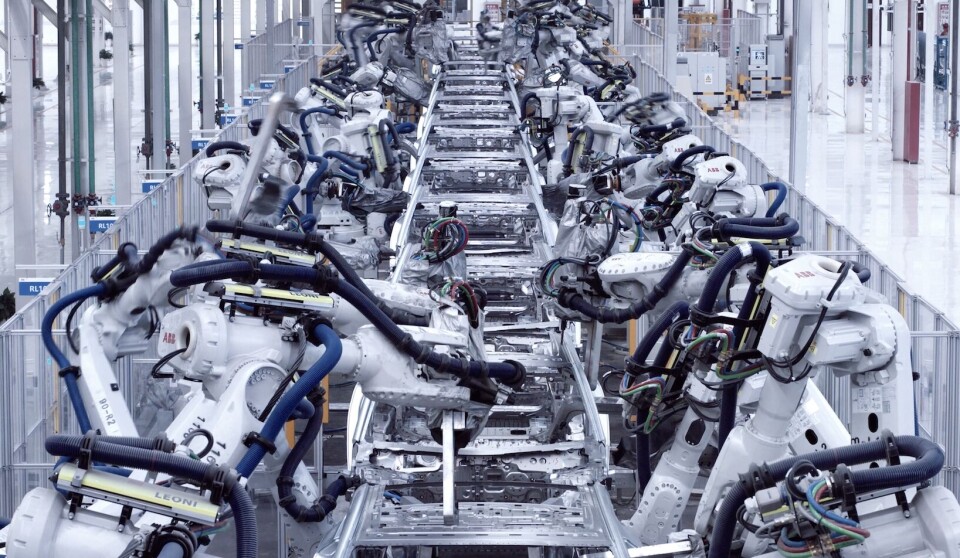
The new ZF facility extends that approach beyond Bentley's factory gates. Rather than relying solely on investment within its own manufacturing footprint, the company is seeking to develop a closer network of strategically located suppliers, reducing the distance between component assembly and final vehicle production.
For ZFFCN, the project represents a further commitment to the UK automotive sector. The 50:50 joint venture between ZF Friedrichshafen and Foxconn was established in 2024 and brings together ZF's experience in chassis systems with Foxconn's manufacturing capabilities. The company operates 27 locations worldwide and employs more than 4,000 people. The Stoke-on-Trent facility is expected to become operational in 2027.
For UK automotive manufacturing, the development demonstrates how the transition to electrification is creating opportunities not only for vehicle assembly investment but also for the localisation of specialist component manufacturing. Bentley's future production strategy will depend on maintaining the flexibility to build vehicles with different powertrain technologies, while ensuring that its supply chain can deliver the precision, quality and sequencing required of a luxury manufacturer. The Stoke-on-Trent project also highlights the importance of supply chain localisation as Bentley moves towards its next generation of vehicle platforms.