Volkswagen Slovakia
From paint shop to platform hall: Jan Drinka's 30 years at VW Bratislava
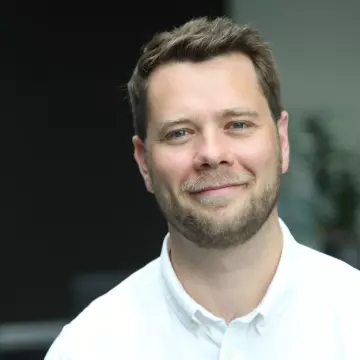

Jan Drinka has accompanied the transformation of the Volkswagen plant in Bratislava since 1992. In conversation with AMS, he talks about automation, new joining techniques and the ramp-up of the electric platform for the Porsche Cayenne.
Jan Drinka, head of the Porsche body shop, has been part of the Volkswagen plant in Bratislava since 1992. In a recent conversation with AMS, he spoke about automation, new joining techniques and the ramp-up of the electric platform for the Porsche Cayenne.
When Drinka started at Volkswagen Slovakia in 1992, the Bratislava plant was still a different place. Smaller, more manageable, with fewer trades and a significantly narrower product portfolio. Today, the site is regarded as one of the most complex multi-brand plants in the Volkswagen Group. Nine models from four brands are produced here under one roof. Drinka has experienced this change from very close quarters. More than that, he helped shape it.

From production worker to hall manager
“Although it was a long time ago, the memory has remained,” says Drinka about his first working day. His previous employer in electrical engineering had closed. He joined Volkswagen Slovakia shortly after, but his first role was not in body-in-white production, that trade was still being set up at the time.
“I started as a production worker in the old paint shop, where we worked on the Volkswagen Passat B3.” It was only in 1993 that he moved into body-in-white production. There he was “one of two maintenance technicians in the hall”.
The gap to today cannot be measured in years alone. It is evident in tools, processes and in the self-conception of manufacturing. “A large part of the activities was manual work, so we literally put our hand to the task,” recalls Drinka.
Today his teams monitor highly automated robot cells, camera-based measurement systems and complex mixed-construction processes. Body construction is more than 90% automated. Nevertheless, Drinka does not describe this development as a sudden break.
This evolution took place in many individual technological steps. With each expansion of the product portfolio, plants, materials and joining techniques also changed. Drinka cites the laser welding of the roof with steel side parts as an early example. Later, robots were added, and the degree of automation increased.
With large vehicles such as the Volkswagen Touareg, Audi Q7 and Porsche Cayenne, the demands on design and process control grew. “Hand in hand with the large vehicles, the technological demands grew and the material composition of the body changed, which brought new joining technologies with it.”
For Drinka, industrial change does not happen in single landmark moments but in a long sequence of ramp-ups, adjustments and lessons learned. "Automation, therefore, cannot be embodied in any specific milestone; in fact, it was and is a continuous development.” It is precisely this continuity that also shapes his own career.
When asked which vehicle project particularly challenged him or made him proud, Drinka said "I can hardly pick out one. I am particularly proud of every mastered ramp-up.” He described Bratislava as a “globally unique multi-brand plant with a 35-year tradition and a truly diverse portfolio”. Every model has further developed the site and also shaped him personally. “Every current as well as every past model brought something new, interesting and innovative and drove the site - and me - forward.”
Learning as a constant in change
What has changed over the decades is not only the technology but the requirements for the people in production have also become different. Manual work gave way to equipment understanding; mechanical experience became an interplay of mechanics, electrical engineering, software and process knowledge. Drinka sums up this connection in one sentence: “When the head thinks, the hands join in.”
In the past, mechanical and manual skills were more to the fore. But even then, employees already had to be ready to take on new things. Today, this ability to learn has become a basic prerequisite. “Regardless of whether it is mechanics, electrical engineering, software or automated processes, one must think along and continue to train constantly.” Drinka explicitly includes himself as well. “I am no exception in this regard. I used to think that learning ended with leaving school. Quite the opposite.”
For him, learning extends beyond technology. Communication inside the plant is changing too, as new generations bring different terminology, abbreviations and ways of working. "Here too, we all have to learn to communicate with one another and understand one another." That makes managing change in body construction a leadership task as much as a technical one. Whoever is responsible for production must understand systems and bring people together.
New platform, new requirements
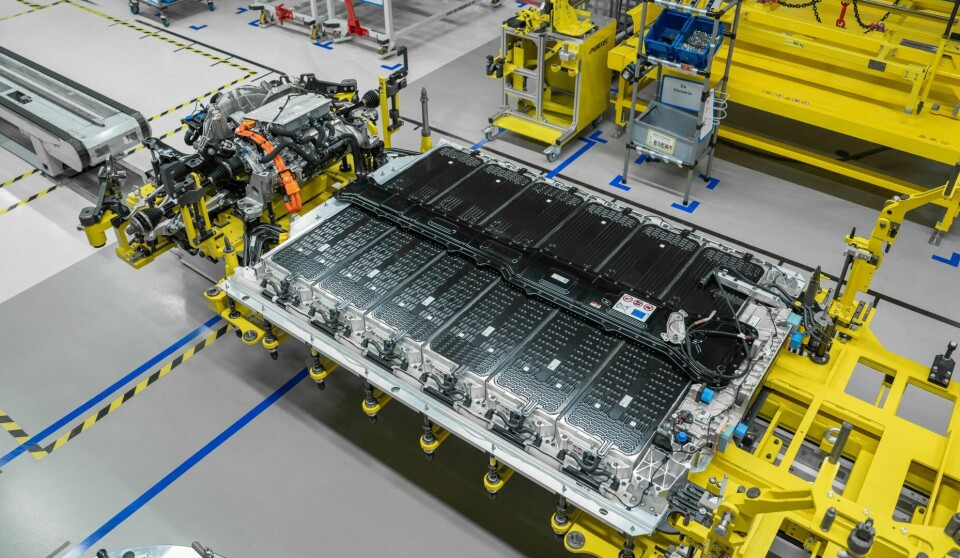
Nowhere is this more visible than in the ramp-up of the new platform hall for the electric Porsche Cayenne. The hall is building a skateboard-style chassis with an entirely different underbody construction, no classic central tunnel. For Bratislava, that meant a complex integration into existing processes.
“It is a completely different concept of design that could not be integrated into the existing body shop.” At the same time, other body parts had to be integrated into existing lines while series production there continued. “This led to a high level of technical and organisational complexity for the employees.”

Joining technology also places new demands. Aluminium, high-strength steels and a high proportion of adhesive are changing processes, systems and quality assurance. For Drinka, this is not an exceptional case, but part of an ongoing learning process. “Definitely - and in fact I learn something new every day.”
New materials, new solution approaches in troubleshooting, new software or proposals for further automation have now become part of everyday life. “New challenges appear continuously .” Often, one does not even notice how much one continues to develop over the years. “In general, the development in the automotive industry is immense and in order to keep up, you must not stand still.”
During the electric Cayenne ramp-up, quality is prioritised over throughput. For Drinka, it is a phase in which experience across different disciplines pays off. In nearly 35 years, he has worked in the paint shop, body shop, assembly and quality and knows each perspective from the inside. “At the same time, I know that vehicle construction is a very complex process, where all parts work together.”
For him, quality is not created at the end of the line, but in each individual process step. “So if the quality department says that a certain standard is to be achieved, it is our common goal.” He therefore describes the ramp-up not as a burden, but “as a challenge, but in a positive sense”.
Why people remain indispensable despite robots
One of the defining observations in Bratislava was the coexistence of high-tech automation and manual work. In automated areas, robot cells, measuring systems and complex processes are at work. At the same time, people remain crucial in troubleshooting, in finishing and in process optimisation. Drinka sees no contradiction in this. Many young employees come to the plant for practical instruction while still at school and quickly understand that manufacturing needs both, technical understanding and practical skills.
“Even if a line is 100% automated, people remain indispensable.” Automation does not replace responsibility, but shifts it. “The robot only does what the person programs.” If a signal is missing or is not correct, the system remains at a standstill or makes a mistake, “which in turn has to be rectified by a person”.
Drinka observed a productive approach to technology, particularly among younger colleagues. They do not just accept automation, but question and improve it. “They often recognise very quickly where a robot still has further potential and where a greater workload can still be assigned to it. Then it is also nice for me to observe the joy the colleagues have in their work and how proud they are of it when we express recognition to them and support them in their efforts.”
A new chapter for Bratislava
When Drinka walks through the new platform hall today, he does not just see another production area. For him, a new chapter of the site begins there. “The entire platform for the electric drive is exceptional in this respect.” Progress is visible above all in the interplay of materials, construction and the technologies used. High-strength steel is combined, for example, with aluminium die-casting. For Drinka, this is more than a technical detail. “It is a major advance and clear proof that we are entering a new technological era.”
After more than 30 years at the plant, the launch of the electric Cayenne is nevertheless not simply another agenda item for him. He places it within the long line of his professional development. “Every new vehicle is something special and a major novelty at the beginning - which later becomes a milestone.” The electric Cayenne is “in any case a significant moment” in his professional career. At the same time, Drinka remains true to an attitude that has run through his entire career. Experience only counts for him if it remains flexible.
“Whoever believes they are good stops becoming better.” For Drinka, this saying describes his personal attitude. TTechnologies are changing at an extraordinary pace. The right response, in his view, is to learn to work and live with that change.