
How AI and next-generation robotics are reshaping the automotive factory floor

From collaborative robots to humanoids, intelligent automation is moving from pilot project to production reality – but the gap between demonstration and deployment remains the industry's defining challenge
Driven by the convergence of artificial intelligence, advanced sensor technology, and increasingly capable robotic platforms, the factory floor is evolving from a space of rigid, high-volume automation into a flexible, intelligent production environment. Next-generation robotics – defined by adaptability, human-robot collaboration, and AI-powered decision-making – are at the heart of this shift.
The transformation is not merely technological. It is strategic. OEMs and tier suppliers alike are reassessing production architectures in response to the demands of electrification, model proliferation, and persistent skilled labour shortages. In this context, next-generation robotics represents not just a productivity tool but a core element of competitive strategy.
Recent deployments – from BMW's humanoid robot programmes at Spartanburg and Leipzig to AI vision inspection systems developed by Munich-based spin-outs – illustrate a sector actively testing the boundaries of what intelligent automation can deliver. While there is considerable potential, industry experts are careful to distinguish between compelling demonstrations and scalable production reality.
Existing production lines require retrofitting or reconfiguring for EV architectures, and cobots – with their relatively low integration cost and rapid deployment capability – offer a practical means of reconfiguring workflow without the capital commitment of a full re-tooling
The rise of collaborative robots (cobots)
Cobots represent a rapidly growing segment in industrial robotics, and the automotive industry has been their most prominent adopter. Using force sensors, vision systems, and sophisticated safety protocols defined under ISO 10218 (updated 2025) and ISO/TS 15066, they can operate in physical proximity to people without the conventional infrastructure of industrial guarding.
One example of this is at BMW's Spartanburg plant in South Carolina. A cobot working alongside a human operator rolls adhesive insulation into car door panels – a repetitive, ergonomically demanding task performed hundreds of times per shift. The cobot handles the consistent, physical element of the work; the human monitors quality and adapts to variation. This division of labour, combining robotic endurance with human dexterity and judgment, is the core promise of the collaborative model.
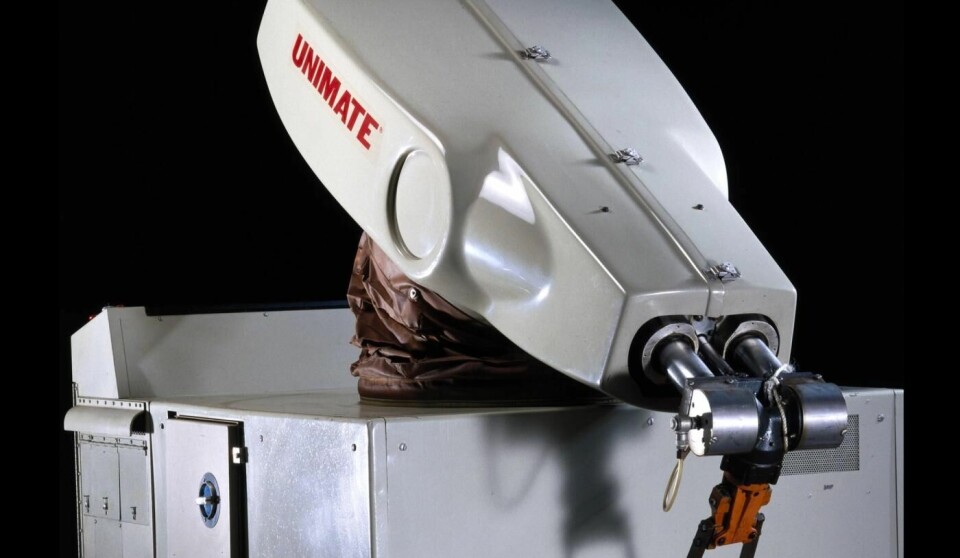
The cobot market was estimated at approximately $2.95 billion in 2025 and is forecast to grow at a compound annual rate exceeding 20% through the end of the decade. The automotive segment dominates adoption, driven by applications including assembly, welding, surface finishing, and quality inspection. Large OEMs including Audi and Volkswagen have embedded cobots into broader intelligent factory strategies, using them to increase production flexibility and improve human-robot interaction across their plants.
The transition to electric vehicles has added additional momentum. Existing production lines require retrofitting or reconfiguring for EV architectures, and cobots – with their relatively low integration cost and rapid deployment capability – offer a practical means of reconfiguring workflow without the capital commitment of a full re-tooling. Their ability to be redeployed across tasks in hours rather than weeks makes them particularly well-suited to the model mix variability that EV transition demands.
The practical challenge that has most consistently undermined AI vision deployment is not detection accuracy but false positives – what the industry terms the 'pseudo-defect' problem
AI-enabled robotics and advanced sensor integration
The defining characteristic of next-generation robotics is not mechanical capability but intelligence. AI-enabled robots – whether humanoid, collaborative, or conventional industrial arms – are increasingly equipped with advanced sensor arrays, machine vision systems, and onboard processing that allow them to perceive, interpret, and respond to their environment in ways that were not possible with earlier generations of automation.
AI-powered visual inspection represents one of the most actively developed applications in automotive plants. Companies such as 36ZERO Vision – a BMW Group spin-out – have developed foundation models trained on more than 22m images captured under real production conditions, including variable lighting, surface reflections, and material inconsistencies.

The practical challenge that has most consistently undermined AI vision deployment is not detection accuracy but false positives – what the industry terms the 'pseudo-defect' problem. When AI systems generate sustained volumes of spurious alerts, operators learn to ignore them, and the business case collapses through erosion of trust rather than technical failure. Addressing this requires not only better algorithms but appropriate optics, controlled lighting environments, and clearly defined quality criteria established by human experts before deployment begins.
Beyond vision, advanced force-torque sensing gives robots a sense of touch, enabling controlled contact applications such as polishing, insertion assembly, and quality testing with precise force feedback. Modern cobots incorporate over 100 self-monitoring safety functions and multiple levels of collision force protection, with onboard data recorders that capture operational state information during anomalies — enabling continuous improvement based on real production data.
One of the most significant barriers to robotics adoption – particularly among smaller manufacturers and in high-mix, low-volume environments – has historically been programming complexity
Humanoid robotics represents the leading edge of this sensor-intelligence integration. BMW's deployment of the Figure 02 humanoid at Spartanburg – handling 90,000 components over ten months across ten-hour shifts – and the subsequent introduction of the Aeon platform at Leipzig mark the first instances of physical AI of this kind operating in active automotive production at scale. The ambition, as BMW has communicated it, is for humanoids to work hand in hand with human employees on the line, handling tasks that require human-like dexterity in environments designed for people.
New approaches to robot programming
One of the most significant barriers to robotics adoption – particularly among smaller manufacturers and in high-mix, low-volume environments – has historically been programming complexity. Traditional industrial robots require specialist engineers, complex code, and lengthy integration cycles. Next-generation approaches are fundamentally changing this equation.
Cobots have pioneered intuitive programming methods including teach-pendant interfaces, where an operator physically guides the robot arm through the desired motion and the system records and replicates it, and no-code frameworks that allow non-specialist personnel to define tasks through graphical interfaces. Some advanced systems can be reconfigured for an entirely different precision assembly process in as little as 15 minutes – a flexibility that opens automation to production scenarios that would previously have been uneconomical.
AI is extending this democratisation further. Large language model interfaces are beginning to allow operators to describe desired robot behaviours in plain language, with AI systems translating intent into motion planning and task execution. Simulation environments – such as ABB's RobotStudio – allow programming, testing, and optimisation to occur in a virtual replica of the production environment before any physical deployment, eliminating the risk and downtime associated with traditional on-line programming.

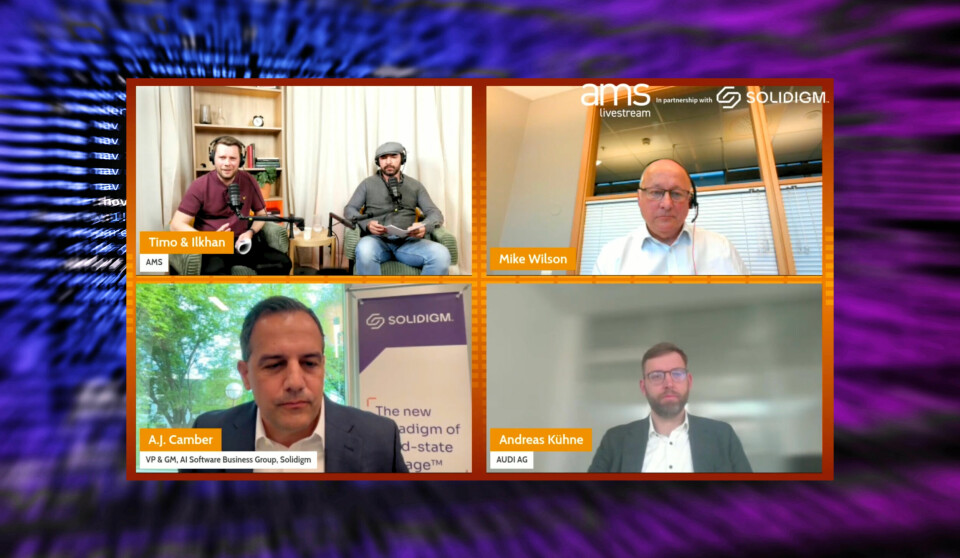
However, a structural challenge remains. As Andreas Kühne, Audi's Program Manager for Artificial Intelligence in Production and Logistics, has noted: the difficulty is rarely in building a prototype that demonstrates a concept convincingly. The challenge is data quality, integration, and standardisation across production lines and plants. Without data that meets a consistent standard and semantic across systems, deploying AI-driven automation at scale requires building custom translators for each environment – a significant drag on the speed and economics of rollout.
For humanoid platforms, programming remains technically demanding. Mike Wilson, Chief Automation Officer at the Manufacturing Technology Centre and Chair of the UK Automation Forum, identifies dexterity and safety as the two unsolved challenges that currently limit humanoid deployment. The grippers and tools that would enable humanoids to perform the full range of tasks present in a vehicle assembly environment do not yet exist at production-viable cost and reliability. This is the gap between demonstration and deployment – and it is the gap that will determine the pace of the next phase of robotic transformation.
At the frontier of the technology – humanoid robots and large-scale AI vision deployments – the ROI calculus is more complex and less proven. The deployments underway at BMW, Toyota, and Tesla represent long-term investments in capability building rather than short-cycle returns
ROI considerations driving investment
The investment case for next-generation robotics in automotive manufacturing is increasingly compelling – but it is not uniform. ROI depends significantly on deployment type, production context, and the baseline from which a manufacturer is starting. Understanding the financial dynamics is essential to making the right automation decisions.
For cobots, the economics are particularly favourable. Their lower upfront cost relative to traditional industrial robots, minimal safety infrastructure requirements, and rapid deployment capability compress payback periods to levels that have historically been difficult to achieve with conventional automation. Industry data indicates typical ROI windows of 6 to 18 months in automotive applications, with automotive case studies reporting returns exceeding 200% over a three-year period. One leading manufacturer reported an average payback period of just 195 days across its customer base.
The value drivers are multiple. Cobots reduce direct labour costs for repetitive, ergonomically demanding tasks. They improve throughput consistency, reducing cycle time variability. They improve quality – both through more consistent execution and, when integrated with AI vision systems, through earlier and more reliable defect detection. And they reduce the cost of workplace injury and the productivity losses associated with it. For heavy-payload cobots addressing tasks such as palletising and machine tending, ROI timelines extend somewhat – typically one to three years – but the business case remains strong given the capital cost differential versus traditional industrial alternatives.

At the frontier of the technology – humanoid robots and large-scale AI vision deployments – the ROI calculus is more complex and less proven. The deployments underway at BMW, Toyota, and Tesla represent long-term investments in capability building rather than short-cycle returns. The question manufacturers must answer is not simply whether the technology works today, but what it will cost and return at the scale they require, over the lifecycle of a platform investment.
Conclusion
Next-generation robotics is redefining what is possible on the automotive factory floor. The combination of AI, advanced sensing, intuitive programming, and human-robot collaboration is producing systems that are more flexible, more capable, and more economically accessible than any previous generation of industrial automation. The four areas examined in this overview – collaborative robots, AI-enabled sensor integration, new programming paradigms, and ROI dynamics – are not independent trends but mutually reinforcing dimensions of a single transformation.
The deployment evidence from leading manufacturers – BMW, Audi, Toyota, and others – confirms that this transformation is not theoretical. It is underway, in active production environments, at meaningful scale. The challenge that remains is the one that has always separated pilot success from production reality: the ability to integrate new technology into the complex, data-rich, operationally demanding environment of a modern vehicle plant, consistently and at pace.