Circular Production Systems


72% have Circularity targets. Only 20% have closed the loop
As assembly lines evolve into closed-loop ecosystems, vehicle manufacturers across Europe are redefining sustainability through advanced recycling, low-carbon steel adoption and radical factory overhauls.
For decades, the automotive industry viewed manufacturing through a linear lens of extraction, assembly and disposal. Today, that model is fracturing under stringent environmental mandates and rising resource costs. Sustainable manufacturing is no longer driven "by one simple unifying objective," says Daniel Harrison, Senior Automotive Analyst at AMS, "but rather, is a nuanced transition motivated by a broader range of differing priorities across a diverse value chain."

The Low-Carbon Steel Automotive Manufacturing Survey 2026, conducted by AMS in partnership with SSAB - where Harrison offers his analysis - reveals that lowering carbon footprint remains the leading objective, cited by 35% of respondents, alongside recycling goals, renewable energy integration and circular economy strategies.
Manufacturers, it turns out, no longer see sustainability as a checkbox exercise. They are restructuring their entire operational footprints to achieve their ends.
Nowhere is this clearer than at Volkswagen’s Autoeuropa plant in Palmela, Portugal, detailed in our report: Inside Palmela: how VW transformed a 30-year-old factory for net zero. By March 2027, 336 boreholes drilled 120 metres into bedrock will form an 80-kilometre geothermal network, replacing natural gas combustion and cutting heating and cooling energy consumption by 25%.
It is one strand of Volkswagen Group’s Zero Impact Factory initiative, which has delivered a 65% reduction in environmental impact per vehicle at Palmela since 2010. The plant now targets a 90% carbon reduction by 2030, backed by a €300 million ($347 million) decarbonisation programme.
Paintshop electrification sits at the heart of that programme. Paintshops typically consume around 60% of a plant’s energy, and Palmela has secured a derogation on new emissions reference values until 2027. Rather than settle for conventional compliance, the plant chose electrified ovens and primerless water-based coatings, cutting painting-related CO2 emissions by 40%. “Once you make this decision,” says Margarida Pereira, Head of Product Management and Planning at Volkswagen Autoeuropa, “you live with its consequences for the next 35 to 40 years.”

The low-carbon steel imperative at Volkswagen - and beyond
Steel production remains one of the most energy-intensive pillars of vehicle manufacturing, so decarbonising it sits at the core of the sector’s environmental journey. When OEMs evaluate steel suppliers, sustainability now factors into more than 93% of procurement decisions, according to the AMS-ABB Survey, with internal net-zero commitments leading low-carbon steel adoption at 39%. Yet tracking embedded carbon remains a work in progress, with 29% of respondents reporting full traceability per tonne, and another 31% working towards it.
Volkswagen’s plans show what collaboration could look like. Palmela has approved a baling press that compresses line-end metal scrap for shipping, which local furnaces have so far consumed in low-value applications. Pereira says a supplier in northern Europe could buy the bales and return them as coils before the end of the decade, which would “completely close the loop for metal raw material”.
We selected Poland due to the strong market potential to source end-of-life vehicles
Scaling circularity from Mirafiori to Burnaston
Circularity extends far beyond raw material procurement and into the physical architecture of plants and recovery hubs.
Stellantis champions this at its Circular Economy Hub in Mirafiori, Turin, run by its Sustainera business unit and featured in our article In Mirafiori, the car gets a second life. The hub combines remanufacturing of engines, transmissions and high-voltage batteries, a sorting centre for used parts known as ‘cores’, and vehicle reconditioning, dismantling and materials recovery. Even the site is recycled, with 55,000 of its 70,000 square metres recovered from unused space.

According to plant manager Stanislao Monfreda, the hub has recycled 40,000 tonnes of material, remanufactured 90,000 engines, transmissions and batteries, dismantled 2,000 vehicles - and sorted four million cores.
Remanufactured parts carry the same warranty as new originals at a price Stellantis puts at around 35% lower, while reused parts can be up to 70% cheaper. But dismantling capacity, Monfreda explains, is “linked to the ability to sell and store the parts”, so circularity depends on storage, digital systems and sales channels as much as the shopfloor.
Toyota shows how circular principles can be scaled, a journey explored in Toyota scales circular factories from UK to Europe. Its first circular factory opened at Burnaston, Derbyshire, in summer 2025, dismantling end-of-life vehicles using Toyota Production System methods. Recovered aluminium travels to the Deeside plant in North Wales, becomes hybrid engine components, and returns to Burnaston for fitment to the Corolla. On 19 March 2026, the first vehicle containing that re-used aluminium rolled off the line.
At launch, Toyota projected Burnaston would process around 10,000 vehicles a year, recovering 120,000 parts, 300 tonnes of high-purity plastic and 8,200 tonnes of steel. A second factory, at Wałbrzych in Poland, is due to open later this year with double the capacity. “We selected Poland due to the strong market potential to source end-of-life vehicles,” says Leon van der Merwe, Vice President of Circular Economy at Toyota Motor Europe.
We aren’t asking whether we can make one Project Cornerstone, but thousands
The recently enacted EU End-of-Life Vehicles Regulation tightens design-for-recycling rules and sets minimum recycled content targets, and Toyota sees an opportunity to anticipate the phased requirements rather than simply meet them.
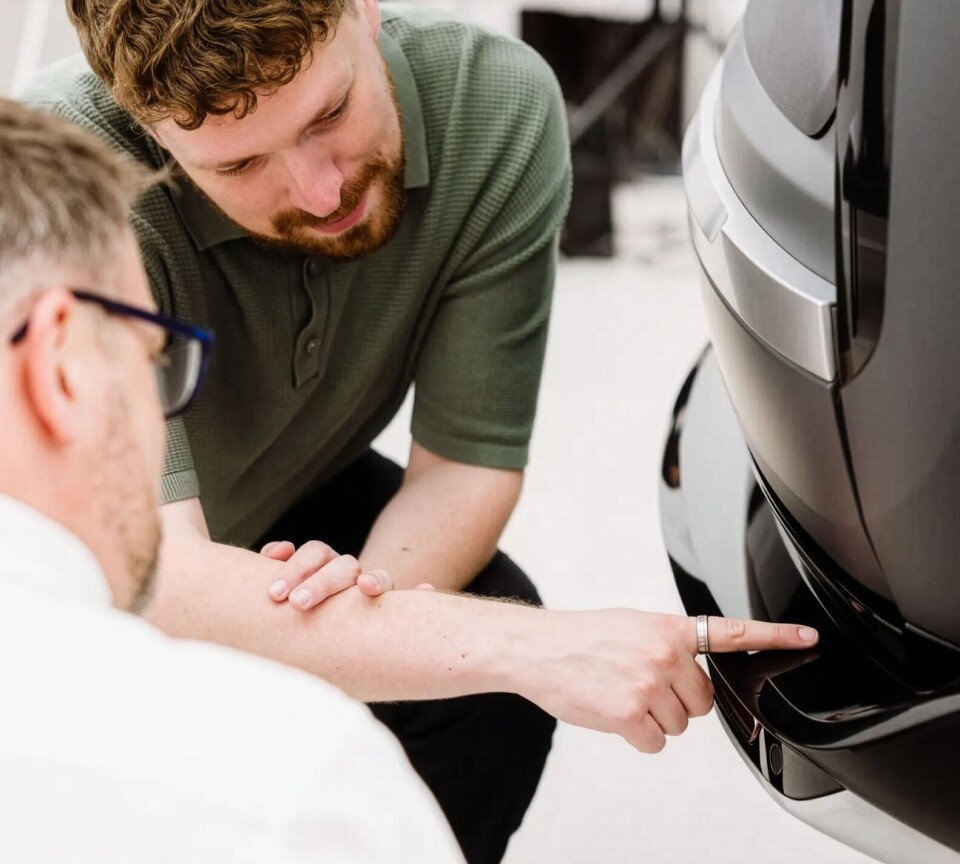
The next step is building circularity in from the outset. JLR’s Project Cornerstone is a Range Rover (L460) showcase developed with more than 40 suppliers, featuring 49 components made from recycled, bio-based or low-impact materials that together cut those parts’ combined carbon footprint by 50%. Gloss black panels mark the circular alternatives, yet they look no different from standard parts.
One Valeo headlamp contains 30% recycled material and has a repairable, no-longer-sealed lens, while a redesigned steering wheel has just five core components for easier separation at end of life.
It can be done - but can it be done at scale? “Cars are really well made, which means they are really hard to take apart,” says Matthew Rowbottom, circularity activations manager at JLR. Cornerstone is an early, engine-less showcase, but JLR intends it to inform future designs.
“We aren’t asking whether we can make one Project Cornerstone,” says sustainability specialist Jamie Webster, “but thousands.”
Closing the loop through supplier agreements
Steel recycling is already exceptionally well established in automotive manufacturing. The AMS and SSAB survey shows 72% of companies have formal steel recycling targets, with 41% targeting 20% to 50% recycled content and 19% targeting over 50%. Some 71% have set target years between 2030 and 2045. Around 39% maintain agreements with recycling companies and 37% with steel suppliers, while 20% have forged closed-loop agreements directly with steel partners.
“Recycling awareness and adoption rates,” notes Harrison, “are on a clear upward trajectory, but the automotive sector needs more widespread targets, dates, and recycling agreements for it to become industry standard practice.”

Overcoming economic hurdles and persistent myths
Cost effectiveness is the leading challenge, cited by 41% of respondents, followed by limited material availability at 32% and scrap quality limits at 29%. Supply is a worry beyond steel: Tobias Bahr, Chief Environment Officer at Volkswagen Group, warns that as legislation mandates higher recycled content across industries, demand for recyclates could outpace supply and drive up costs.
A persistent misconception also plagues the market, with 20% of respondents concerned about the quality of low-carbon steel, which is identical in quality, strength, durability and formability to conventional steel.
“Navigating the challenges in implementing low-carbon steel,” says AMS's Harrison, “is as much about education and thought leadership, due to the surprising level of myth busting that is required.”
Forging partnerships today for a sustainable tomorrow
Bridging aspiration and operational reality requires collaboration across the supply chain, with steel producers providing strategic guidance and carbon transparency.
Johan Lundin, Head of Marketing at SSAB Europe, explains: “The market is increasingly ready for low-carbon steel. Today, the challenge is no longer convincing customers why they should decarbonise, but helping them understand how to make it happen.”
Articles Curated Just For You...
-

72% have Circularity targets. Only 20% have closed the loop
-

Low-Carbon Steel: What’s Driving Automotive Adoption?
-

Inside JLR and ArcelorMittal's off-cycle study to rethink steel vs aluminium
-

Automotive Manufacturing Outlook Survey 2026
-

Digital product passports move from compliance to production tool
-

Brownfield vs greenfield: How OEMs are navigating paintshop investment under pressure
-

Low-Carbon Steel Automotive Manufacturing Survey 2026 Results
-

How BMW pushes product and supply chain sustainability with the new BMW X5
-

Scout’s $2bn US plant prepares for pre-series production
-

How software-defined vehicles are redefining sustainability