
Stellantis Industrial System: Scaling improvements across a global manufacturing network
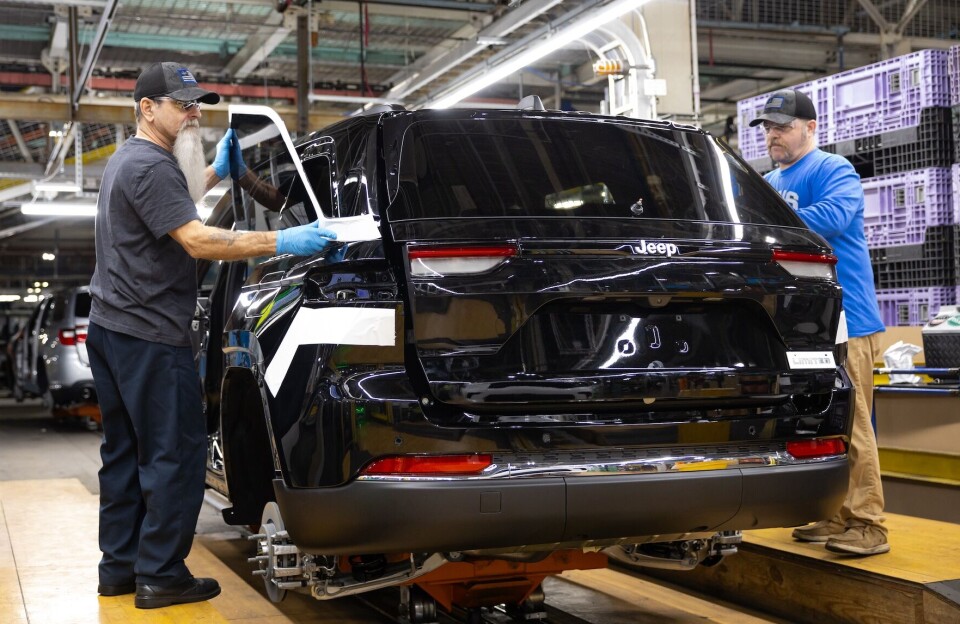
Stellantis has reframed its production approach as the Stellantis Industrial System to broaden scope and discipline across quality, supply chain, PDCs and manufacturing
Stellantis has been developing its manufacturing approach from a production‑centric mindset to a wider industrial discipline that formally brings together product, manufacturing and innovation under a unified operating framework. Speaking with AMS, Tim Fallon, Senior Vice President, Global Head of Stellantis Industrial System and Anna Valeria Anllo, Head of Global Innovation for Vehicle Process Engineering, explained why the change in name from production to industrial matters. Both shared insights into cross‑functional teams and workplace integration, balancing speed and validation, how suppliers and startups are embedded into trials, and how outcomes are measured and scaled across a vast, geographically diverse network.

Stellantis Industrial System (SIS) evolution
The name change from production to industrial is more than cosmetic; it represents an evolution in scope, discipline and intent. Fallon described the move as reflecting the expanding breadth of the company’s footprint and the desire to formalise standards across the full industrial remit. He said the rebranding was intended “to include all of our systems, all of our industrial footprint, from quality to supply chain to our PDCs and to designate that discipline.” That shift toward an industrial designation signals a purposeful effort to integrate standards and processes across multiple functions so that innovation and operational disciplines can be applied consistently. Fallon explained that the change was driven by both organisational evolution and a strategic emphasis on embedding processes and standards around innovation, giving Stellantis the “opportunity to grow our network and make our network more efficient as we look to proliferate projects within our manufacturing footprint.” In short, the industrial system is positioned as the architecture for scaling best practices and governing the link between new ideas and reliable production deployment.
Tim Fallon Senior Vice President and Global Head of the Stellantis Industrial System (SIS)

Fallon leads the company’s worldwide excellence and transformation framework throughout manufacturing. In this role, he is responsible for embedding a common operating system that drives safety, quality, cost, delivery, and continuous improvement across Stellantis’ global footprint.
His work experience includes:
- 2026, Senior Vice President, Global Head of Stellantis Industrial System, Stellantis N.V.
- 2024 – 2025, Senior Vice President, North America Manufacturing, Stellantis North America
- 2022, Vice President, Manufacturing Operations, Rivian Automotive Inc.
- 2020, Vice President, Manufacturing, Canton (Mississippi) Vehicle Assembly Plant, Nissan Motor Corporation
- 2005, various roles including director/plant manager for trim and chassis assembly, director/plant manager for paint and plastics manufacturing and engineering, and director/plant manager for body assembly, Smyrna, Tennessee
• 2002, Field Service Engineer, Babcock & Wilcox
Anllo reinforced the practical implications of this evolution by pointing to concrete design rules that underpin manufacturing outcomes. She explained, “We call it design to manufacture here in Stellantis, and they are our golden rules that we use to design and manufacture the cars.” Those rules address engineering details that have direct manufacturing consequences, which must be designed into CAD models to avoid costly post‑design changes. Anllo noted the potential downstream cost of inadequate early design decisions.: “You’re going to spend a lot of money to try and fix problems later because you could potentially have to start changing parts, moulds etc.” The industrial system therefore combines macro governance with detailed engineering standards, reducing the need for costly rework and supporting the objective of faster, higher‑quality launches.
Cross‑functional teams and workplace integration
A central pillar of SIS is the deliberate use of cross‑functional teams and early workplace integration. These teams bring together specialists from manufacturing engineering, product engineering, process engineering, advanced robotics and operations to work on concepts from the earliest phase through to industrialisation. Anllo described the process as beginning with advanced manufacturing teams, with experts from centres of competence and multiple engineering disciplines, who are engaged very early in the concept and then move into the industrialisation phase.
Fallon elaborated on how the organisation institutionalises workplace integration through a launch domain. He said, “We have a launch domain within SIS and we have made some additional improvements recently to really enhance the workplace integration, which puts manufacturing, manufacturing engineering, manufacturing operators alongside process engineers from both vehicle and underbody design.” That workplace integration mandates collaboration from concept to digital development and onto the plant floor, deliberately moving teams out of silos. Practical measures to ensure collaboration include co‑location expectations and early plant engagement, with Fallon noting that the product engineer “has to go to the plant that the vehicle is going to be built at and interface with the operators, the team leaders to make sure that everything’s going to flow.” This physical proximity and operational interface are used to identify manufacturability issues early, saving time and expense later.
Anllo explained why the engineering and operational perspectives from cross‑functional teams is especially valuable for innovation projects: “I alone, cannot say if an AI tool is going to work or not. I have support from our IT and digital teams who are also involved, but as Tim mentioned we’re also working with the people on the shopfloor. They’re the ones who really know day in, day out what’s truly needed.”
This underlines the need for solutions to be technically viable, IT‑compliant and accepted by shopfloor teams to be adopted successfully. Also, how cross‑functional support the development of projects that are designed to be implementable, not just theoretically promising.
Accountability and flexibility
This collaborative approach is underpinned by defined accountability through formal gateways that align product readiness with manufacturing readiness. Fallon described Stellantis’s gateway process as rigorous: “We have very specific gateways, especially on the launching of vehicles and on product development… Both of those must come together at five different milestones throughout a vehicle development process.”

Progression through these milestones requires sign‑off from the heads of product engineering, manufacturing, quality, purchasing and supply chain for the region, with quality acting as the final gatekeeper. Fallon emphasised that the decision to move through a gate is not unilateral but an “amalgamation of all of those approvals from all of those heads of the functions.” This multi‑functional approval model builds shared accountability and reduces the risk that a project proceeds without full operational buy‑in.
At the same time, Stellantis preserves flexibility to pursue strategic initiatives that do not conform to traditional ROI measures. Fallon acknowledged that strategic change does not always meet a standard ROI payback and explained that the company has “mechanisms for being able to validate projects that don’t fit within the traditional ROI scheme.” This recognition allows the organisation to fund and test strategic investments that are important for longer‑term competitiveness even if near‑term financial metrics are ambiguous. The accountability framework and reserved pathways for strategic projects are complementary; governance prevents risky rollouts, while alternative validation tracks enable the company to pursue high‑value innovations that require non‑standard justification.
Anna Valeria Anllo responsible for Global Innovation for Manufacturing.

Anllo drives Stellantis’ manufacturing and industrial transformation, leading strategic investments in automation, artificial intelligence, and next‑generation technologies to enhance efficiency, sustainability, and cost performance across manufacturing plants in Europe, North America, South America, the Middle East & Africa, and the Asia Pacific regions.
Prior to joining Stellantis, Anllo spent more than a decade at BMW, where she led major vehicle launch programs across the United States, Germany, and South Africa.
Anllo joined Stellantis in 2023 and has since held positions within Vehicle Process Engineering and the Paint Innovation area at the Poissy (FR) office.
Supplier integration and Proof of Concepts (POCs)
Leveraging external expertise and innovations has been an important part of Stellantis’ product and production development process, as demonstrated by the Factory Booster Days. The OEM treats suppliers and startups as integrated members of project teams rather than as external vendors. Anllo noted that suppliers “become part of the team” and may be out on the shop floor when a POC is being run. That proximity allows supplier engineers to support trials in real operational contexts, accelerating iteration and building mutual understanding. Fallon added that clarity of expectations is essential when hosting outside partners inside plants: “[all parties] know what the plan is, know what any sort of back out or recovery plan may be,” and those plans are used to control risk. This disciplined approach keeps trials transparent and predictable and ensures that production exposure is minimised.
Proof‑of‑concepts follow a staged vetting sequence, and Stellantis avoids introducing immature solutions into live production. Anllo described a sequence of lab proofs followed by controlled in‑plant POCs once a concept is sufficiently validated. For digital and IoT solutions, the company conducts IT and cyber security homologation checks. Anllo reiterated the priority that POCs must not risk production. The staged approach is deliberately conservative at first to build trust and ensure reliability. Only after a solution is proven in one plant and cleared through Stellantis guidelines is the company prepared to accelerate roll‑out across multiple sites. Anllo captured the logic succinctly: “We make sure that it works in one location first, because if it’s not going to work and it has too many bugs, people aren’t going to adopt it, they’re not going to trust us.”
Balancing speed, quality and validation
Stellantis confronts a central tension between speed to market and the discipline required for quality and safety. The organisation’s approach is to treat speed and quality as mutually reinforcing rather than opposing goals. Anllo stated plainly, “Speed and quality aren’t mutually exclusive for us. It’s really what we aim for.” To achieve both, Stellantis combines early manufacturing involvement, formal gateways, rigorous vetting and the adoption of a ‘fail‑fast’ philosophy in appropriate contexts.
Fallon described a cultural shift toward quicker, cheaper experimentation: “If you can do it in four weeks or four days and say, okay, that’s going to work or that’s not, it’s how we fail fast and move to the next project.” The aim is to avoid lengthy, expensive development cycles that build up sunk costs for concepts that ultimately do not work. Yet the company couples fail‑fast experimentation with strict validation before scaling. For example, camera‑based inspection systems and AI tools must pass rigorous testing and IT security checks before they are rolled out widely. Anllo emphasised that controlled validation protects production and supports adoption: “We test in many different scenarios, especially with camera control… Once we’ve proven it, then we can start rolling it out and that rollout can go quite fast.”
Cost and quality benefits
Every project is evaluated with a detailed business case and tracked against forecasted outcomes. Fallon explained that projects typically include labour efficiency estimates, logistics and energy considerations and then are monitored to ensure benefits are realised in the P&L. He said: “We track those on a project-by-project basis to ensure that it actually is flowing through the P&L to make sure we’re getting the benefit.” This discipline ensures that successful pilots translate into measurable financial and operational gains.
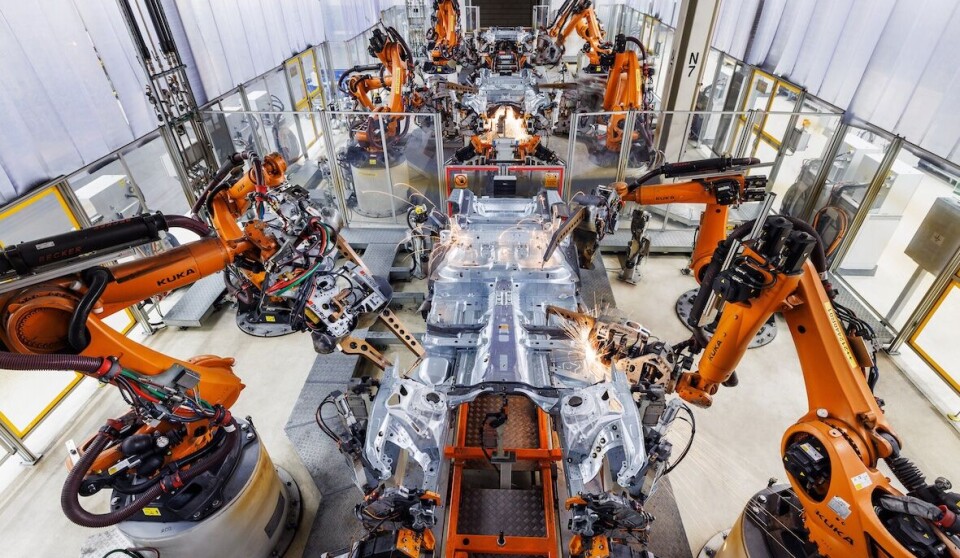
Anllo gave examples of how innovation has driven cost and quality improvements. One example came from a supplier conversation at Factory Booster Day, which prompted a review of purchase orders to identify duplicate parts and pricing discrepancies across plants. That discovery enabled the team to combine volumes and seek better pricing. Other innovations include inline quality solutions such as AI camera control systems to detect defects early and avoid costly rework, mobile metrology tools that compare scanned parts directly to CAD models in real time, and projects targeting energy and water consumption reduction.
Scaling and network management
Scaling proven solutions across an extensive global network of roughly 90 plants is both the source of greatest potential benefit and the primary implementation challenge. Fallon explained that the true value of many innovations emerges only when they are applied across an entire shop or factory, and that the organisation is focused on how to expand a solution across an entire shop, an entire factory. To enable that expansion, Stellantis uses a combination of cross‑plant forums, innovation catalogues and digital discovery tools.
Fallon described existing business clubs and cross‑plant forums that the company is expanding to include innovation as a formal topic. These clubs allow plants to share what is working and to consider adoption of proven solutions from peers. Anllo described the development of an innovation catalogue that will track completed projects, savings and supplier costs, making the information accessible to plants that face similar problems. Given the scale of the network and the volume of initiatives, Stellantis is also using AI search tools and chatbots to surface relevant projects quickly.
Fallon gave the example of a line worker in Algeria who can search for “logistics automation” and receive targeted project matches rather than being forced to search through thousands of entries manually. When a solution has been validated and is captured in the catalogue, the combination of peer networks and digital discovery tools enables faster, more confident roll‑out of that solution.

Aligning innovation with manufacturability
Stellantis’s transition to an industrial system reflects a deliberate and pragmatic effort to align innovation with manufacturability, quality and scale. By embedding cross‑functional teams and workplace integration early in the development cycle, enforcing multi‑functional gateways and accountability, embedding suppliers into controlled proof‑of‑concepts, and pairing a fail‑fast experimentation culture with rigorous validation, Stellantis is positioning itself to move quickly without compromising production continuity or product quality.
Fallon summarised the ambition as bringing “that rigor and discipline into the process” while expanding the network’s ability to deploy innovations rapidly so “we can get the maximum benefit.” Anllo’s emphasis on practical engineering rules, plant involvement and trust through validated pilots shows how these strategic aims are translated into day‑to‑day operations on the shop floor. The result is a repeatable pathway for turning promising technologies into scalable, reliable improvements across a global manufacturing network.