Physical AI in automotive manufacturing
Volvo joins BMW in deploying Hexagon’s humanoid robots


Volvo Cars is training Hexagon Robotics’ AEON humanoid at its Ghent plant in Belgium, targeting deployment in live production from mid-2027. The programme follows BMW’s trials of the same robotic platform in Leipzig.
Volvo Cars is expanding its advanced manufacturing capabilities through a collaboration with Hexagon Robotics. Its Ghent facility has become the carmaker’s first plant to trial humanoid robots, with initial training and validation already underway ahead of a factory pilot scheduled for the first half of 2027.
The Swedish carmaker is adopting the same robotic platform that BMW is testing at its Leipzig plant, with a focus on supporting production workers in physically demanding and repetitive tasks.
Volvo’s manufacturing team is using imitation learning to train AEON, initially focusing on precise component placement in two fixtures. Subsequent stages will introduce multiple-part handling, autonomous movement across the shopfloor and interaction with existing automation systems.
Volvo targets production deployment in mid-2027
Standing 1.65 metres tall and weighing 60kg, AEON uses a wheeled platform rather than legs, enabling travel speeds of up to 2.4 metres per second. Equipped with cameras and sensors, the robot has a payload capacity of 10kg.
For Volvo, the appeal lies in the platform’s flexibility and its potential to address tasks that are difficult to automate using conventional fixed industrial robots.
“Our aim is for humanoid robots to take on some of the most physically demanding tasks and help make work more ergonomic for our people,” says Magnus Nilsson, chief manufacturing officer at Volvo Cars.
The OEM plans to increase the number of robots and broaden their applications throughout the pilot, with deployment in live production targeted for mid-2027.
Building on Hexagon’s automotive manufacturing experience
Hexagon’s collaboration with Volvo follows its partnership with BMW, which AMS explored earlier this year during a visit to the carmaker’s new centre of competence for physical AI in Munich.
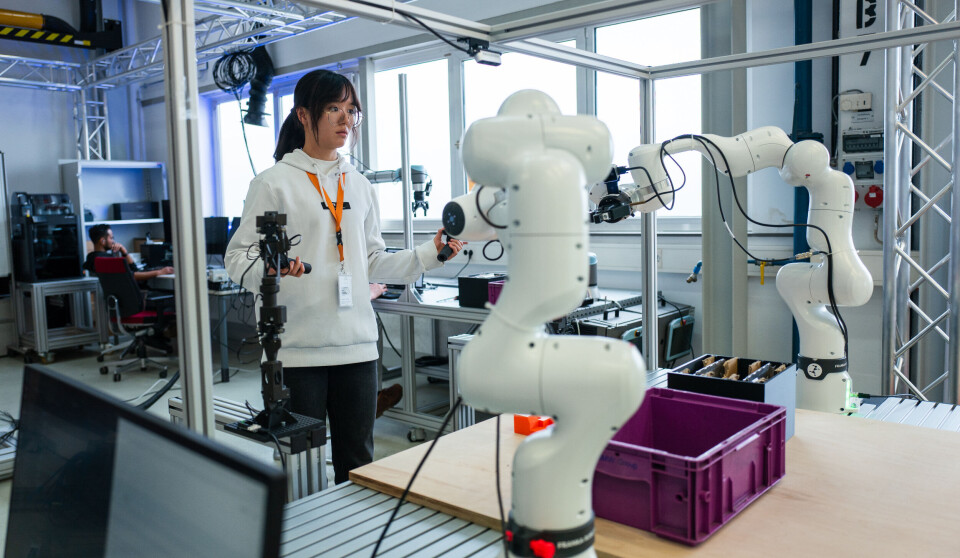
During the visit, Hexagon Robotics president Arnaud Robert outlined the rationale behind AEON’s design as a multi-purpose industrial platform. Beyond component handling, potential applications include inspection, reality capture and digital twin creation. An automated battery-swapping mechanism is designed to support continuous operation.
While BMW has identified high-voltage battery assembly and component manufacturing as initial applications, Volvo is taking a gradual approach to task complexity. Both programmes will provide further insights into how humanoid robotics can be integrated into existing automotive manufacturing environments.