Industrial Training Evolution


Rockwell's Stephen Heirene on bringing future mobility to factory floor training
Rockwell Automation's Stephen Heirene explains how the company is helping automotive manufacturers bridge the gap between legacy systems and digital transformation through training academies that prepare engineers for the realities of modern production.
The gap between what engineers learn and what they encounter on the factory floor has long plagued automotive manufacturing. As production systems move from hardware-centric automation to software-driven intelligence, this disconnect grows more pronounced.
AMS recently covered how Toyota Motor Manufacturing UK has launched a new training approach at its Burnaston plant in partnership with Rockwell Automation, redefining how industrial skills are developed for the next generation of technicians. The project infuses a hybrid training model in which apprentices spend two years building technical and behavioural competencies in a classroom environment to match the technological shift marking automotive production. The model, delivered jointly with a local college, is followed by two years applying those skills on the shop floor across maintenance areas.
By integrating current-generation Rockwell hardware and software into the curriculum, the academy ensures apprentices learn on the same PLCs, HMIs and automation systems used in modern production, rather than outdated equipment.
The programme also responds to an ageing maintenance workforce. With more than 300 technicians at Burnaston and many approaching retirement, Toyota is building a long-term talent pipeline and extending outreach into local schools to foster early interest in engineering and STEM careers.
Although demand is high, the academy admits only 12 apprentices a year, prioritising depth of training, mentoring quality and strong retention over scale.
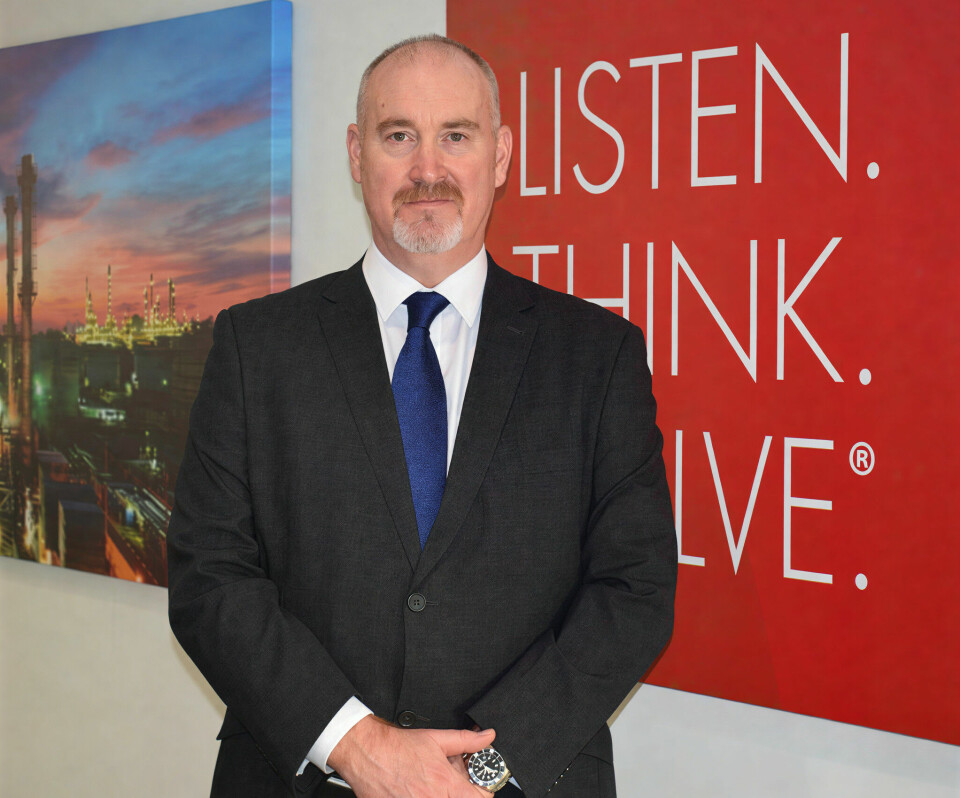
Stephen Heirene, Industry Consultant for Transport and Future Mobility at Rockwell Automation, sees training as the critical bridge between these worlds. His role centres on understanding how automotive manufacturers can navigate the transition to electrification, autonomous vehicles and hydrogen technologies whilst maintaining the production competencies that keep their factories running. It is a balancing act that requires equal attention to immediate operational needs and longer-term strategic shifts.
"Rockwell has chosen to organise itself around industry verticals so that our teams understand the language, technologies and applications specific to each sector," Heirene explains. "My focus is automotive and transportation in the UK, which includes aerospace, long-established manufacturers and new start-ups."
Training must reflect real-world applications. It doesn't help learners if equipment is decades out of date. The upgrade ensured the tactile experience resembled what they will encounter in working factories
The scope extends beyond traditional automotive boundaries. Future mobility encompasses autonomous delivery systems, battery production and alternative powertrains. Because these technologies are advancing at different rates globally, Heirene's work involves drawing insights from regions where adoption has accelerated. "Because Rockwell operates globally, we draw insights from regions like China and Korea that are advancing rapidly in these areas," he notes.
Training for the systems engineers actually encounter
At Toyota's Burnaston Academy, which trains not only Toyota personnel but engineers from Caterpillar, Pirelli and others, the decision to upgrade to current-generation Rockwell equipment reflects a fundamental philosophy about effective learning. The Academy recently replaced legacy systems to ensure apprentices train on equipment that mirrors what they will find in working factories.
"It's essential," Heirene says of this approach. "Training must reflect real-world applications. It doesn't help learners if equipment is decades out of date. The upgrade ensured the tactile experience resembled what they will encounter in working factories."

This philosophy extends beyond simple equipment currency. Even when legacy systems remain in use on production lines, understanding contemporary systems provides engineers with the conceptual framework needed to troubleshoot older equipment. The fundamental programming principles remain constant, but the interface through which engineers interact with these systems has changed dramatically.
"Even when legacy equipment is used in training, the fundamental programming principles still apply," Heirene observes. "But this was the right time for an upgrade to align the Academy with contemporary factory systems. Reducing the element of surprise when learners enter the workplace is a key part of the Academy's philosophy."
The shift from hardware to software intelligence
Automotive manufacturing's evolution from simple indicator systems to integrated operational intelligence represents more than a technological upgrade. It means a foundational change in how production environments generate and use data. The transformation from basic Andon systems, (a visual, and sometimes auditory, signal system that alerts employees to issues on the production line, originating from the Toyota Production System) with red and green lights to FactoryTalk-enabled digital systems creates new demands on workforce skills.
Heirene emphasises that Rockwell's approach centres on outcomes rather than products. "Our approach is outcomes-based rather than technology-led," he says. "Instead of pushing specific products, we align with the customer's goals and select the appropriate technologies to support those goals."

This philosophy becomes particularly important when manufacturers transition from legacy systems. The data flowing through modern production environments requires engineers who understand not just machinery but networks, databases and analytics platforms. The digital thread connecting design, production and maintenance systems demands a more holistic understanding of manufacturing operations.
"Manufacturers increasingly focus on the digital thread and factory digitisation," Heirene notes. "AI, analytics and software-driven functionality are replacing traditional hardware approaches."
Building training infrastructure that scales
The pace of technological development is leading to a major skills gap in the automotive production industry, with the need for training and upskilling initiatives growing across the board. Rockwell's training infrastructure apprehends this shift in required competencies. The automation company maintains a comprehensive syllabus delivered through multiple channels. Classroom training at its Milton Keynes facility offers structured courses whilst virtual modules through Learning+ provide more than 300 packages covering motion, Logix, safety and networking.
"We offer classroom training in Milton Keynes with a full schedule of courses, skills assessments and customised training roadmaps, instructor-led remote training, and virtual modules via Learning+ with more than 300 packages, covering motion, Logix, safety, networking and more," Heirene explains. "Learners can train at their own pace, take exams and receive accreditation."
The emphasis on portable training rigs ensures that hands-on learning remains central. Every automation discipline has dedicated hardware that students can physically manipulate and program. This tactile experience complements Emulate3D, Rockwell's emulation platform that incorporates real-world physics and connects to actual PLCs.
At the Burnaston Academy, instructors often come from long manufacturing careers...The Academy also welcomes learners at any age, including those in the final years of their working life who want to improve skills, which is impressive to see
"From Rockwell's perspective, hands-on learning is indispensable," Heirene emphasises. "We provide portable training rigs for every type of automation so each student works with real hardware."
The emulation platform differs from traditional simulation by incorporating physical constraints like gravity and friction. Learners can programme virtual factory environments whilst observing how their code affects operations in real time. The system also offers immersive VR capabilities, allowing engineers to experience production environments before setting foot on the factory floor.
Capturing institutional knowledge before it retires
The challenge of transferring expertise from retiring personnel to incoming engineers presents one of manufacturing's most pressing problems. Decades of tacit knowledge about system quirks, troubleshooting methods and process optimisation walk out the door when experienced engineers leave.

Toyota addresses this through mentorship programmes that pair near-retirement personnel with apprentices. Rockwell supports this knowledge transfer through structured training programmes and certification services, including TUV Rheinland-certified engineers for machine safety.
"At the Burnaston Academy, instructors often come from long manufacturing careers," Heirene observes. "The Academy also welcomes learners at any age, including those in the final years of their working life who want to improve skills, which is impressive to see."
This intergenerational approach proves particularly valuable as manufacturing systems become more complex. The combination of institutional memory and contemporary technical skills creates engineers capable of maintaining legacy systems whilst implementing new technologies.
Networking as the emerging critical skill
As production systems become more interconnected, networking competency emerges as perhaps the most crucial skill for modern manufacturing engineers. The ability to troubleshoot communication failures between devices, understand data flow through enterprise systems and secure industrial networks against cyber threats becomes as important as traditional automation skills.
"Networking is becoming one of the most important areas for learners, whether they're dealing with local networks or enterprise-wide systems," Heirene says. "This will be a key focus for future discussions with the Academy."
This shift reflects the broader transformation in manufacturing operations. Production lines no longer function as isolated systems but as nodes in larger digital ecosystems. Real-time data from shopfloor sensors flows through multiple layers of the Purdue model, informing decisions at every level from individual machine control to enterprise resource planning.
The integration of MES, PLM and ERP systems creates dependencies that require engineers to understand not just their immediate equipment but the entire information architecture supporting production. When systems fail, troubleshooting requires tracing data paths through multiple platforms and protocols.
Supporting manufacturers through the transition

For established manufacturers moving from legacy systems to modern digital architectures, the transition presents both technical and workforce challenges. The investment in new equipment must be matched by investment in training, yet production cannot stop whilst engineers develop new competencies.
Rockwell's support for start-ups differs from its work with established manufacturers. "For start-ups, we support everything from network design and data centres through to MES, PLM, ERP and the entire digital thread of the factory," Heirene explains.
"We provide technologies across the Purdue model, - [a hierarchical framework that structures industrial control systems (ICS) and operational technology (OT) networks into distinct layers, like an automation pyramid] - from shopfloor sensing to cybersecurity, data analytics and AI. We help customers move safely from R&D to pilot and then into production."
Established manufacturers face the added complexity of maintaining existing systems whilst implementing new ones. Training must address both legacy equipment knowledge and contemporary digital skills, and this dual requirement makes academies like Burnaston particularly valuable since they can tailor training to address the specific mix of systems engineers will encounter.
"Data has become essential to improving efficiency, especially for companies transitioning from legacy systems into more modern environments," Heirene notes. "We see strong demand for training in data handling, networking and digital production workflows."

The question of what happens next
With automotive manufacturing continuing its evolution towards electrification and autonomous systems, the demands on workforce training will only intensify, as of course, the skills required to maintain a traditional internal combustion engine production line differ substantially from those needed for battery assembly or autonomous vehicle testing facilities.
Training systems, if they are to be effective, must evolve not just to keep pace with current technology but to anticipate future requirements, as engineers entering the workforce today will spend their careers navigating constant technological change. The ability to learn new systems quickly becomes as important as expertise in any specific platform.
Heirene's work sits at the convergence of these challenges. By supporting both established manufacturers and start-ups, by drawing insights from rapidly advancing markets whilst serving traditional automotive heartlands, Rockwell positions itself to help manufacturers navigate whatever comes next.