Gestamp develops G-Weld for joining operations on complex vehicle parts
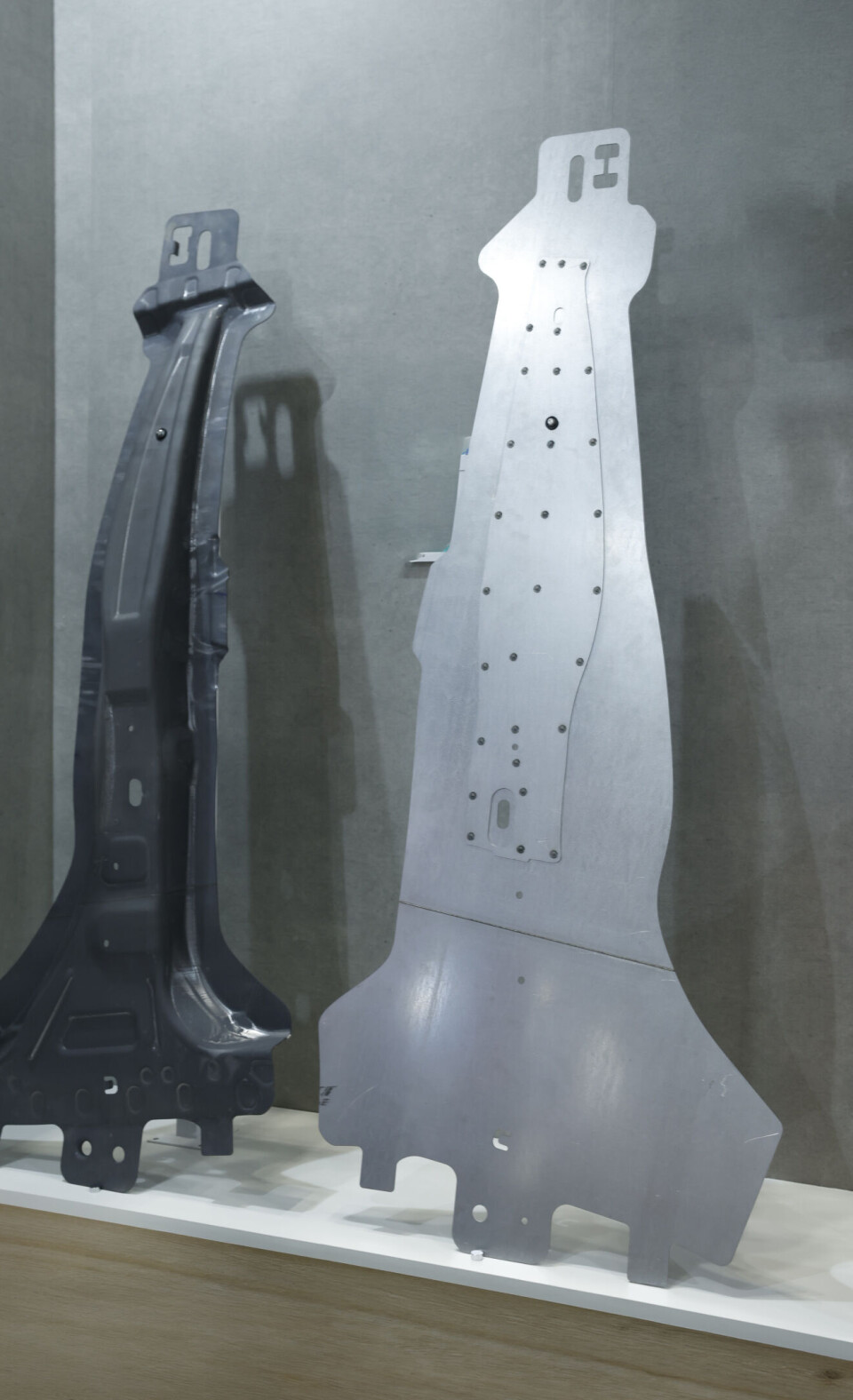
Gestamp’s remote laser welding technology targets faster, more flexible assembly of large vehicle structures, using a G-shaped weld to manage steel coatings and improve joint strength
As vehicle structures increase in size and complexity, the joining processes used to assemble them face new demands. Components may require more welds, access can be difficult, and production lines must accommodate a wider range of parts and materials. For OEMs and suppliers alike, this presents challenges. Bringing its experience and expertise in developing and producing vehicle structural parts to bear on this problem, Gestamp has been developing a new joining solution that looks to address some of these challenges: G-Weld.
The main challenge we aim to solve with G-Weld is to simplify our highly complex assembly lines that are using traditional resistance spot welding
David Corón, a process engineer in Gestamp’s Material Joining Department, discussed the technology’s development and potential applications with Automotive Manufacturing Solutions. Corón joined Gestamp in 2017 and has worked on laser applications including remote laser welding. He said the main objective behind G-Weld was to simplify assembly operations, rather than to develop a new weld shape for its own sake.
“The main challenge we aim to solve with G-Weld is to simplify our highly complex assembly lines that are using traditional resistance spot welding,” he said.
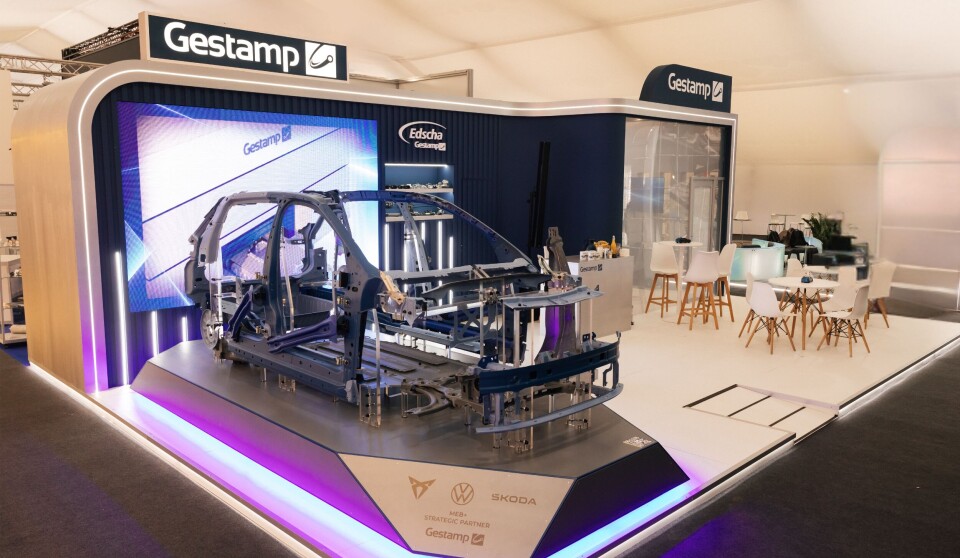
Resistance spot welding has limitations, Corón explained, particularly as parts become larger and more complex. “It can be a slow welding process and also has accessibility issues with complex parts,” he said. “And there’s this trend from the car manufacturers for larger, more complex parts that require a larger number of spot welds.”
G-Weld is based on remote laser welding. Corón said its speed and access requirements can help address those assembly challenges: “Our G-Weld process uses remote laser welding, so it’s high speed and flexible as it only requires one-sided access to the part and creates semi-visible joining points.”

Developing the G-shaped weld
According to Corón the shape of the weld was the result of extensive development “Developing the shape required many iterations,” Corón said.
Gestamp wanted to retain some of the orientation-independent performance associated with a spot weld. Corón explained that the team initially wanted “to have something similar to a circular weld because we wanted to have this orientation-independent performance similar to like a spot weld.” But circular or spiral welds could create a quality issue when welds overlapped: “We didn’t achieve the weld quality that we were aiming for due to the coating on the steel mixing into the melting pool.” Gestamp’s approach was to manage the coating’s behaviour during the process.
We did some simulation at the beginning, but the most important results came from real testing in the lab, then you really see what’s going on
The geometry and the process parameters were developed together. Asked whether geometry was a major part of the work, Corón noted: “So, developing the process parameters related to that geometry ensured that we are managing the coating issues. It was an important target for this technology and its development.”
The resulting G-shaped geometry not only helps manage the behaviour of the coating during the joining process but also provides another important advantage: the joining points remain partially visible, providing a clearer visual indication of the joint.
Gestamp carried out some simulation work at the start, including fluid-dynamics testing related to coating behaviour. But Corón explained that laboratory trials proved more useful in revealing how the weld behaved in practice. “We did some simulation at the beginning, but the most important results came from real testing in the lab, then you really see what’s going on,” he said.
Managing steel coatings
The process is designed to work with coatings on steel. Corón described how Gestamp uses the difference between the melting points of the coating and the base steel to manage material in the weld area.
“We are looking to manage the parameters to preheat the weld,” he said. “And by having these different melting points of, for example, an aluminium silicon coating and the base steel, we can reach a state where the coating in the inner side of the weld is still in a melted state, and we can push through that and displace most of it outside of the weld.”

The process is not, Corón observed, highly sensitive to coating thickness, although thinner coatings can help produce better weld quality. “It’s true that the lower the coating thickness is, the better the quality of the welds. Our tests confirmed good performance across the most common coatings.”
Gestamp has also tested different material combinations. “We have done many tests with different material combinations, and so far, we can weld all of them,” said Corón. He added that the company’s aim is to build a broad range of tested combinations to offer to its customers.” However, Corón cautioned that each new combination still needs testing.
It’s a faster process than resistance spot welding and we get narrower heat-affected zones and then a larger plug diameter, and that’s where we see these stronger welds
Strength, speed and validation
Gestamp has carried out internal validation of the G-Weld. Coron said: “We’ve done some internal validation of the technology, and it’s been proven to work. It meets the performance requirements and offers a competitive advantage. In assembly applications, Corón cited a 15% increase in [weld] strength. He said testing had been conducted at both vehicle and component level.
Corón attributed the increase in weld strength to the laser welding process “It’s a faster process than resistance spot welding and we get narrower heat-affected zones and then a larger plug diameter, and that’s where we see these stronger welds.”
A compact cell with potential flexibility
A typical G-Weld cell uses a welding head with a robot as part of an automated solution. Corón said its layout would be similar to other assembly lines, but it could occupy a smaller footprint than a resistance spot-welding operation.
Because the process is faster, a line might need fewer welding robots. He identified that as particularly useful for large gigastamped components, which can require a high number of welds.
Corón noted that integrating the G-Weld process into an existing operation is relatively simple, retaining much of the familiar production flow. “The integration is very similar to existing systems. The layout is pretty much same as that for spot welding, but within the welding operation, we have fewer components.” Part reception and quality control remain the same, while the fixturing is different but based on the same general concept.
The process also offers more flexibility in part production. “One of the benefits of the G-Weld is that our robot placement is less important as we use fewer of them,” explained Corón. “So, we can produce variety of different parts in the same welding cell. We can swap out the fixtures and adjust the reference without any major layout changes.”

Applications from pillars to door rings
Gestamp’s internal validation has covered parts of different sizes, from pillars and rocker panels to large gigastamped components. Corón highlighted that the work also included door rings and double door rings. “These are some of the largest parts that we make,” he said. “And it’s on our latest addition to the portfolio of parts that we have tested G-Weld.”
He said the technology is most relevant when parts need a large number of welds: “G-Weld makes sense for parts which require a high number of welds. So, usually the larger the part, the more sense it makes to go with G-Weld technology.”
However, although smaller, rocker panels are another application, where additional reinforcement creates a need for more welds. “Also, rocker panels are another part that now needs further reinforcement, and that requires more welds,” Corón said. “That’s an application where G-Weld is useful.”
The technology is proven, we know it works. Now it’s a matter of widening our scope and testing the new materials that are coming through
Simulation, materials and next steps
Gestamp is also working to ensure that test results can support predictive simulation models. Coron said: “For us, it’s very important to have a very predictable simulation model. That way we can more accurately validate our components in simulation before going into production.”
The company works with internal teams to develop the models. “We work very closely with our product development and material research teams here in Gestamp to have these simulation models ready,” he said. “So, we developed a series of tests with components for dynamic crash situations. We combine these different tests to fit the simulation models we developed, and then we validated them against real tests.” Corón said Gestamp had achieved “a good fit” between the models and the physical results.
G-Weld is also intended to complement Gestamp’s wider joining portfolio, including GES Wire. Coron described the technologies as complementary rather than competitors. Some parts may use one process for blank joining and G-Weld for reinforcement elsewhere. “We have a very experienced and skilled product development team, and they can go into the details of which technology fits best to any given application,” said Corón.
The next step, he said, is to expand the range of materials tested: “The technology is proven, we know it works. Now it’s a matter of widening our scope and testing the new materials that are coming through.” Gestamp is also studying the sustainability implications. Coron said removing operations could contribute to sustainability but stressed that the work remains ongoing.